Nassef is the founder of PHISO (Philippine International Studies Organization), BRLN (Bangsamoro Research and Legal Network), DSRN (Decolonial Studies Research Network), and Co-IRIS (International Relations and Islamic Studies Research Cohort). He researches policy issues affecting the Bangsamoro society and explores decolonial knowledge sources of the global south as well as interdisciplinary study between Islam and International Relations.
Author: Nassef Manabilang Adiong
Nassef is the founder of Co-IRIS (International Relations and Islamic Studies Research Cohort), PHISO (Philippine International Studies Organization), DSRN (Decolonial Studies Research Network), and BRLN (Bangsamoro Research and Legal Network). He works on interdisciplinary research between Islam and International Relations and explores the Bangsamoro society as he heads the Policy Research and Legal Services (PRLS) of the Bangsamoro Parliament. Visit https://nassef.info/ for more details.
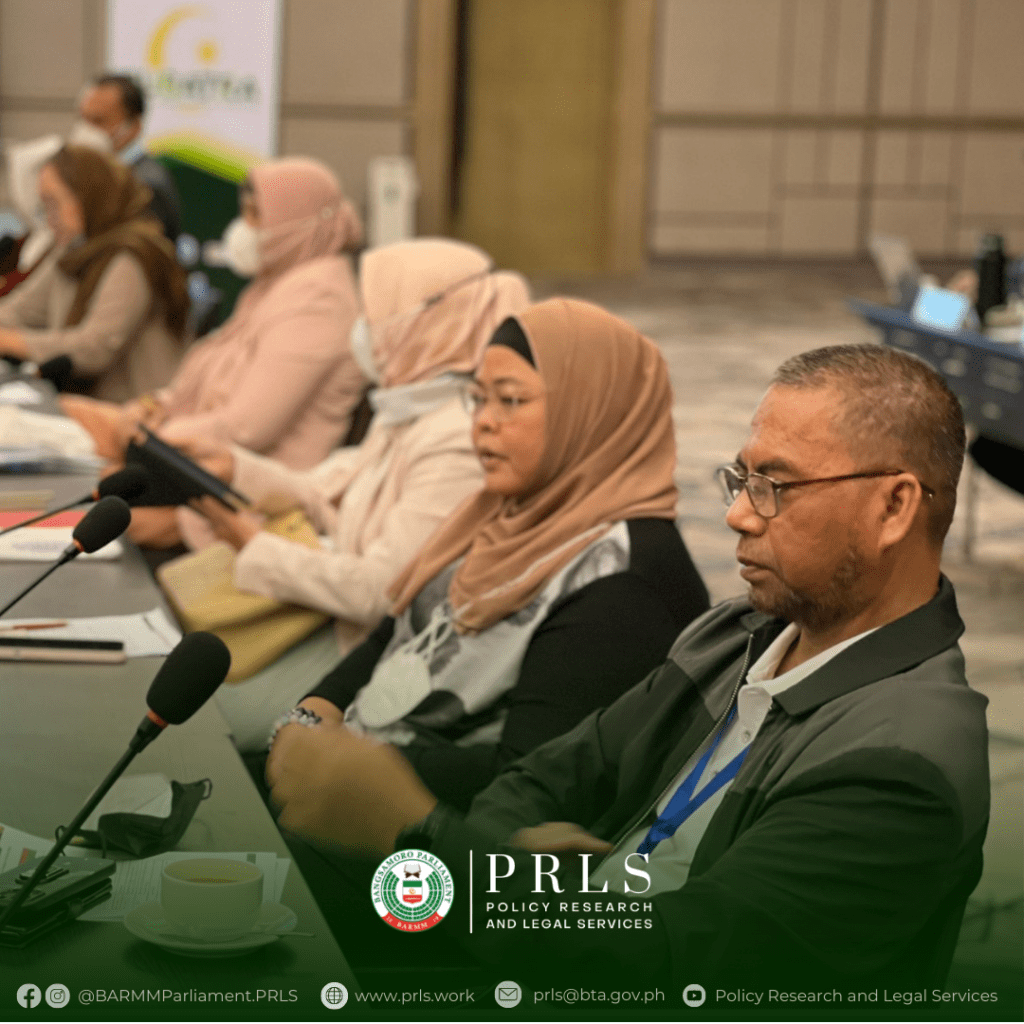
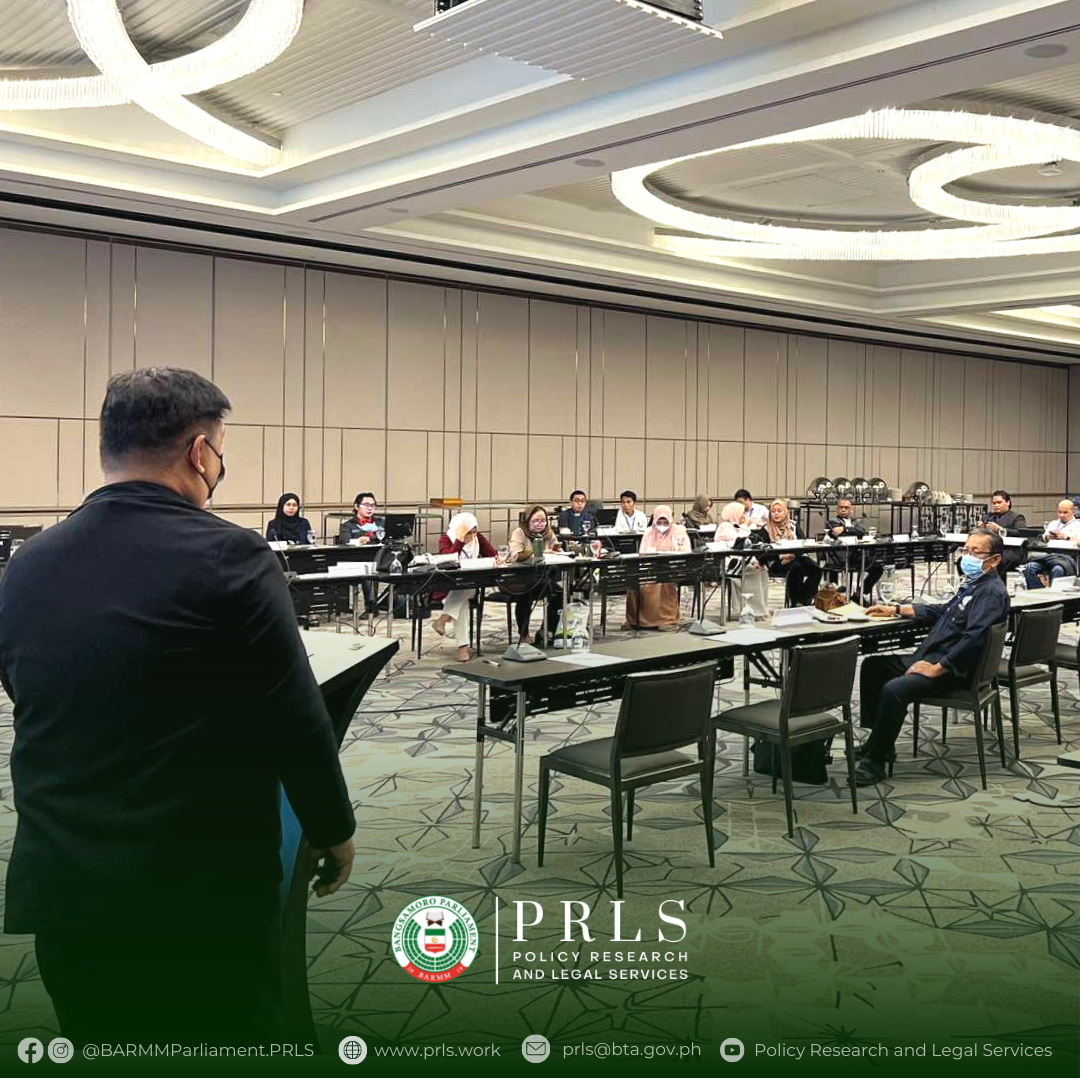
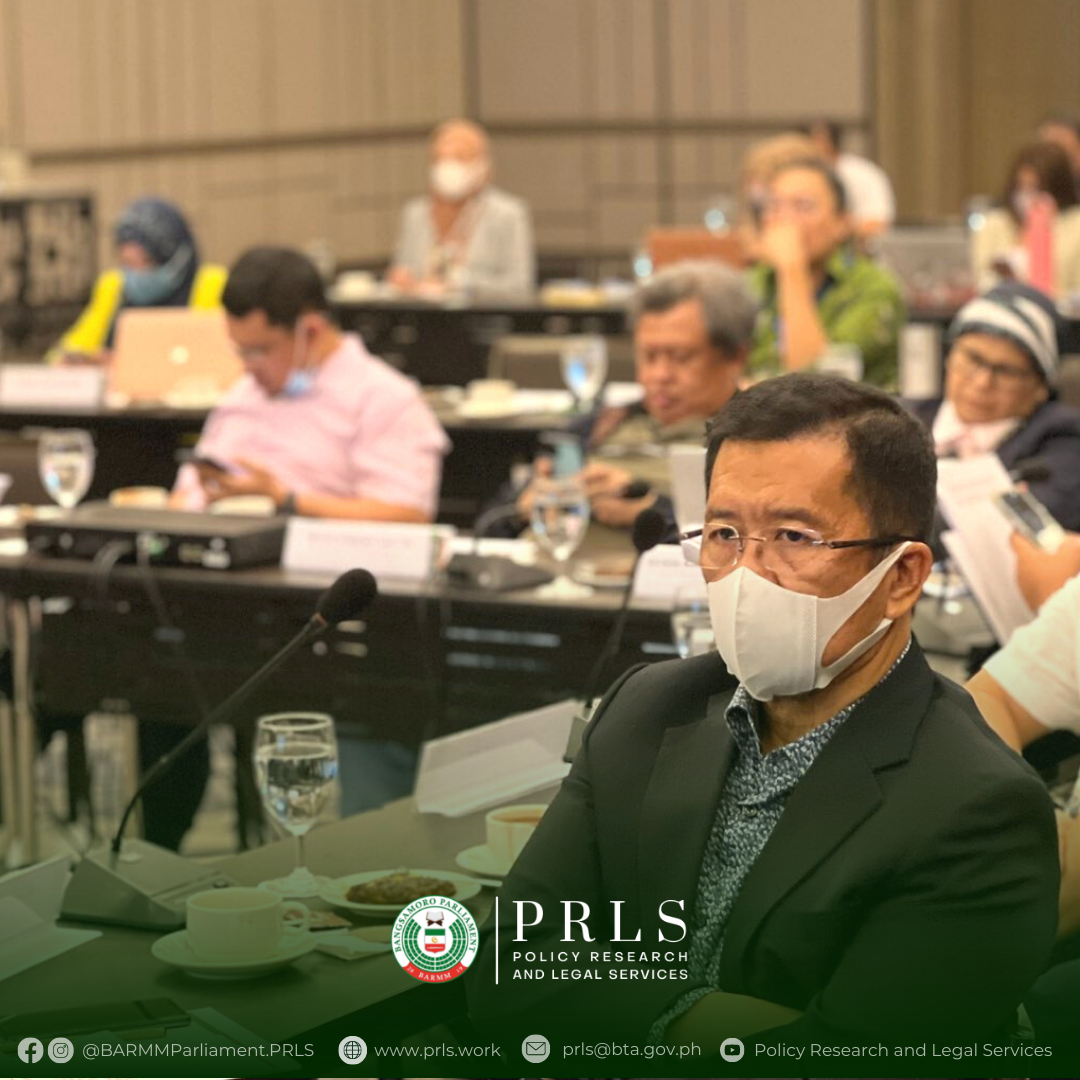
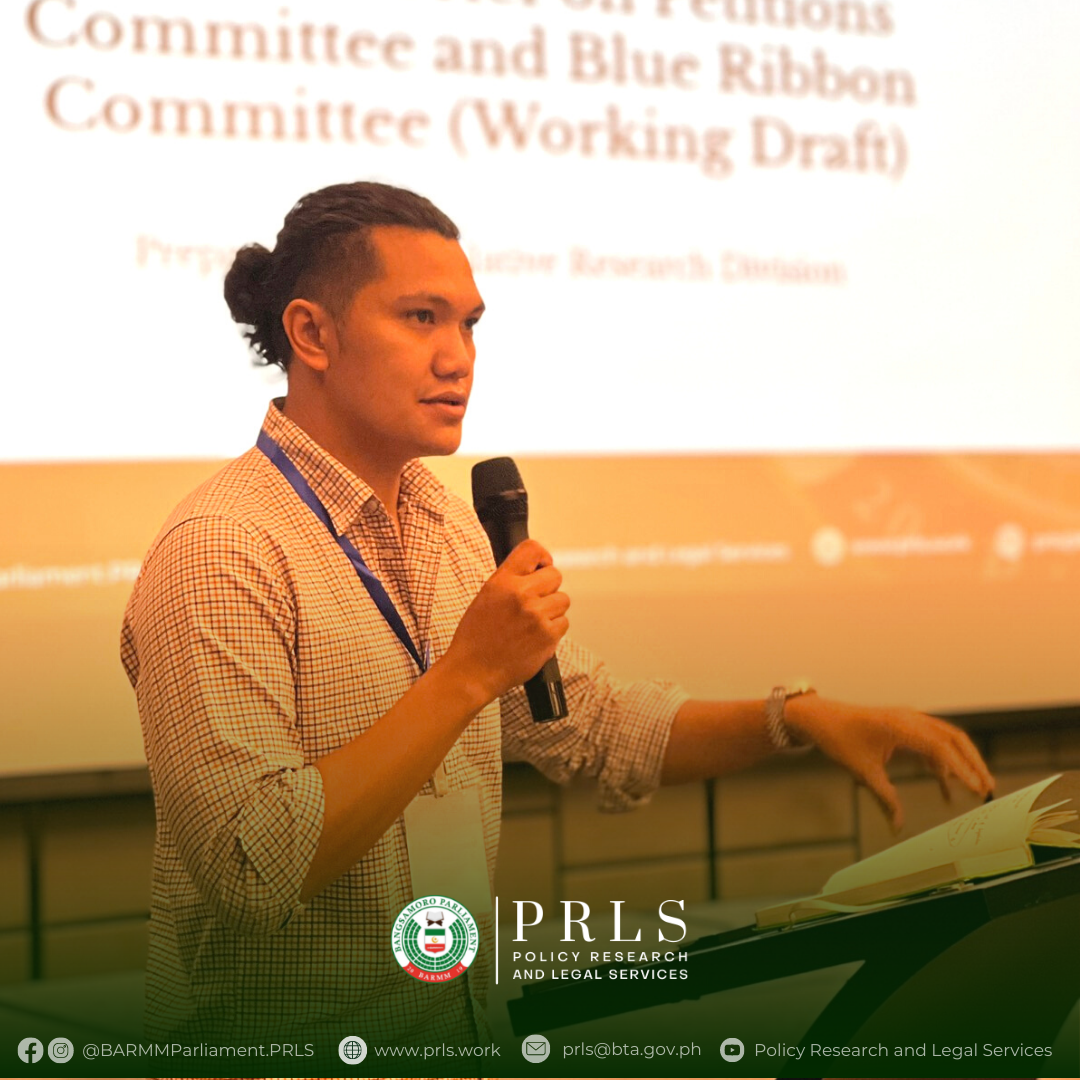
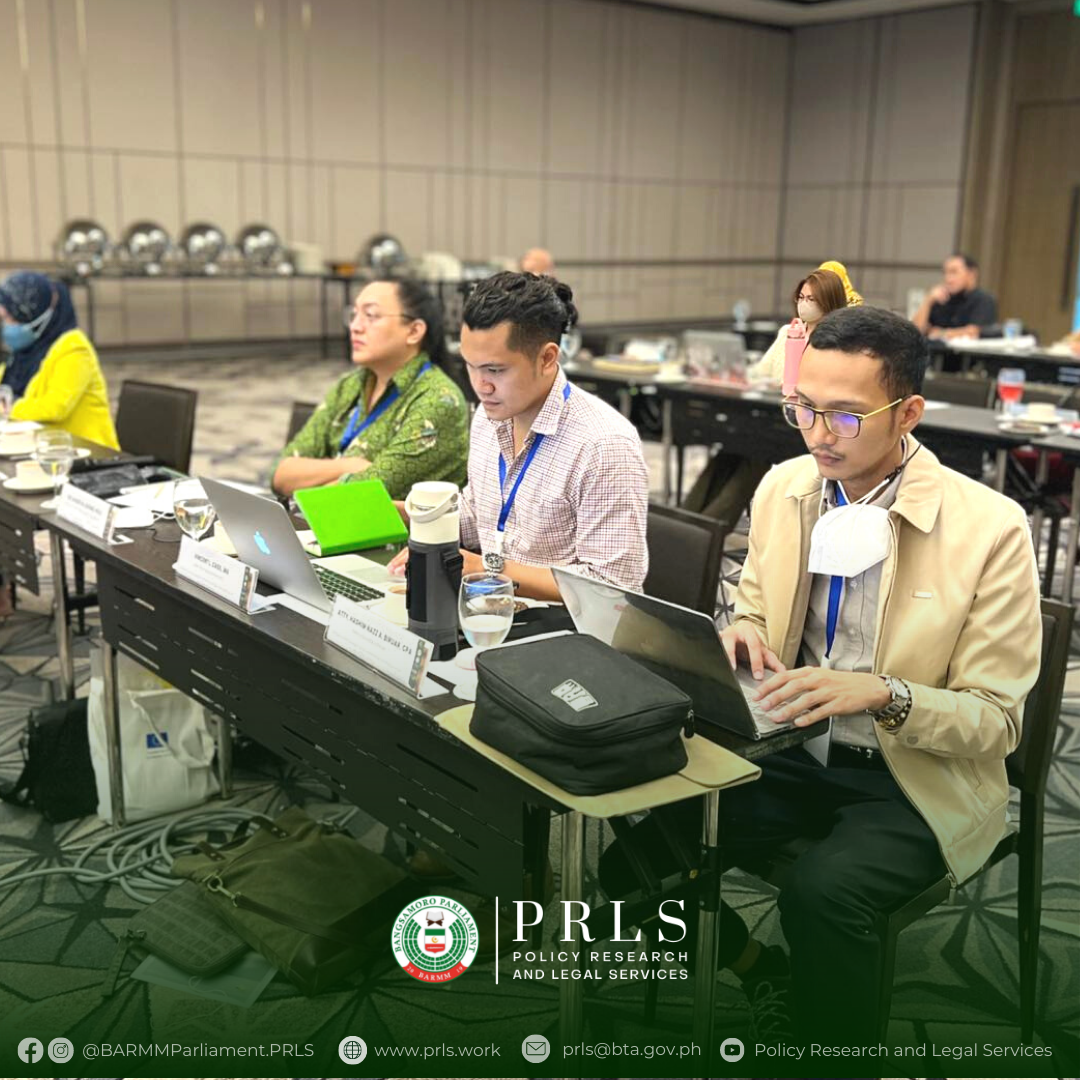
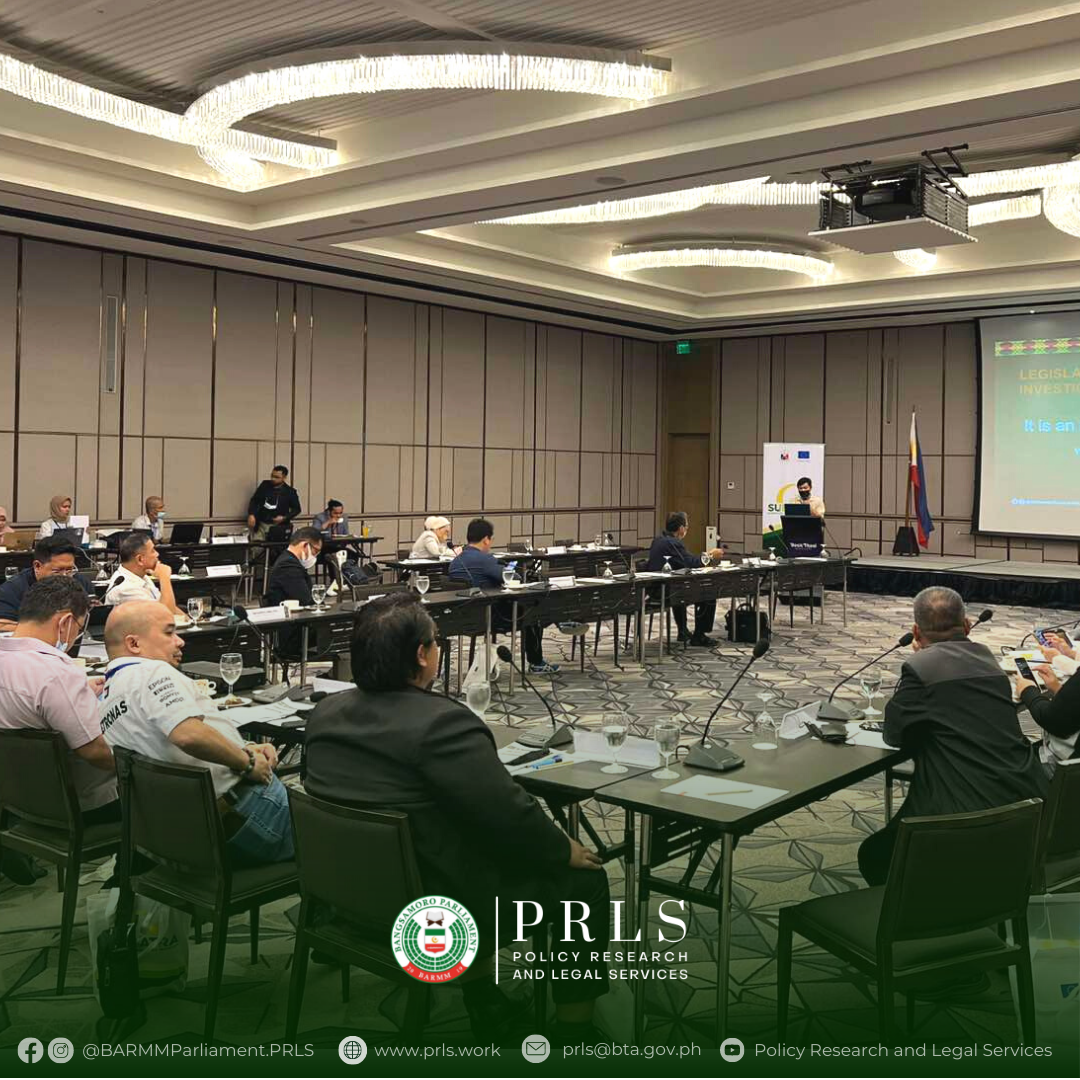
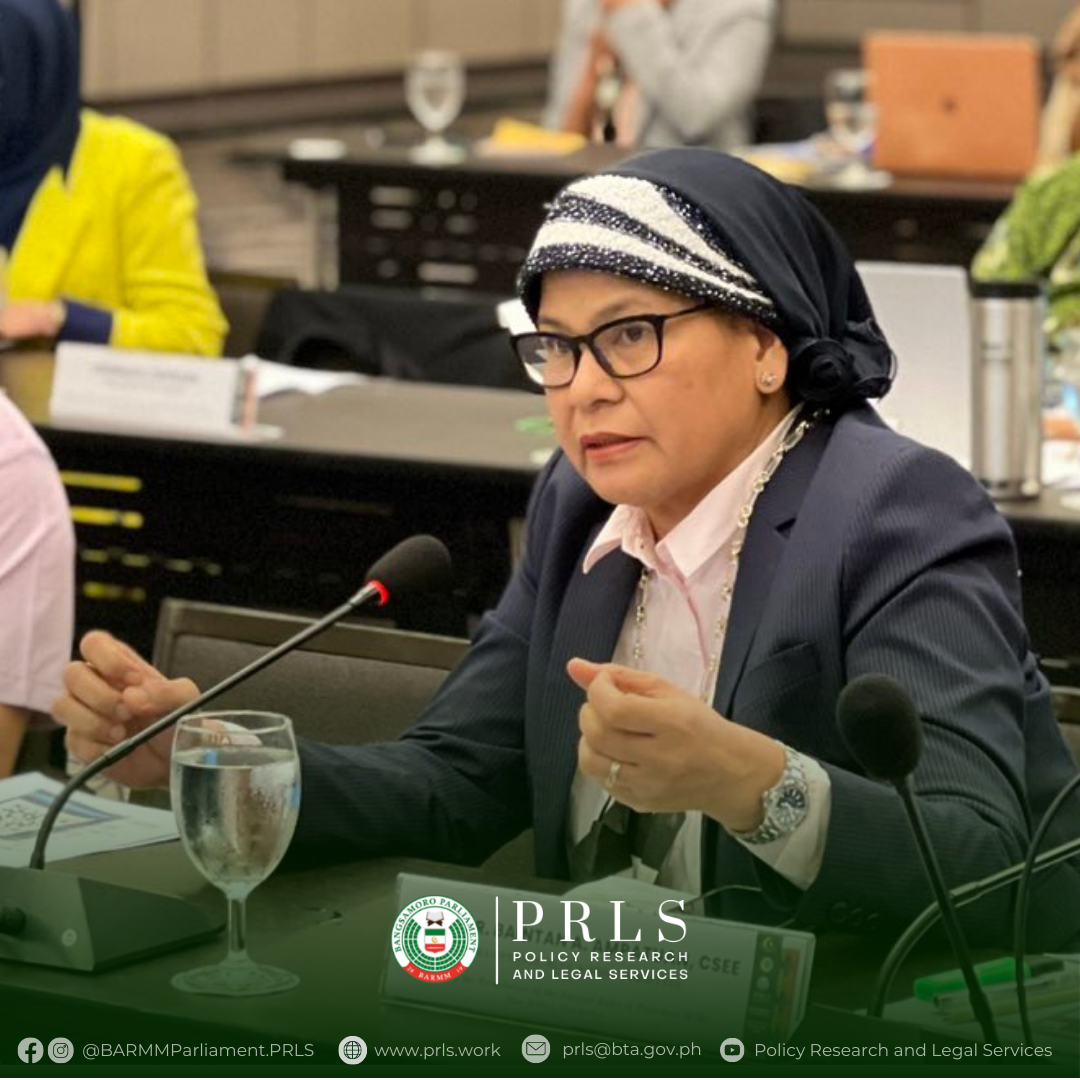
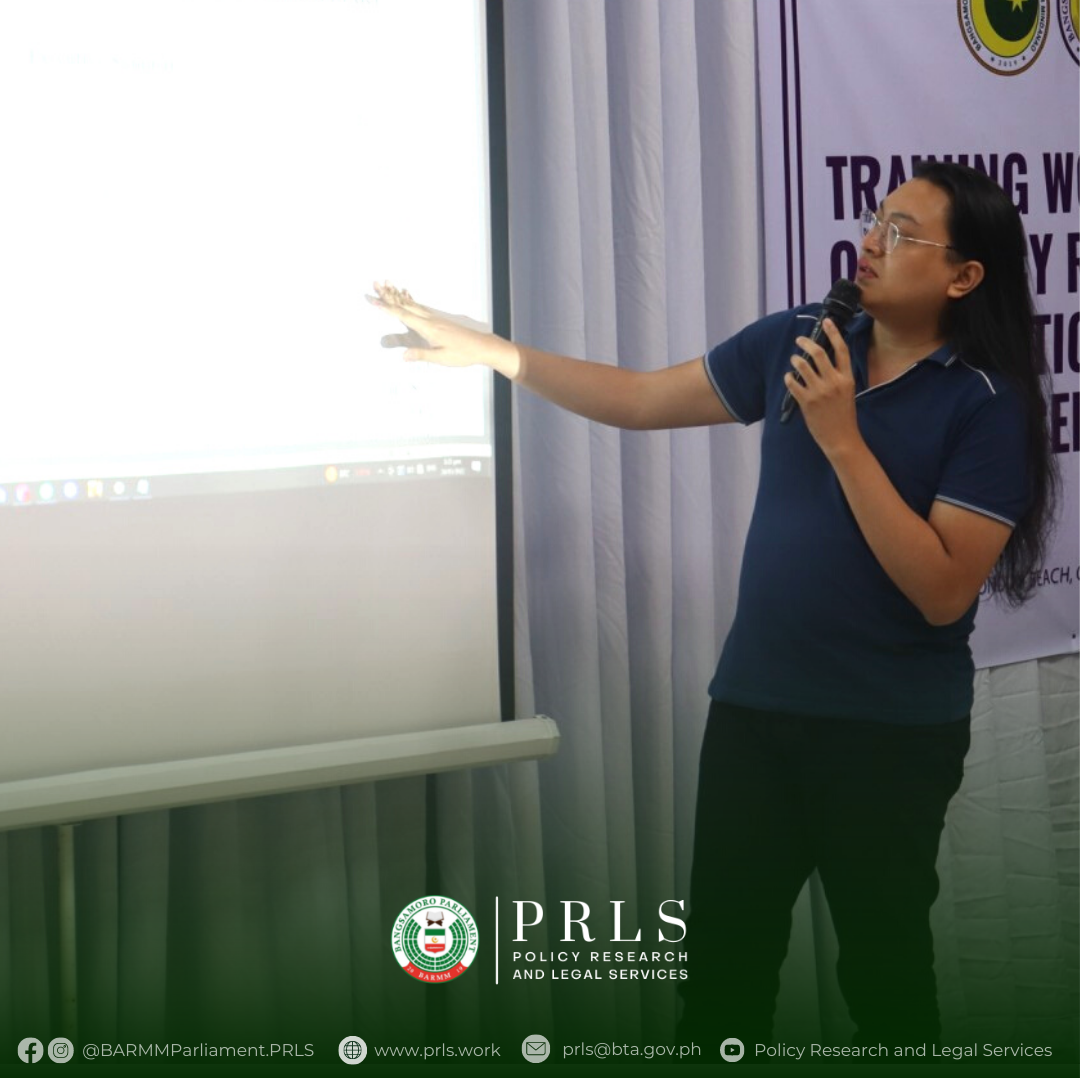
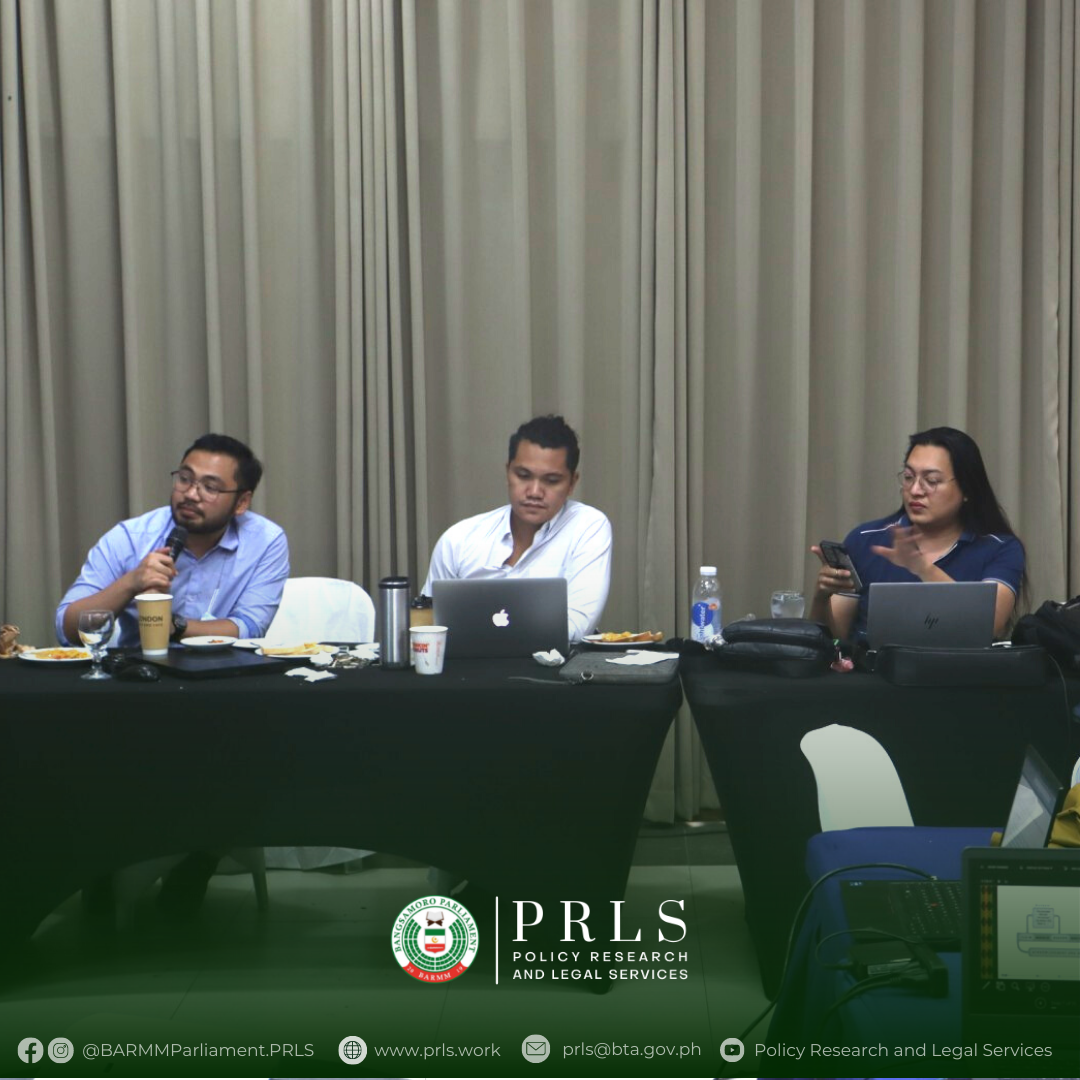
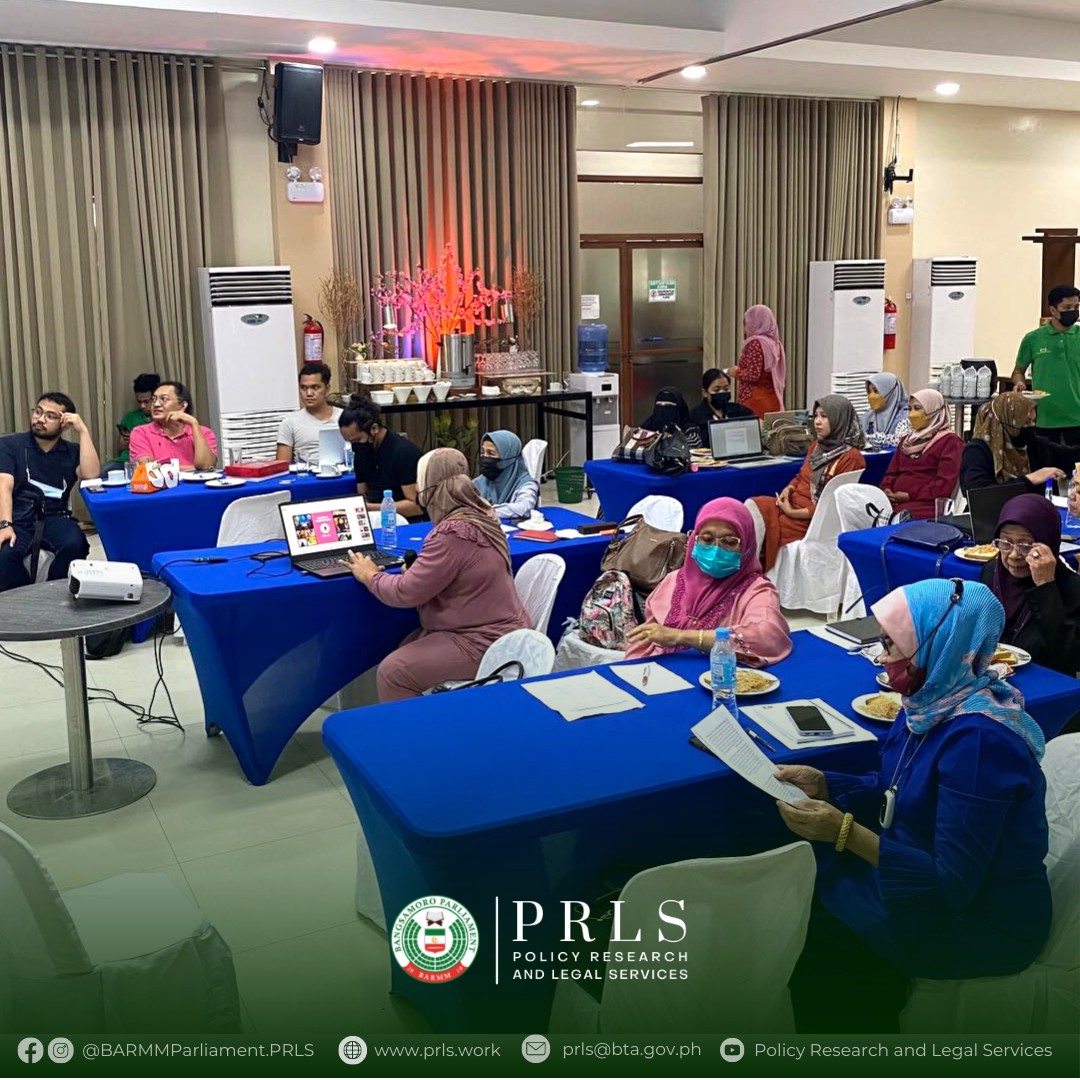
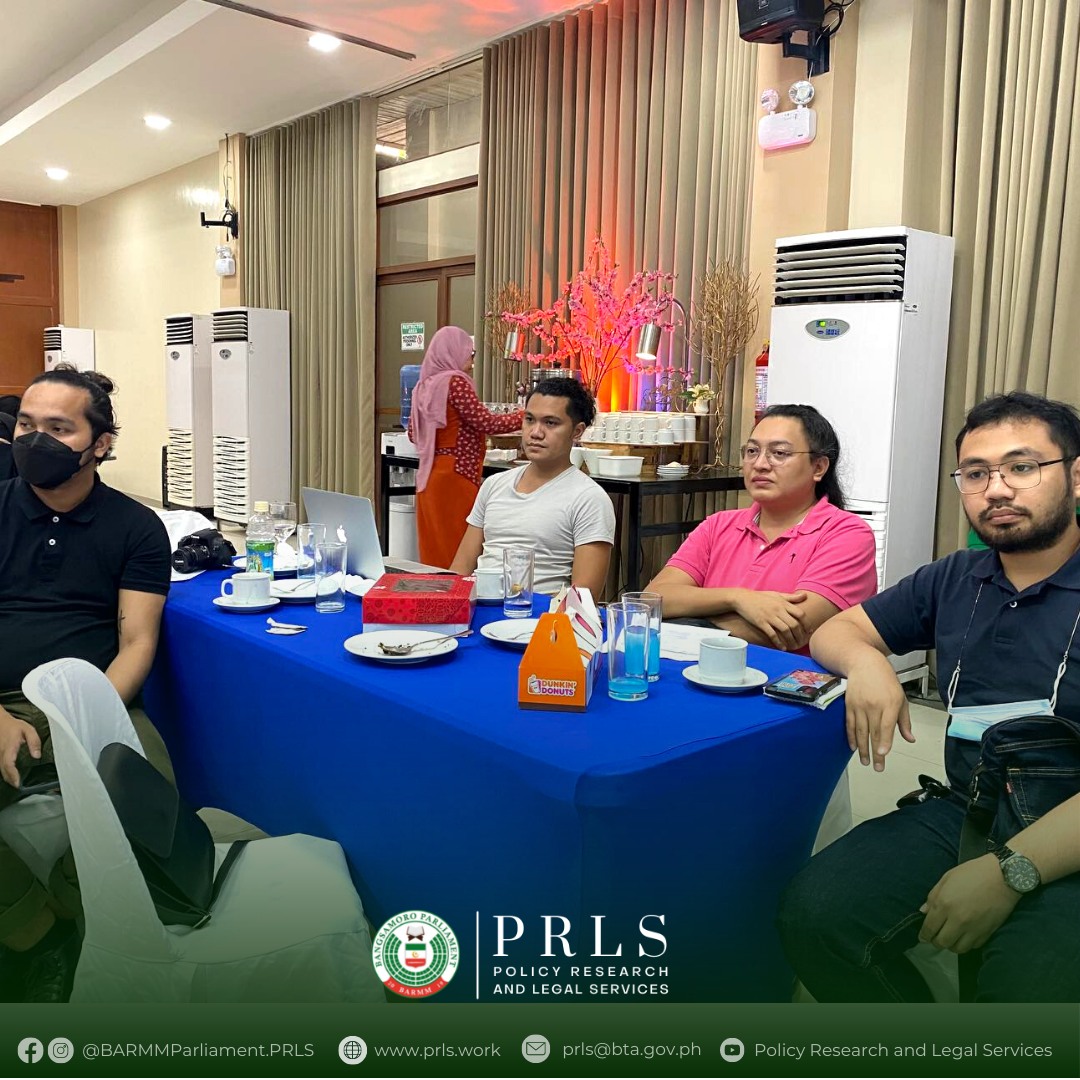
Upon the invitation of the Office of the Majority Floor Leader, the Policy Research and Legal Services (PRLS) participated in the two-day workshop on the formulation of the internal rules of procedures of the Blue Ribbon Committee from June 8 to 9, 2022, in Davao City.
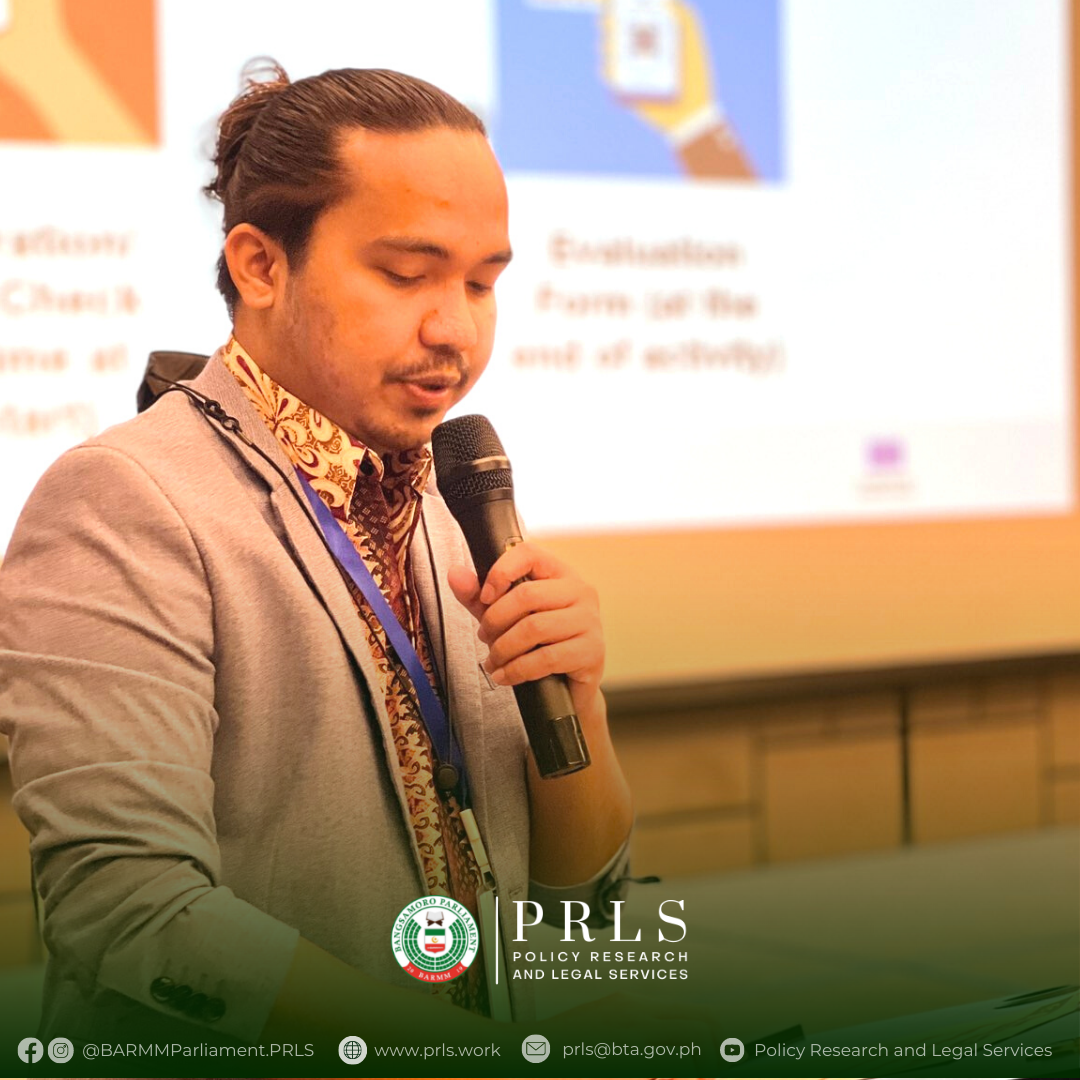
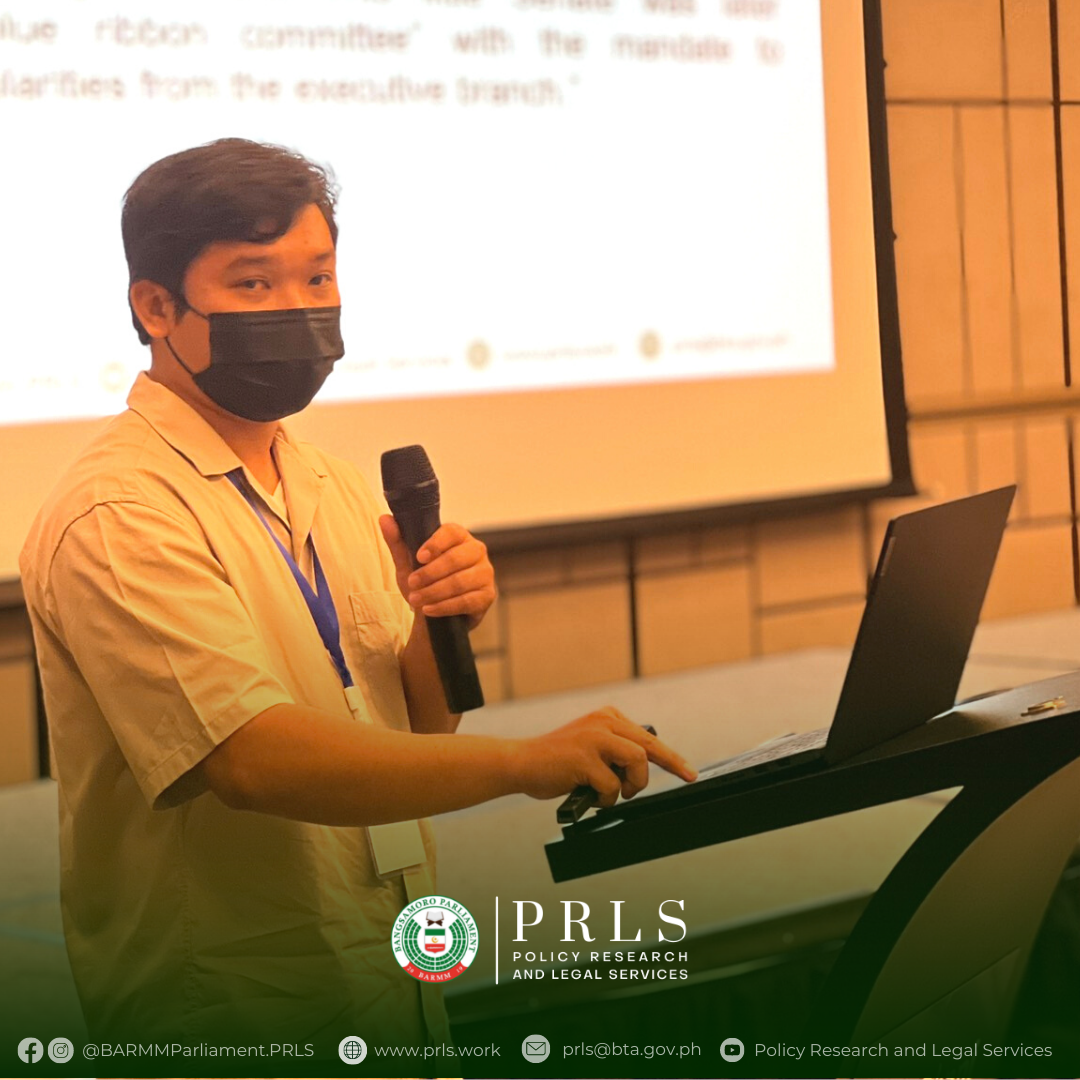
As the workshop commences today, PLRS’ Legislative Research Division (LRD) Chief Mr. Vincent Casil discussed data and analysis on Parliamentary Public Petitions Committee, while Atty. Rafsanjani Baraguir, Administrative Assistant VI of the Legislative Measures and Legal Assistance Division (LMLAD), shared a presentation on the data and analysis on Presidential Blue Ribbon Committee. Also, LMLAD Head Atty. Hisham Nazz Biruar served as the moderator during the open forum on structuring the outline of the committee’s internal rules of procedures.
Eighteen members of the Parliament joined the discussion on refining the outline. According to them, the internal rules of procedures of the Committee on Good Government, Accountability of Public Officers and Investigation, otherwise known as the Blue Ribbon Committee, helps realize the body’s duty to hold public officials accountable and prevent misconduct in the government service. The workshop will continue tomorrow morning.
The Bangsamoro Autonomous Region in Muslim Mindanao (BARMM) was recorded as the second-fastest-growing region in the country, with 7.5% Gross Regional Domestic Product (GRDP) growth in 2021. Accompanied by this economic growth is the reduction of the proportion of poor families from 55.9% in 2018 to 39.4% in 2021.
However, this significant economic improvement at the regional level does not translate to the provincial level which poses a challenge in expanding and making the growth inclusive in all areas of BARMM. This paper looks into the poverty profile of the BARMM provinces to provide valuable insights and policy recommendations that could help alleviate the poor families in the next succeeding years.
Click the download button to access the full paper.
The Ministry of Health BARMM (MOH-BARMM) has formed partnership with the Policy Research and Legal Services (PRLS) of the BTA Parliament for mentoring their research proponents on health research which took off last March 22-25, 2022, at the Grand Summit Hotel, General Santos City.
Research mentoring is part of the service deliverables of the PRLS under Legislative Workshops. The main objective of the formed partnership with the MOH-BARMM is to help the proponents in coming up with health research proposals and guide them throughout the implementation of their research.
Five health research studies were proposed during the program. The proposed titles, the researchers, and their respective PRLS mentors are presented below
1. How to make Epidemiology and Surveillance Units Functional in BARMM
Researchers: Ms. Katherine Gay G. Villanueva and Ms. Zenaida K. Pandita
Mentor: Mr. Nashrolah S. Langco, Legislative Staff Officer, PRLS Office of the Service Director
2. Respiratory Therapist Job Perceptions: The Impact of Protocol Use in Amai Pakpak and CRMC
Researchers: Dr. Mohammad Candao and Ms. Shymalyn Guialel
Mentor: Mr. Mc Erschad D. Pabillan, Legislative Staff Officer, PRLS Legislative Research Division
3. Factors affecting why pregnant mothers opt for home delivery over Rural Health Unit Facility in the Island of Tawi-Tawi
Researchers: Ms. Michelle F. Lu and Ms. Bai Hazrat Fatima Biruar
Mentor: Ms. Anisah U. Lingga, Legislative Staff Officer, PRLS Legislative Measures and Legal Assistance Division
4. Factors Affecting the Hesitancy and Uptake of COVID 19 Vaccines in BARMM, Philippines
Researchers: Dr. Nihaya P. Macasindil and Ms. Lilian P. Macadupang
Mentor: Mr. Kebart P. Licayan, Legislative Staff Officer, PRLS Legislative Research Division
5. Health Literacy Assessment in the Province of Basilan: A cross-sectional survey using the Health Literacy Questionnaire (HLQ)
Researchers: Ms. Nasiba Masuhul and Mr. Eldhi Francis B. Alibangbang
Mentor: Mr. Vincent L. Casil, Chief, PRLS Legislative Research Division
As stated in PRLS Training Design for Mentorship, the PRLS mentors’ responsibilities extend well beyond helping novice researchers (NR) learn what is entailed in the research and writing components of the research mentoring program. PRLS mentors also incorporate NR into the culture of the discipline, clarifying and reinforcing—principally by example—what is expected of a professional scholar.
Moreover, a research board was formed consisting of Ms. Lilian P. Macadupang, head of the Research and Development Unit of MOH-BARMM; PRLS director Nassef M. Adiong; and Mr. Vincent L. Casil. The board acts as the panelist during the presentation of the research proposals of the proponents.
The revised proposals shall be presented by the proponents to MOH to request for funding. As of writing, the proponents and their mentors continue to keep in touch to give updates on their research.
The Policy Research and Legal Services (PRLS) held a Grand Iftar on April 19 in observance of Ramadan. Ramadan is the holiest month of the year in Islamic culture. For Muslims, it’s a time for spiritual reflection and growth; it’s also the perfect opportunity to help those in need and spend more time with friends and families. The sacred month of Ramadan is practiced by fasting from food and water and abstaining from committing evil deeds from the start of dawn to sunset every day.
Iftar marks the end of each day’s fast and often celebrates and brings together the community. Ramadan also emphasizes a renewed commitment to generosity and charity, and iftar is connected to those values as well. Providing food for others to break their fast is considered an important part of the observance. As part of the event, the dinner also serves as a celebration and thanksgiving for its newly appointed staff. The gathering also welcomes the new employees of PRLS and congratulates the Service’s new lawyers who have recently passed the Bar examination 2020-2021








 Nassef Manabilang Adiong, PhD
You must be logged in to post a comment.