
 143-word bionote:
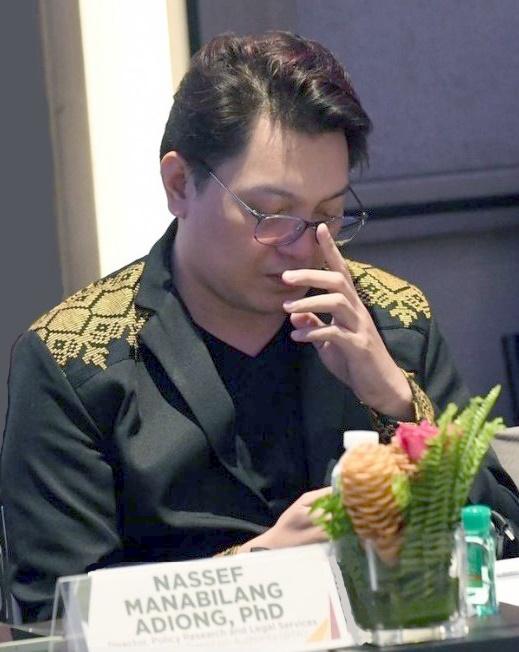
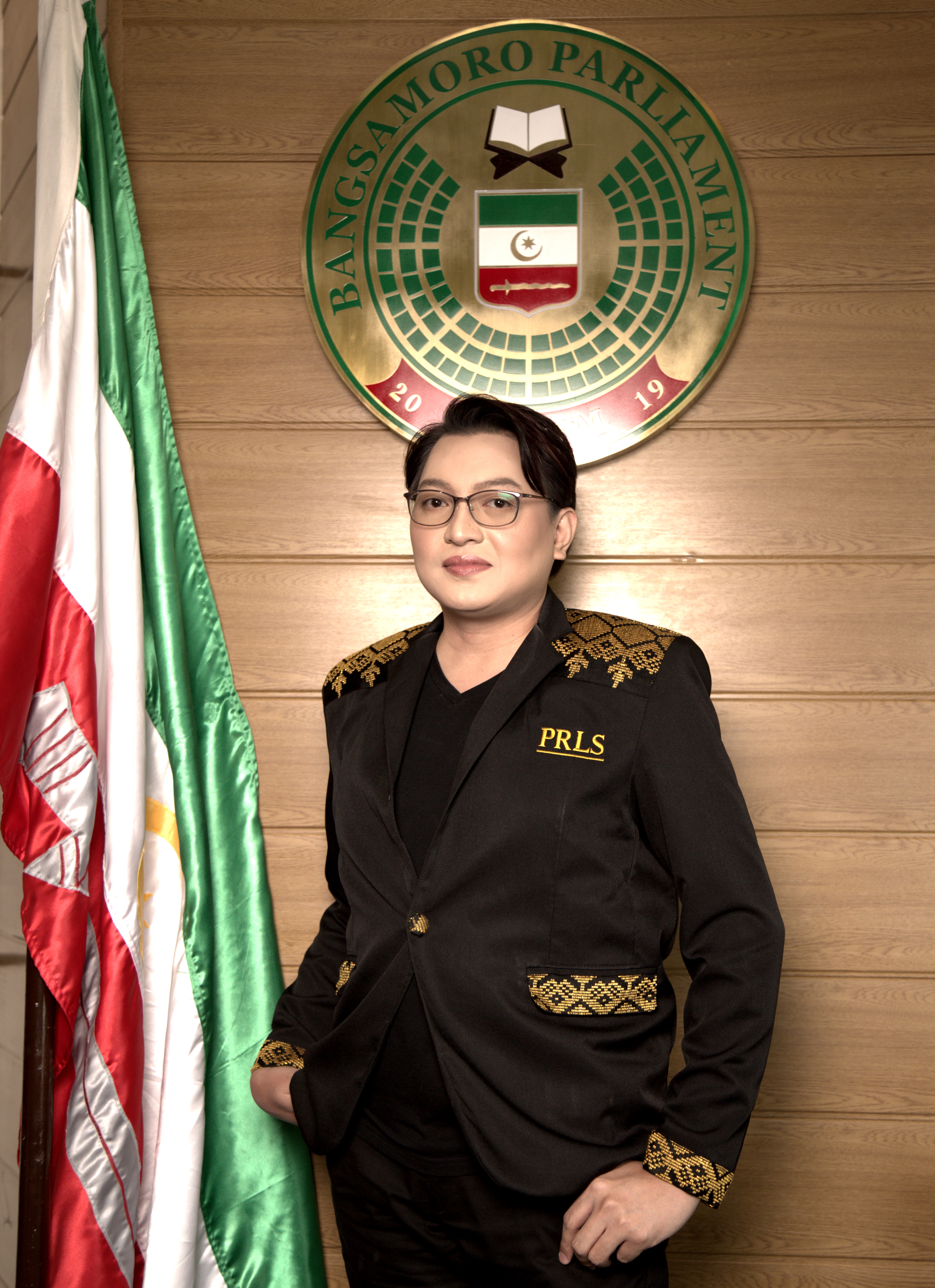
“Nassef Manabilang Adiong serves as head of a policy research office within the Bangsamoro regional government and is the founder of four academic networks, including the Philippine International Studies Organization (PHISO). His work addresses policy issues affecting Bangsamoro society while advancing decolonial knowledge production from the Global South and promoting interdisciplinary engagement between Islam and International Relations. Since 2012, he has established one academic journal and five book series, alongside a substantial body of edited books, journal articles, policy papers, book chapters, discussion papers, encyclopedic essays, and reference entries. Dr Adiong has received at least twenty-three distinctions, including the Noam Chomsky Global Connections Emerging Scholar Award, two legislative resolutions of commendation from the Philippine Senate and the Bangsamoro Parliament, the UP Scientist conferment, the UP Centennial Professorial Chair Award, the Outstanding Young Men and Women (TOYM) honor, and the PUP Professorial Chairholder Award.”

An Evaluative Profile of Dr Nassef Manabilang Adiong
Dr Nassef Manabilang Adiong presents a substantial and distinctive professional profile whose significance rests not merely on the accumulation of achievements, but on the coherence and consequence of his scholarly, institutional, and policy-oriented work. His record brings together academic production, public service, editorial leadership, and field-building in ways that merit evaluation as an integrated professional trajectory. Across International Relations, Islam, decolonial thought, and Bangsamoro governance, his work reflects a sustained effort to connect intellectual inquiry with institutional reform and public accountability. The central feature of this profile is Dr Adiong’s ability to move between academic inquiry and the practical demands of governance without treating these domains as separate or unrelated. As a scholar with a substantial body of books, journal articles, policy papers, and invited lectures, and as a senior public servant positioned within legislative and institutional processes, he occupies a comparatively rare scholar-practitioner role. The strength of this position lies in its capacity to translate theoretical work into public policy; its corresponding challenge lies in ensuring that critical scholarship remains analytically rigorous while also becoming politically viable, administratively feasible, and institutionally sustainable.
Academic Leadership and Public Service
The first major dimension of this scholar-practitioner profile is Dr Adiong’s movement into senior institutional and policy leadership within the Bangsamoro government while maintaining an active academic and publishing presence. Since 2021, he has served as the tenured Director of Policy Research and Legal Services in the Bangsamoro Transition Authority, with reappointment under the Bangsamoro Parliament in 2025. He has also held roles in key BARMM governance bodies, including the Bangsamoro Research and Development Council (BRDC) and the Bangsamoro Parliament’s Project Management Team. This government-facing leadership is reinforced by his advisory and consultancy work with institutions such as the National Security Council, the Department of Health, the Institute for Autonomy and Governance, the Institute of Bangsamoro Studies, Australia’s DFAT Palladium Education Pathways to Peace in Mindanao, the European Union’s SUBATRA, the Development Academy of the Philippines, and the Armed Forces of the Philippines Civil Relations Service. Collectively, these roles reflect sustained engagement with governance, security, education, and policy design rather than narrow academic specialization. Taken together, these roles indicate that Dr Adiong operates at the intersection of state-building, research infrastructure, legislative support, and public intellectual life in the Bangsamoro region and beyond. The breadth of this engagement is a major strength, although it also raises the evaluative question of how far institutional influence can be sustained amid the political and administrative constraints of a transitional autonomous government.
Institution-Building and Network Creation
This institutional orientation is also evident in his role as a founder and builder of organizations, rather than merely a participant in existing structures. He has established or helped lead intellectual and professional platforms such as the Philippine International Studies Organization (PHISO), the Decolonial Studies Research Network (DSRN), the Bangsamoro Research and Legal Network (BRLN), the UP CIDS Decolonial Studies Program, and the International Relations and Islamic Studies Research Cohort (Co-IRIS). This record reflects more than a list of positions; it presents him as a builder of fields and scholarly conversations. That impression is reinforced by his elected roles in the International Studies Association’s Asia-Pacific Region, the World International Studies Committee, and the ISA Global South Caucus. These activities demonstrate influence through network-building, conference convening, editorial leadership, and intellectual agenda-setting, particularly in non-Western and decolonial International Studies. From an evaluative standpoint, their significance lies in expanding the institutional spaces through which scholars from the Global South can shape disciplinary debates, though the durability of such influence depends on whether these networks remain active beyond individual leadership.
Influence, Legitimacy, and Policy Leverage
- Intellectual networks: Dr Adiong’s connections with Philippine and international academic communities—including universities, think tanks, and research networks—strengthen his ability to bring comparative and theoretical insights into the Bangsamoro context. These networks also allow him to position Bangsamoro experiences within wider debates on autonomy, post-conflict governance, Islamic thought, and Global South knowledge production, thereby expanding the intellectual visibility of Moro perspectives beyond local and national arenas.
- Policy instruments: Through legislative drafting, planning frameworks, and committee advisory work, Dr Adiong exercises direct influence over institutional design and reform implementation. His leverage is especially visible in areas such as autonomy implementation, data governance, and research infrastructure, where technical policy tools can shape how Bangsamoro institutions define priorities, allocate resources, and measure progress.
- Public legitimacy: Recognition through awards, professorial appointments, policy engagement, and public-facing scholarship strengthens Dr Adiong’s credibility among local communities, national institutions, and international partners. This legitimacy is important because reform in the Bangsamoro depends not only on technical expertise but also on trust, symbolic authority, and the ability to build support across academic, civic, governmental, and community-based audiences.
Core Intellectual Agenda
The institutional and policy dimensions of Dr Adiong’s work are anchored in a coherent intellectual agenda. His scholarship is distinguished by the consistency of its focus and the significance of its contribution to conversations on Islam and International Relations, non-Western and decolonial knowledge production, and Bangsamoro political thought and policy. Rather than appearing as separate interests, these themes converge around recurring questions that link theory, governance, and public purpose:
- how Islam relates to international relations theory;
- how Muslim political thought intersects with sovereignty, territoriality, and governance;
- how decolonial approaches can reshape international studies and legislation;
- how these theoretical issues play out concretely in the Bangsamoro context.
This coherence is especially evident in the trajectory of his books and edited volumes. Titles such as International Relations and Islam: Diverse Perspectives, Islam and International Relations: Contributions to Theory and Practice, The Contemporary World, Islam in International Relations: Politics and Paradigms, and International Studies in the Philippines: Mapping New Frontiers in Theory and Practice reflect both subject-matter depth and field-building ambition. The 2022 Philippine edition of the latter, which included a new foreword, translation, a COVID-19 essay, and a chapter on the West Philippine Sea, also suggests a sustained effort to localize and expand international studies discourse for Philippine audiences. The book was also a finalist for the 41st National Book Awards in Social Science. His work on Islam and International Relations, non-Western theory, and international studies in the Philippines reflects both intellectual depth and a sustained commitment to shaping these fields. At the level of articles and chapters, recurring themes include Muslim governance, Salafi orthodoxy in the Bangsamoro, decolonizing religion, decolonial legislation, Indigenous peoples’ rights, decentralization, and gender-responsive climate security. The scholarship is therefore conceptually focused and consistently attentive to questions of public significance. A critical strength of this body of work is that it resists treating theory and policy as separate domains; however, its impact ultimately depends on whether its conceptual interventions are taken up by wider scholarly communities and translated into durable institutional practice.
Scholarly Vision, Decolonial Method, and Public Purpose
- Decolonial and region-centered scholarship: Dr Adiong’s scholarship foregrounds knowledge production from the Global South, with particular attention to the Bangsamoro as a source of theoretical insight rather than merely a field of policy application. By drawing on local histories, Islamic intellectual traditions, and the lived realities of insurgency, autonomy, and post-conflict governance, his work challenges dominant categories in International Relations (IR) and repositions Moro experience as a basis for conceptual innovation.
- Interdisciplinary method: His work brings together International Relations, Islamic studies, and public policy to move across scholarly critique and institutional practice. This interdisciplinary method enables him to translate complex theoretical concerns into legislative drafting, governance design, and policy advice while also requiring careful negotiation between intellectual depth, administrative feasibility, and political pragmatism.
- Normative commitments: His scholarship and public service are anchored in a commitment to autonomy, pluralism, and reparative justice for historically marginalized Moro communities. These commitments shape both the analytical questions he pursues as a scholar and the institutional reforms he advances as a policy actor, linking intellectual work to broader struggles over recognition, representation, and self-governance.
Policy Relevance and Applied Research
This intellectual agenda becomes especially significant when viewed through Dr Adiong’s applied research portfolio, which demonstrates a sustained emphasis on funded, policy-oriented work closely tied to public issues in BARMM. His commissioned projects address the UNESCO Memory of the World inscription for the Peace Accords between the Philippines and the Bangsamoro, gender-responsive and conflict-sensitive climate security mechanisms, climate adaptation strategies, madrasah education policy, Muslim governance and Salafi orthodoxy, and Islamic approaches to International Relations. Several of these projects have been supported by substantial grants, including a policy analysis grant of more than PHP 1 million on madrasah education. This demonstrates both institutional trust and practical relevance, although the evaluative measure of such work lies in the extent to which research outputs shape implementation, public accountability, and measurable policy outcomes. This practical orientation extends into his professional service. He has reviewed legislation concerning amendments to the National Commission on Muslim Filipinos (NCMF) Act, the proposed Bangsamoro Gender and Development (GAD) Code, the Lake Lanao Development Act, the Bangsamoro Economic Zone Authority (BEZA) Act, and the Indigenous Peoples’ Rights Act (IPRA) for a Senate committee. These roles demonstrate direct involvement in shaping policy instruments rather than commenting on them from a distance. Recurring themes such as moral governance, policy development, legislative drafting, gender-responsive legislation, local governance, peacebuilding, and research-to-policy translation underscore a consistent pattern: his work translates scholarly expertise into legislative and administrative practice.
Institutional Influence and Policy Leadership
- Bridge between scholarship and statecraft: As a policy researcher and adviser within Bangsamoro institutions, Dr Adiong translates critical scholarship into practical laws, governance frameworks, and capacity-building initiatives. His role is not limited to applying academic ideas to policy; it also involves adapting theoretical insights to the cultural, social, and political realities of autonomous governance. In this sense, he helps convert scholarly critique into institutional practice.
- Agenda-setting influence: Through formal research and policy advisory roles, he contributes to defining legislative priorities in areas such as data systems, institutional research, and policy infrastructure. His influence is structural because it shapes what counts as evidence, which indicators guide decision-making, and which development problems are elevated as matters of public concern. This agenda-setting role allows him to affect not only individual policy outputs but also the broader terms through which Bangsamoro governance is understood and evaluated.
- Institutional builder: By founding and co-founding research networks, academic initiatives, and advisory councils, he strengthens the local knowledge ecosystem needed for self-governance. These efforts reduce dependence on external expertise, cultivate Moro scholarly and professional capacity, and create more durable channels through which research can inform lawmaking and public administration. His institution-building work therefore contributes to both intellectual autonomy and practical governance capacity within the Bangsamoro.
Editorial and Publishing Influence
The same field-building logic is visible in Dr Adiong’s editorial work, which is significant not only because of its breadth but because it places him in positions that help shape the direction of scholarly production. His service as founding chief editor of several book series and a journal—including the Islam and Global Studies and Islam in Southeast Asia series with Palgrave Macmillan/Springer, the International Relations in Southeast Asia series with Routledge, and the International Journal of Islam in Asia with Brill—indicates a capacity to influence which questions, regions, and theoretical approaches gain visibility in international academic publishing. These roles also reflect a high degree of professional trust. His service as a reviewer and editorial-board member for journals and publishers such as Oxford University Press, Cambridge University Press, SAGE, Routledge, and Palgrave Macmillan/Springer suggests that he contributes not merely as an individual scholar but as a gatekeeper and curator of wider debates in international studies, religion, and related fields. From a critical standpoint, the value of this influence depends on whether it expands intellectual diversity and supports sustained scholarly participation from underrepresented regions, rather than simply reproducing existing hierarchies of academic prestige.
Teaching and Mentorship
Dr Adiong’s teaching record extends this broader institutional and intellectual contribution into the classroom. His experience as a professorial lecturer and associate professor across major Philippine institutions—including UP Diliman, PUP Manila, Miriam College, MSU-IIT, San Beda University, the Development Academy of the Philippines, and FEU—shows an ability to bring specialized scholarship into diverse educational settings. The fact that he was also offered, but declined, a post at Universiti Brunei Darussalam further indicates that his academic profile has attracted regional recognition beyond the Philippines. The evaluative significance of this teaching portfolio lies in its range and public relevance. Courses in global and regional governance, policy analysis, research methodology, local government, Philippine foreign policy, topics on sustainable development, Asia-Pacific security, post-conflict reconstruction, Muslim governance, Islamic political thought, the history of Islam, interreligious relations in the Philippines, Turkish culture, Islam in Europe, and the Philippines in the Global South suggest a pedagogical agenda that bridges theory, area studies, governance, and public policy. This breadth is a strength because it allows students to approach political and religious questions through comparative, historical, and policy-oriented lenses. At the same time, the breadth of the portfolio invites an evaluative question about depth, continuity, and institutionalization: its long-term value depends on whether these courses and supervision practices help develop sustained scholarly capacity in fields that remain underrepresented in Philippine and Bangsamoro academic institutions.
Education and International Formation
The comparative reach of this teaching and scholarship is grounded in Dr Adiong’s formal academic formation. His training culminated in a PhD in International Relations from Middle East Technical University in Ankara, following a Master’s degree in International Studies from UP Diliman and a BA in International Studies from the University of the East. This trajectory situates him within both Philippine and international academic traditions, allowing his later scholarship to move between local political concerns and broader debates in International Relations. His scholastic record also shows extensive international academic exposure through certificates, fellowships, summer schools, grants, and scholarships in Turkey, the United Kingdom, Germany, Greece, Switzerland, Denmark, the United States, Malaysia, Russia, and elsewhere. Of particular note are the Chevening Fellowship at the Oxford Centre for Islamic Studies, the SUSI fellowship on religious pluralism at Temple University, and long-term Turkish and Erasmus-related support during doctoral study. These experiences strengthen the comparative scope of his work, although their intellectual value ultimately depends on how effectively international exposure is translated into locally grounded analysis rather than cosmopolitan credentialing alone. This formation helps explain the comparative and transregional dimensions of his scholarship, particularly his sustained engagement with Middle Eastern and Southeast Asian Islamicate contexts. Its importance lies in enabling him to connect Bangsamoro questions to wider debates without reducing them to external models. The critical test of this formation is whether it supports grounded theoretical production from the Bangsamoro and the Philippines, rather than merely applying frameworks generated elsewhere.
Recognition, Public Engagement, and Professional Standing
The record of honors and recognitions further supports the strength of Dr Adiong’s professional standing, but its evaluative importance lies in what these distinctions indicate about broader impact. Awards such as UP Scientist III, the A. Noam Chomsky Global Connections Award, the UP Centennial Professorial Chair Award, and other national recognitions in international relations suggest that his work has been acknowledged by both academic and public institutions. Together with his invited lectures, keynote addresses, and extensive conference participation, these distinctions reinforce his credibility and visibility. However, recognition should be treated as evidence of influence rather than as a substitute for assessing the substance, durability, and public effects of his scholarly and policy contributions. These strands—scholarly production, editorial leadership, institution-building, teaching, and direct policy engagement—therefore form a mutually reinforcing profile rather than a loose collection of accomplishments. Particularly notable is the degree to which Dr Adiong’s scholarship is institutionally relevant and demonstrably connected to public and policy concerns. At the same time, a balanced evaluation should note that the long-term significance of this profile will depend less on the number of roles held or recognitions received than on the durability of the institutions, networks, and policy frameworks that emerge from this work.
Structural Constraints and Strategic Tradeoffs
- Scholar-practitioner tradeoffs: Translating critical, decolonial scholarship into politically workable policy requires sustained negotiation, selective framing, and strategic compromise. Ideas that challenge dominant institutional assumptions must often be articulated in terms that can secure support from national government agencies, local political elites, civil society organizations, and international partners. This creates an enduring tension between preserving the transformative ambition of reform and ensuring that proposals remain administratively feasible, legally defensible, and politically acceptable.
- Political economy constraints: Bangsamoro reform operates within a political economy shaped by limited fiscal resources, patronage networks, uneven institutional capacity, and competing elite interests. Even well-crafted policy frameworks can lose force when implementation depends on under-resourced agencies, fragmented coordination, or political actors with incentives to preserve existing power arrangements. These constraints show that reform is not simply a technical exercise in drafting better rules, but a political process of building coalitions, aligning incentives, and sustaining institutional commitment over time.
- Legitimacy across different audiences: Academic recognition and policy expertise do not automatically produce legitimacy among grassroots communities, local leaders, or constituencies directly affected by reform. At the same time, participation in legislative, advisory, and institutional roles can expose scholars to political scrutiny, raising questions about independence, representation, and accountability. Sustaining credibility therefore requires the capacity to move across academic, civic, and governmental spaces while remaining attentive to community concerns and avoiding the appearance of capture by formal power structures.
- Security and political volatility: Reform work in a post-conflict autonomous region is shaped by fluctuating security conditions, fragile institutional settlements, and shifting national-local political alignments. Policy windows may open rapidly after breakthroughs in peacebuilding or governance, but they can also close when security incidents, leadership transitions, or changing national priorities redirect attention and resources. Reform initiatives therefore need enough flexibility to withstand uncertainty while still advancing the longer-term goal of institutional transformation.
Long-Term Institutional and Intellectual Impact
- Knowledge infrastructure: By helping institutionalize research bodies, policy units, and evidence-based advisory mechanisms, Dr Adiong contributes to governance capacities that can endure beyond individual administrations. These institutions shape not only how policy questions are studied, but also how future debates on Bangsamoro autonomy, development, and public accountability are framed.
- Epistemic shift: His promotion of decolonial and Moro-centered frameworks can gradually influence curricula, research agendas, and policy norms in Philippine International Relations, Islamic studies, and regional governance scholarship. Over time, this may help reposition Bangsamoro knowledge as a source of theory and policy innovation rather than merely as an object of study.
- Policy precedents: Practical models developed in the Bangsamoro—such as data governance systems, participatory planning processes, and policy drafting for autonomy—could become reference points for other autonomous regions and post-conflict transitions. Their long-term significance lies in demonstrating how locally grounded institutions can translate historical grievances into workable governance arrangements.
In conclusion, the significance of Dr Adiong’s work is best assessed not by the accumulation of appointments, publications, or recognitions alone, but by the extent to which these achievements contribute to lasting intellectual infrastructure, substantive institutional reform, and accountable governance. His scholarly and policy interventions are most consequential where they help create durable research networks, strengthen policy and administrative capacities, and expand the terms through which Bangsamoro autonomy is understood, debated, and implemented. At the same time, a critical evaluation must recognize that such contributions remain contingent on implementation capacity, political continuity, public trust, and the ability of institutions to outlast individual leadership. His long-term legacy will therefore depend on whether the frameworks, networks, and policy instruments associated with his work become embedded in accountable public practice rather than remaining dependent on personal influence, symbolic recognition, or episodic reform efforts.
Commendations
“Having worked closely under his leadership in the Policy Research and Legal Services (PRLS) of the Bangsamoro Parliament, I witnessed Dr. Adiong’s exceptional ability as an academic leader and institution-builder. He combines intellectual vision with practical execution, building strong systems, teams, and a research culture. Under his directorship, PRLS became a credible policy research institution supporting legislation, governance reform, and evidence-based policymaking in the Bangsamoro government. Dr. Adiong also encouraged innovation, critical thinking, and collaboration, while strengthening staff development and expanding the office’s academic and policy networks. His leadership consistently bridged academia, policymaking, and community engagement through scholarship, public service, and social relevance.” – Chief Vincent L. Casil, Supervising Legislative Staff Officer II, Bangsamoro Parliament’s PRLS Legislative Research Division
“Dr. Adiong is a distinguished scholar and institution-builder with recognized expertise in Global South international relations, decolonial studies, and Islamic political thought. His strong publication record, leadership in international research networks, and editorial roles reflect both academic depth and global engagement. He has also shown exceptional ability to translate scholarship into policy impact, lead complex initiatives, and build sustainable academic communities. I saw these strengths firsthand in a UNESCO-affiliated project under the International Centre for Documentary Heritage in South Korea, where he led stakeholder consultations and the drafting of nomination materials. His leadership was instrumental in the successful submission that led to the inscription of the Peace Agreements between the Government of the Philippines and the Bangsamoro in the Memory of the World National Register—a significant contribution to documentary preservation, peacebuilding, and international cooperation.” – Dr. Junsu Seo, Senior Programme Specialist at UNESCO International Centre for Documentary Heritage & Researcher at the Center for Southeast Asian Studies, Hankuk University of Foreign Studies
“Dr. Adiong is a leading Global South scholar of International Relations in Southeast Asia. His work in international relations, Islamic political thought, decolonial theory, governance, and Bangsamoro studies reflects intellectual rigor, methodological range, and a sustained commitment to Global South perspectives. His strong publication record has earned international recognition and positioned him as an important voice in the decoloniality of IR. In his parliamentary role, he applies scholarly insight to legislation, institutional design, and capacity-building. He is also a dedicated teacher, with strong evaluations across leading institutions and a consistent record of mentoring students from underrepresented backgrounds.” – Dr. Melanie Reyes, former Chairperson of Miriam College’s Department of International Studies, Executive Director of Women and Gender Institute, and President of Women’s and Gender Studies Association of the Philippines
“Dr. Adiong has built a distinguished body of work grounded in sustained engagement with the Global South, particularly Southwest and Southeast Asia. His scholarship has advanced decolonial approaches in International Relations, especially in theorizing Islam, pluriversalism, and worlding, while shaping a clear intellectual agenda. He has also turned these commitments into lasting institutional impact through program development, curriculum design, and the creation of scholarly platforms, including the University of the Philippines’ Decolonial Studies Program and PHISO. Beyond academe, he has worked effectively across academic and policy spheres, including public service in BARMM, where he bridged theory and practice with inclusive and context-sensitive leadership. Nassef leads with calm, patience, and deliberation—qualities that inspire trust and sustain collaboration.” – Dr. Frances Antoinette Cruz, Assistant Professor, Department of European Languages, University of the Philippines Diliman & Deputy Director of the UP Center for Women’s and Gender Studies
“Dr. Adiong’s career has been marked by sustained recognition across institutions, reflecting a body of work that has earned the respect of peers well beyond any single academic home. His scholarship is notable not only for its substance, but also for its contribution to the intellectual and institutional conditions that enable further scholarship. Equally significant is his commitment to teaching and mentorship, grounded in a clear sense of accountability to students and to the broader mission of education. He takes seriously the question of whose knowledge counts and whose experience informs theory. His organizational initiatives likewise deserve emphasis: they reflect not merely administrative competence, but the capacity to identify institutional gaps, build durable structures, and sustain them over time.” – Prof. Lorna Q. Israel, Chair, Miriam College’s Department of International Development, Innovation, and Sustainability
“Dr. Adiong is a scholar of distinguished accomplishment, an accomplished academic administrator, and a proven institution-builder whose career embodies sustained excellence in mission-driven higher education. Over more than two decades, he has demonstrated distinction in teaching, research, curriculum development, and institutional leadership. His interdisciplinary scholarship has earned international recognition, while his work as founding chief editor of five scholarly book series and an international journal reflects both intellectual authority and a profound commitment to advancing knowledge production in underrepresented regions. He has likewise founded four enduring organizations and provided leadership to academic programs across diverse institutional settings. Above all, his work is guided by an unwavering commitment to the Bangsamoro people, to decolonial knowledge production, and to elevating Global South voices within international academic discourse.” – Dr. Rizal G. Buendia, Independent political analyst and consultant in Southeast Asian Politics and Governance based in Wales, UK
“Dr. Adiong combines scholarly distinction with pluralistic intellectual range, inclusive institutional leadership, and a clear sense of mission. His editorial appointments with journals published by Oxford University Press, SAGE, and Brill reflect the strength of his international standing. Beyond the classroom, he has shown exceptional leadership where he leads research that informs legislation and engages government ministries and international institutions. He has also held elected roles in global professional associations as well as founded Philippine-based research networks. These are not ceremonial distinctions, but proof of his capacity to build institutions and lead with purpose. He is also a dedicated teacher and mentor who has advanced decolonial approaches to International Studies and brought Islamic perspectives into mainstream IR discourse, amplifying Global South voices.” – Dr. Rommel A. Curaming, Senior Assistant Professor, History and International Studies, Universiti Brunei Darussalam
“Dr. Adiong is a distinguished scholar whose pioneering work on decolonial methodology and the intersection of International Relations and Islam. A multi-awarded academic and public servant, Dr Adiong has built a strong record of research excellence, with major publications and editorial leadership across Routledge, Palgrave Macmillan, and Brill. He has also shown a strong capacity to teach, mentor, and build academic programmes across institutions. His work has earned major recognition, including designation as UP Scientist III, TOYM honors in International Relations, and formal commendation from the Bangsamoro Parliament. Dr. Adiong is an exceptional scholar of rigor, range, and public impact.” – Atty. Archill Niña F. Capistrano, Assistant Professor for Political Science, University of the Philippines Cebu
“Dr. Adiong’s work is distinguished by rigor, integrity, and intellectual clarity. Bringing a strong Global South perspective to International Relations, he challenges mainstream frameworks by centering overlooked voices, including indigenous traditions. His scholarship is analytically sharp, historically grounded, and closely attuned to Islamic civilization and contemporary global realities. As a teacher and institution-builder, he fosters critical inquiry, open dialogue, and meaningful academic collaboration. In both scholarship and service, he is a committed and exemplary academic citizen.” – Dir. Erickson D. Calata, Associate Professor in the Department of Political Science and Director of the Disaster Resilience Institute of the Polytechnic University of the Philippines
“I met Dr. Adiong in 2018, and our exchange grew into a sustained scholarly collaboration through which he introduced me to Global South and decolonial approaches that have deeply shaped my academic work. He went on to establish the country’s first Decolonial Studies Program, cultivate scholarly communities around decoloniality and Global South knowledge production, and, in the BARMM, demonstrate how effectively scholarship can inform institutional practice. Our collaborations on Indigenous rights, Bangsamoro governance, and The Contemporary World reflected his capacity to mentor junior scholars, foster serious collective scholarship, and produce work of clear public relevance. With doctoral training in International Relations and civilization studies, alongside parliamentary research experience, Dr. Adiong brings together intellectual rigor, institutional leadership, and policy impact.” – Mr. Kebart P. Licayan, PhD Candidate, Department of Political and Social Change, Australian National University
To download his CV, click here. To inquire or relay a message, please send him an email at contact@nassef.info.


You must be logged in to post a comment.