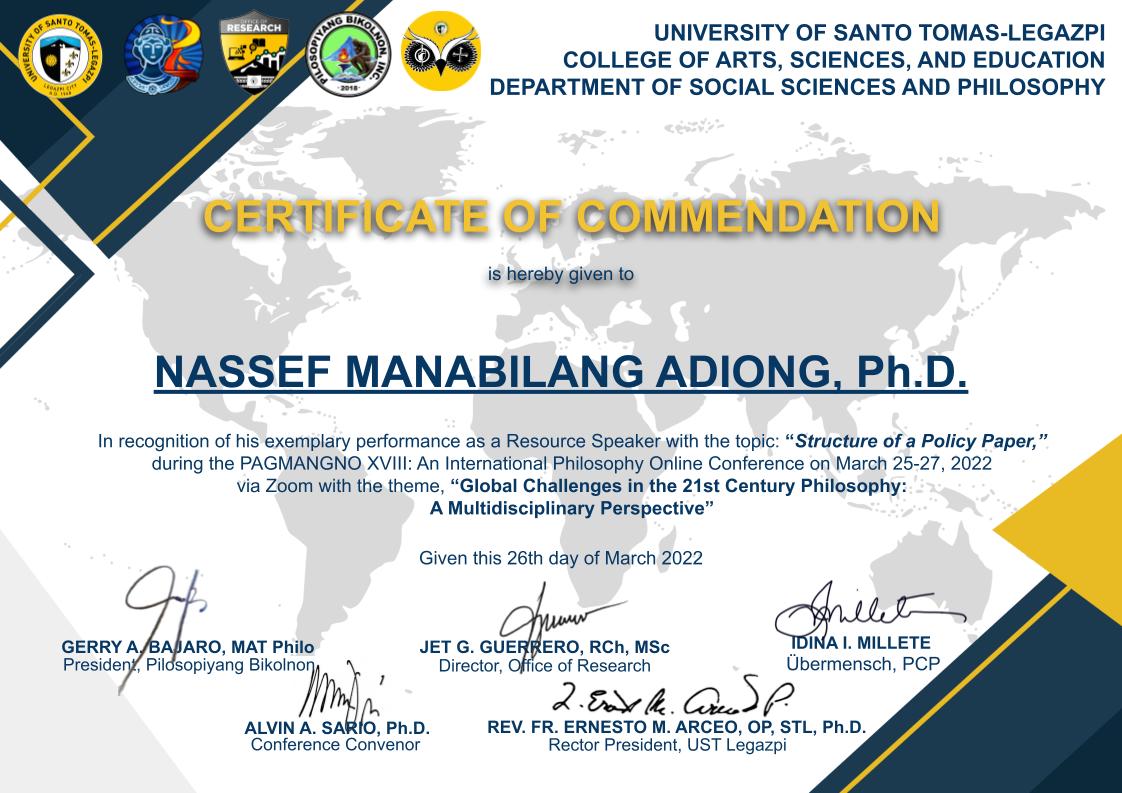



Nassef is the founder of PHISO (Philippine International Studies Organization), BRLN (Bangsamoro Research and Legal Network), DSRN (Decolonial Studies Research Network), and Co-IRIS (International Relations and Islamic Studies Research Cohort). He researches policy issues affecting the Bangsamoro society and explores decolonial knowledge sources of the global south as well as interdisciplinary study between Islam and International Relations.
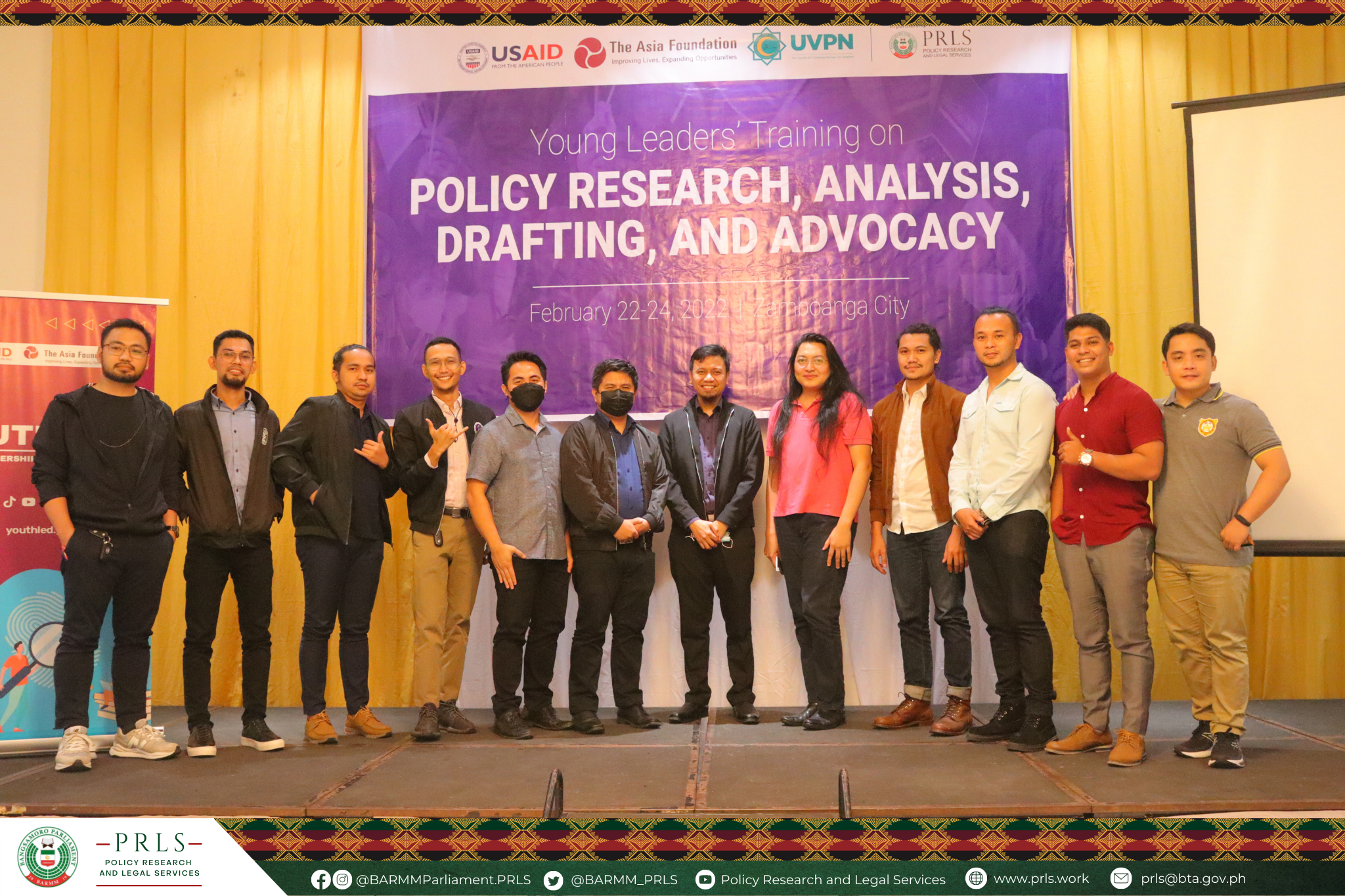
Dubbed as “A haven for Bangsamoro intellectuals,” the BARMM Parliament’s Policy Research and Legal Services (PRLS), in partnership with UVPN, Inc., has provided training on Policy Research, Analysis, Drafting, and Advocacy among heads of different youth organizations across BARMM on February 22-24, 2022, at Zamboanga City.
The series of training is a part of the YouthLeD project spearheaded by UVPN alongside The Asia Foundation (TAF) and the USAID, with the goal to enable young leaders to transform their causes into policy papers.
The training was divided into Lectures and Workshops. PRLS resource persons delivered lectures on Policy Research and Policy Analysis. Lectures on Policy Research include Guiding Principles of Policy Research: A case on decentralization by PRLS Legislative and Research Division’s (LRD) OIC, Mr. Vincent L. Casil, and Policy Relevant Research Case on Bangsamoro Environment by Mr. Moh’d Al-Khaleel A. Bogabong of PRLS Office of the Service Director (OSD).
Furthermore, lectures on Policy Analysis include Guide to Policy Analysis: A case on BARMM’s Non-Traditional Security by Mr. Kebart P. Licayan, technical staff of PRLS-LRD, and Policy Analysis to PCVE in the Bangsamoro by Mr. Gurhan A. Adan, technical staff of PRLS-OSD.


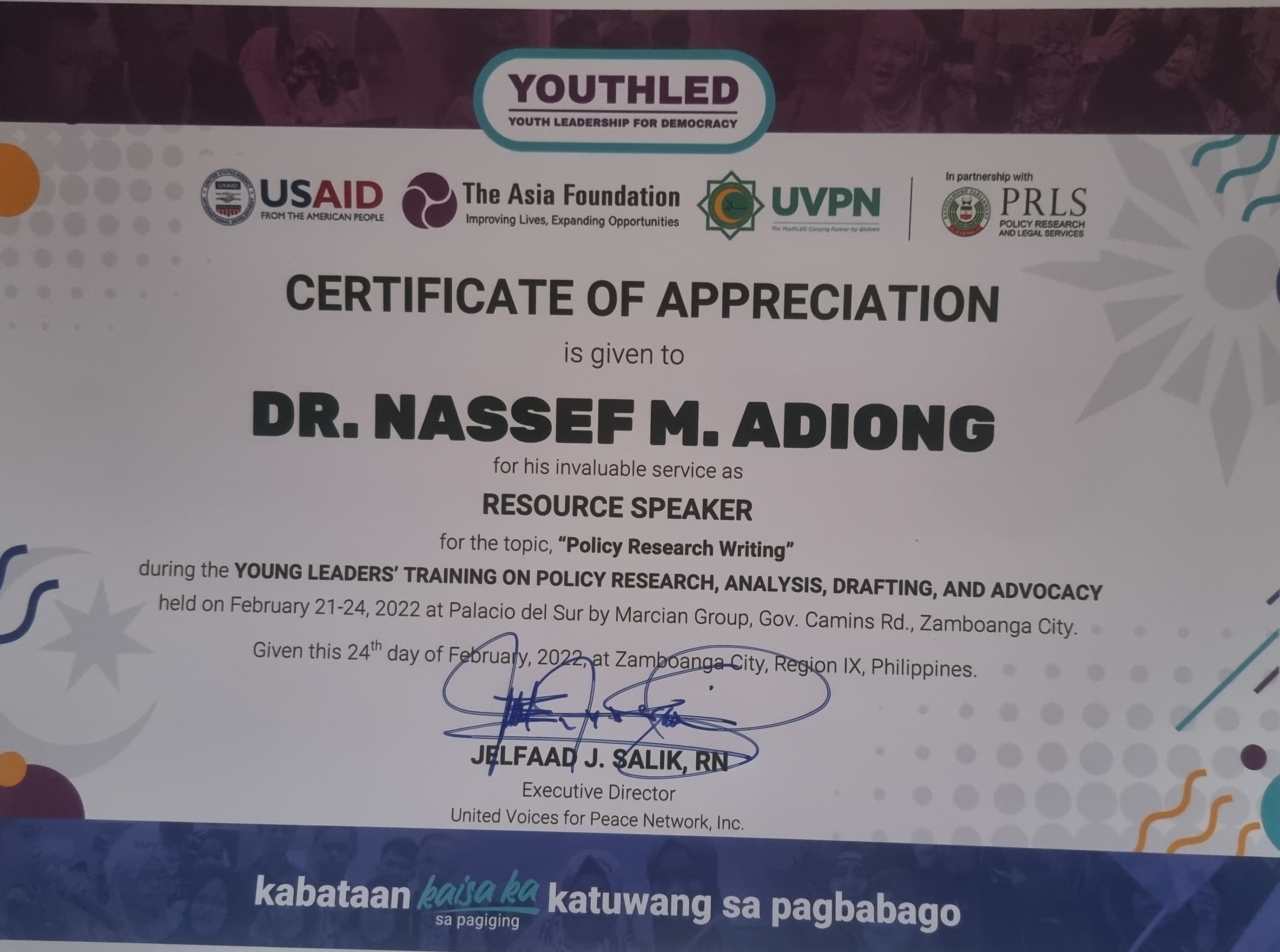
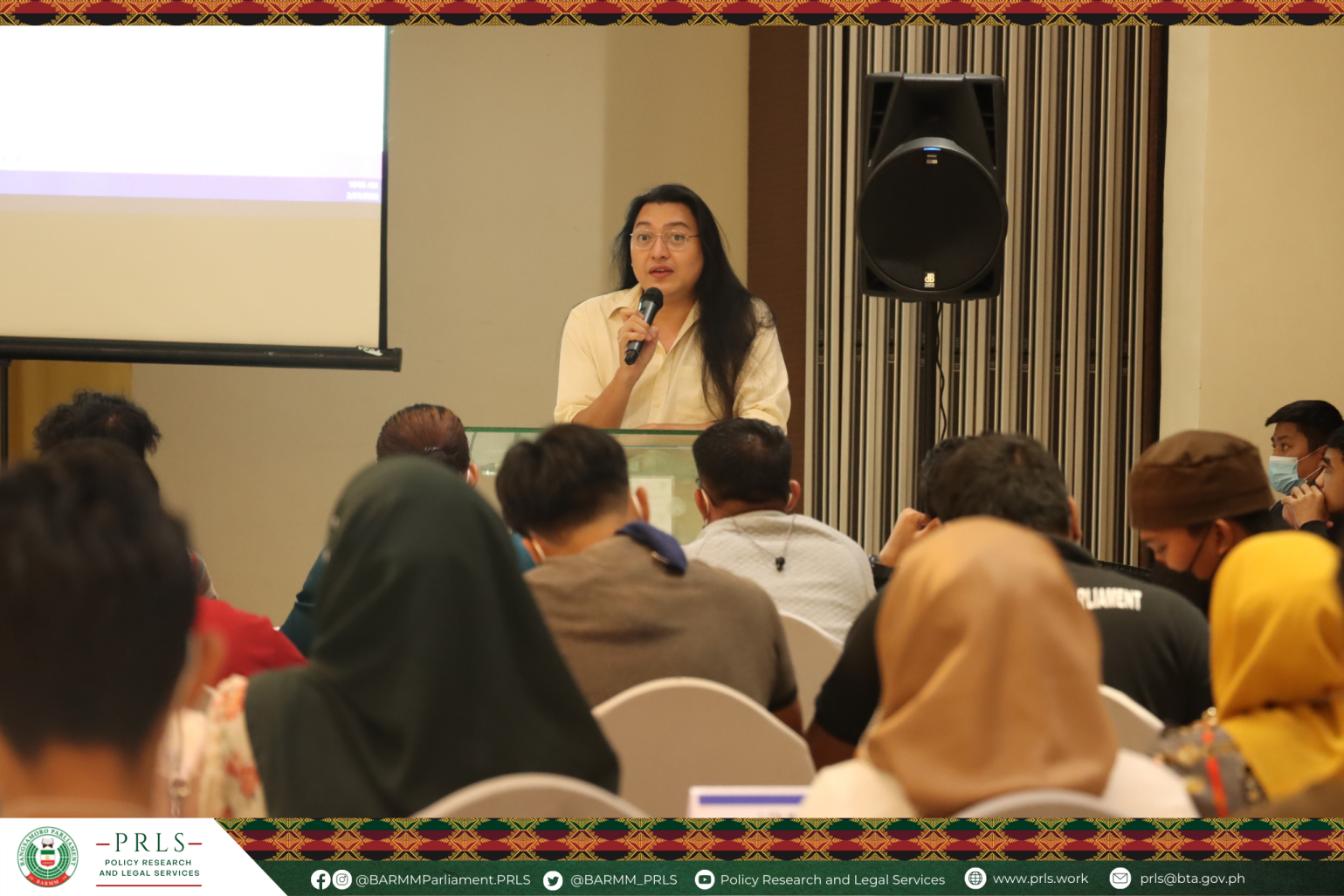
With reference to the workshops, PRLS Director II Nassef M. Adiong, Ph.D., introduced Policy Research Writing to the youth leaders. Afterward, it was followed by an Introduction to Bill Drafting by Atty. Hisham Nazz A. Biruar, Chief, BTA-PRLS Legislative Measures and Legal Assistance Division (LMLAD).
The PRLS team did not only provide meaningful workshop-seminar to the youth leaders but also guided the said participants in converting their policy research papers into draft bills.


The Mandanas Ruling and its Impact on Non-traditional Security Challenges in BARMM
Authored by: Kebart P. Licayan
The Mandanas Ruling provides a double-edged sword in local autonomy. On the one hand, it allows local governments to express their local autonomy by fully devolving certain national functions. Many local governments, on the other hand, are still unprepared for such a transition, although EO 138 mandates them to do so due to (1) varying capacities, (2) weak institutions, and (3) clientelist politics. This study looks at potential options that LGUs can use to address their concerns about devolution. Special attention will be given to the non-traditional security issues such as social services, health, and investment in the Bangsamoro Autonomous Region.
DOI:10.13140/RG.2.2.33424.28163
Click the download button to access the full paper.





 Nassef Manabilang Adiong, PhD
You must be logged in to post a comment.