My seminar talk on March 06, 2021 at the Universiti Brunei Darussalam’s Institute of Policy Studies.


Nassef is the founder of PHISO (Philippine International Studies Organization), BRLN (Bangsamoro Research and Legal Network), DSRN (Decolonial Studies Research Network), and Co-IRIS (International Relations and Islamic Studies Research Cohort). He researches policy issues affecting the Bangsamoro society and explores decolonial knowledge sources of the global south as well as interdisciplinary study between Islam and International Relations.
My seminar talk on March 06, 2021 at the Universiti Brunei Darussalam’s Institute of Policy Studies.
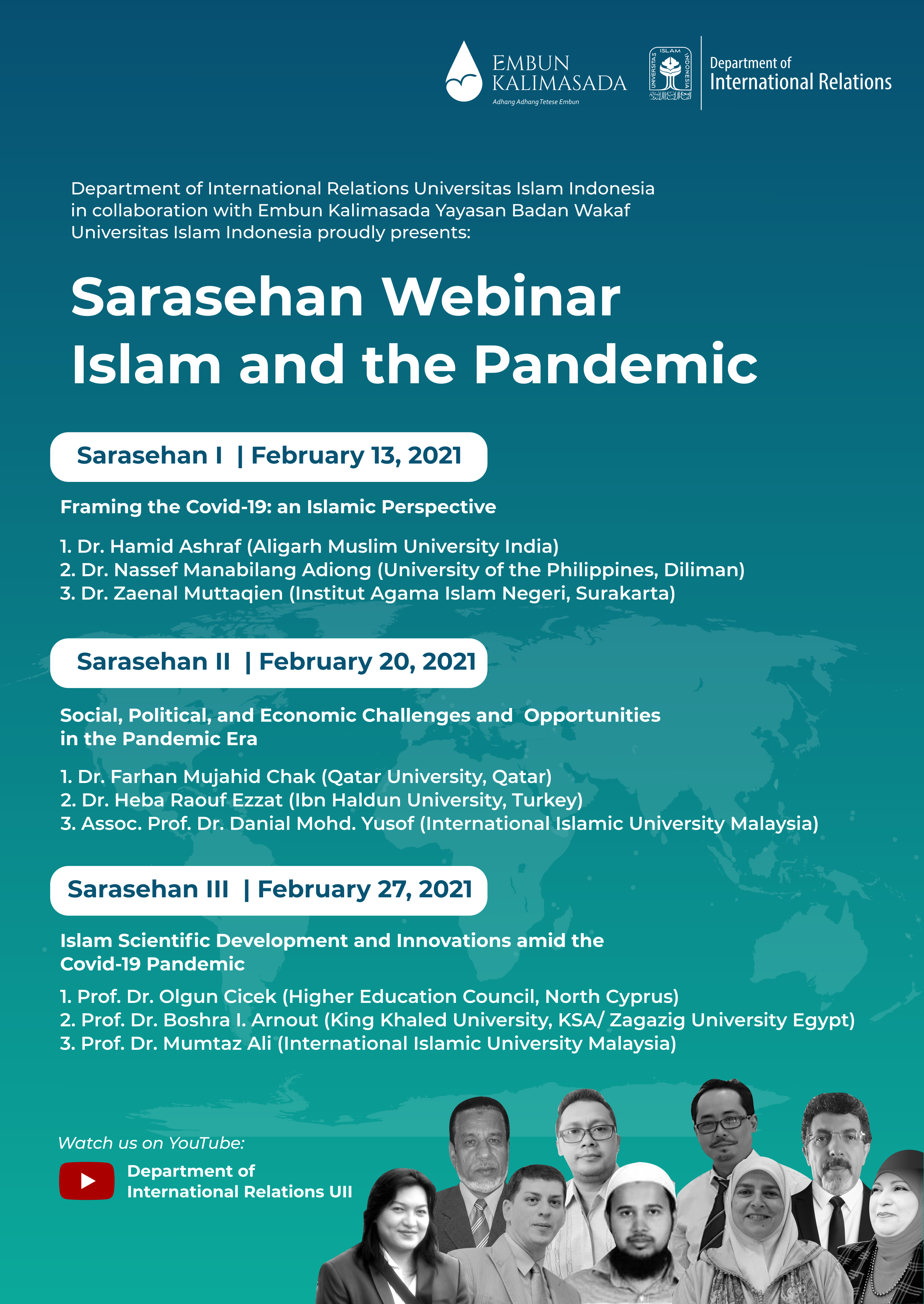
I will speak virtually at the Islamic University of Indonesia. It will be recorded on February 8 and will premiere on February 13, 2021 at the university’s YouTube channel.

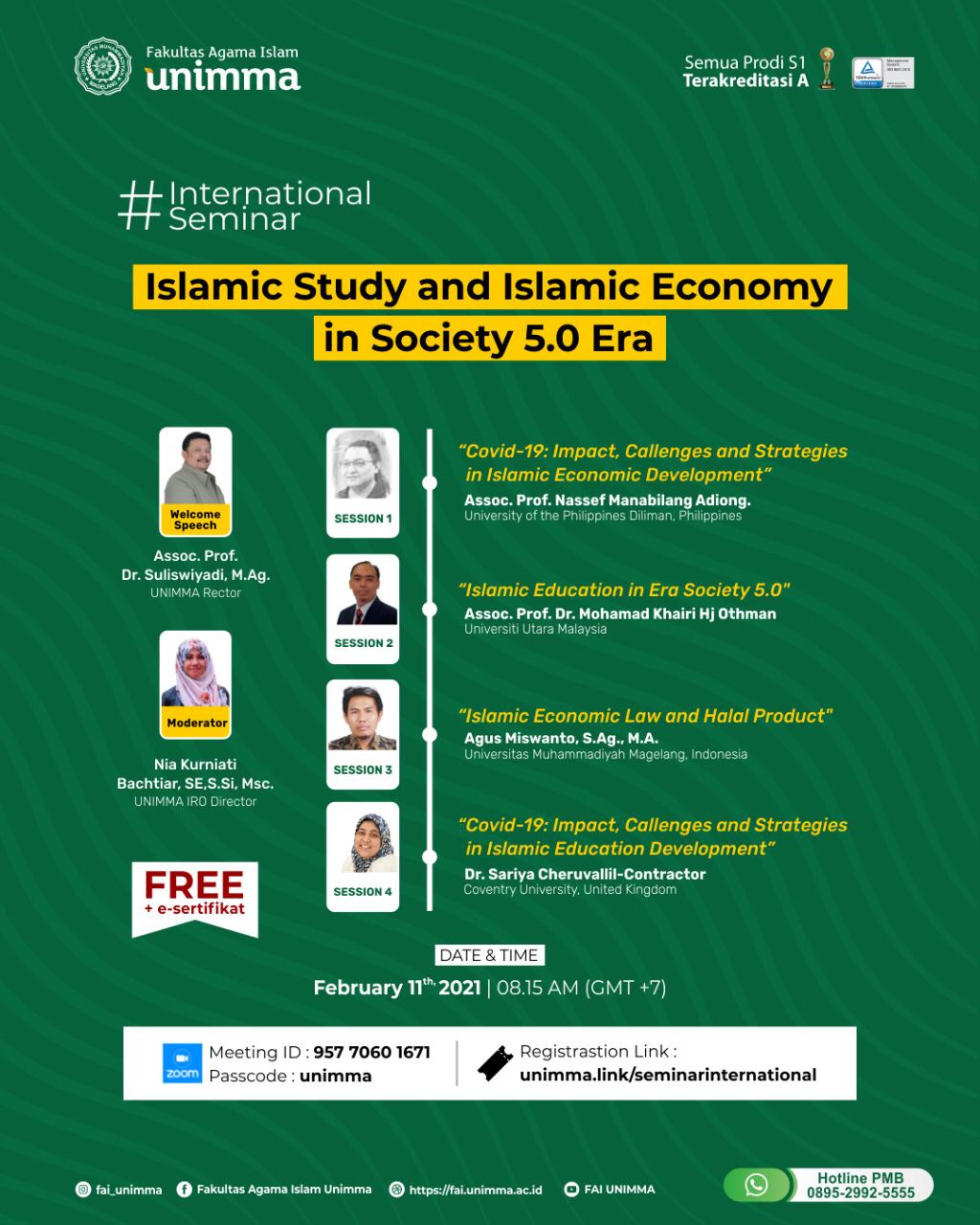
I will speak virtually at the Muhammadiyah University of Magelang, Indonesia, on February 11, 2021.
Reason, Revelation and Law in Islamic and Western Theory and History
Edited by R. Charles Weller and Anver Emon
This book engages the diverse meanings and interpretations of Islamic and Western law which have affected people and societies across the globe, past and present, in correlation to the epistemological groundings of those meanings and interpretations. The volume takes a distinctively comparative approach, advancing dialogue on crucial transnational and global debates over the history of Western and Islamic approaches to law, politics and society and their relevance for today. It discusses how fundamental concepts are understood and even translated from one historical or political context or one semantic domain to another. The book provides focused studies of key figures and theories in a manageable, accessible format useful for specialized academic courses and research as well as general audiences.

R. Charles Weller, Associate Professor of History (Career-Track), Washington State University, and Senior Research Fellow, Department of Religion and Culture, Al-Farabi Kazakh National University, Almaty, Kazakhstan
Anver Emon, Professor of Law and History; Canada Research Chair in Religion, Pluralism and the Rule of Law; Director, Institute of Islamic Studies, University of Toronto, Canada
Volume 1 (2020); Issue 1 (December 2020) in International Journal of Islam in Asia
The establishment of the International Journal of Islam in Asia (IJIA) aims to offer an academic platform for all aspects of research on Islam in Asia, particularly to shed light on understudied Muslim communities. The original intent of creating the journal was to promote scholarly endeavors and research works concentrating on the study of Islam and Muslim societies in Southeast Asia. The region was, and still is, sadly referred to as the periphery of the Muslim world even though it has one of the largest Muslim populations in the world. The Muslim Southeast Asian region manifests a sheer unparalleled diversity of cultures, traditions and mores which have survived for centuries despite the influence of Western modernity, coloniality, and the ascendance of the nation-state system. Through careful and long deliberation among us, the editors, and the publisher, it was decided to expand the regional scope of IJIA to cover the entire Asia and accommodate diverse epistemic backgrounds that could go beyond disciplinary boundaries.
Aside from academic articles, the journal will aim to include policy research that comprises historical and contemporary Muslim communities in Asia and the Asian Muslim diaspora. The journal also aims to cover an eclectic group of articles that vary in their topics such as but not limited to, theoretical, methodological, empirical, religious, spiritual, and critical studies of Islam, including mundane praxes and lived Islam. It is interesting to explore Islamic theories and how they fit or (dis)connected to the ground realities of Muslims’ everyday lives. Moreover, it is necessary to analyze the critical variations of Islamic views when we speak about belief, faith, credence, truth, religion, religious, religiosity, spiritual, and spirituality.
The editors encourage multi-, inter- and transdisciplinarity and eclectic contributions from both scholars and practitioners (e.g. preachers, spiritual/religious leaders, and policy makers) to facilitate a holistic approach towards the study of Islam and of Muslim societies in the entire continent. Although we welcome all research backgrounds and knowledge orientations, for example, a decolonial lens on Islam, we are particularly interested to receive submissions that are relevant to MENA-Asia relations, Islamic thought and intellectual history, Islamic philosophy, intra-Muslim (Sunni and Shi’i) relations, Sufism, canonical and periphery Islam, Islam and ethnicity, Islam and modernity, Islam and politics, Islam and the State, Islam and geopolitics, Islamic Studies and Area Studies, and relations between Muslims and non-Muslims across Asia.
Introduction
Authors: Nassef Manabilang Adiong, Deina Abdelkader, and Raffaele Mauriello
Sinicizing Islam: Translating the Gulistan of Saʿdi in Modern China
Authors: Alexander Jabbari and Tiffany Yun-Chu Tsai
Islamic Feminism and Hegemonic Discourses on Faith and Gender in Islam
Author: Farah Shahin
Buddhism according to Modern Muslim Exegetes
Authors: Ahmad Faizuddin Ramli, Jaffary Awang, and Zaizul Ab Rahman
Religious Tolerance of Madrasa Students according to Their Religious Affiliation: An Empirical Investigation
Authors: Sadia Shaukat and Anthony William Pell
The Defence of National Identity as a Revolutionary Concept: Gharbzadigī, Islamic Modernisation, and Anticolonialism
Author: Alessia Tortolini



 Nassef Manabilang Adiong, PhD
You must be logged in to post a comment.