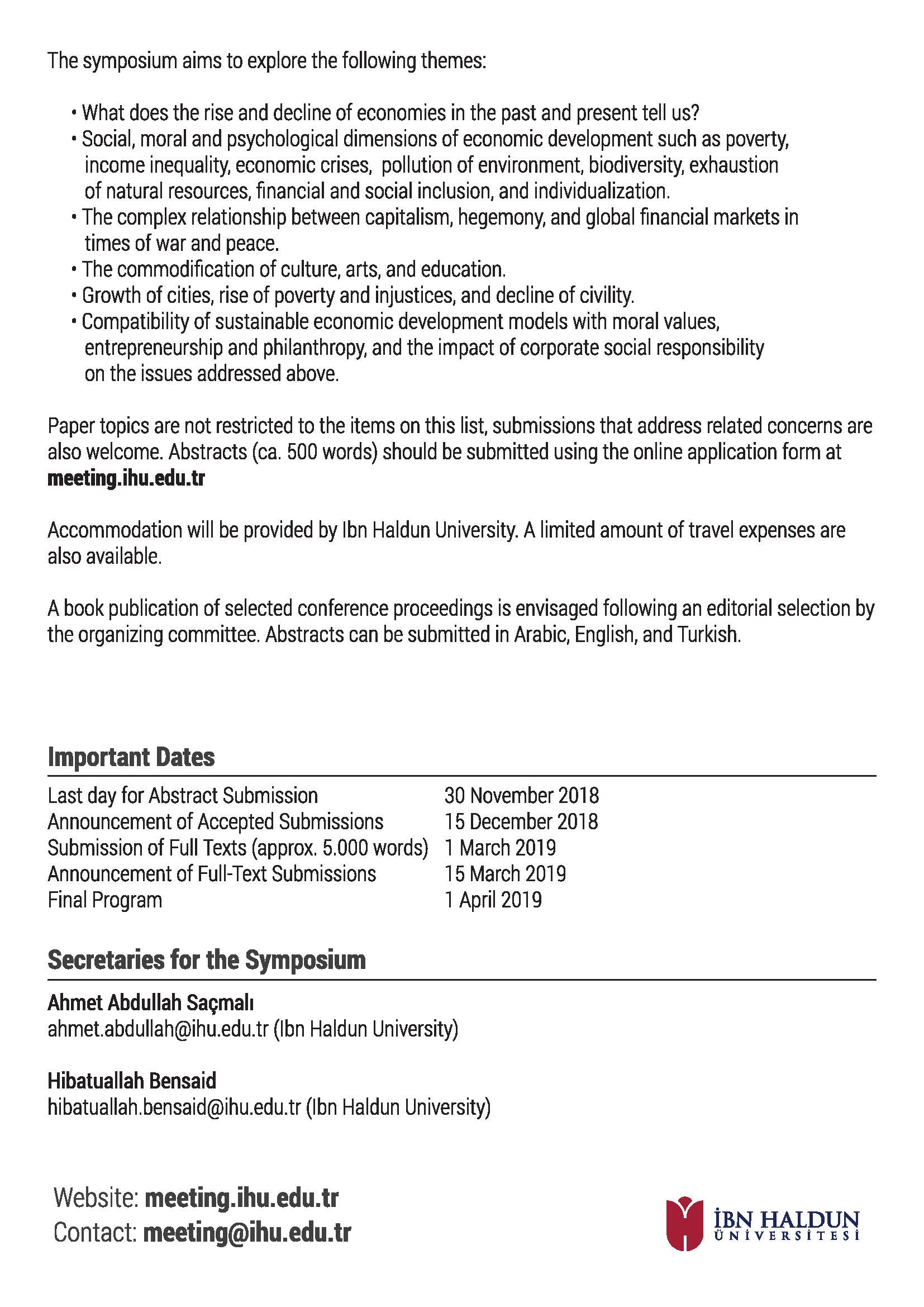
“European Muslims and their Foreign Policy Interests: Identities and Loyalties” by Imène Ajala

Congratulations to Dr Imène Ajala! The Co-IRIS team is very proud to announce the first volume of the “Islam and International Relations” series in partnership with Gerlach Press.

In a global context marked by terrorist threats, Muslim communities in the West have come under increasing scrutiny. Sensitive questions on identity arise with regard to their foreign policy interests and their loyalties.

Topics covered include:
– Relations between European Muslims and international issues
– Political opportunity structures
– Organization and institutionalization of Islam
– Diaspora and transnational dimensions
– The securitization of Islam
– Foreign policy and loyalty

This book investigates the foreign policy interests and political mobilization of Muslims in Europe, specifically in France and Great Britain, contributing to shed light on these difficult questions.

Contents

Introduction

1 Muslims im Europe
– Exploring Islam in Europe
– Islam and Muslims in the West as an Object of Research
– Integration and Identity
– European Muslims and International Issues: Analyzing a Complex Relation
– Assumptions of a ‘Muslim Lobby’ on Foreign Policy
– Theoretical Framework: Domestic Politics and International Relations

2 Islam in France and Great Britain
– French and British Political Opportunity Structures
– Historical Trends and Current Characteristics
– Two Different Philosophies of Integration
– Organization and Institutionalization of Islam in France and Great Britain
– Processes of Institutionalization
– Legitimacy and Efficiency of Institutionalizing Processes

3 French Muslims and Foreign Policy
– French Muslims and Foreign Policy Issues
– Foreign Policy: a Remote Concern
– Palestine: The Exception?
– UOIF Positions on Foreign Policy Issues
– UOIF, the Palestinian Issue, the Syrian War and Victimhood
– UOIF and the Condemnation of Terrorism

4 British Muslims and Foreign Policy
– Diaspora and Transnational Dimensions of British Muslims’ Foreign Policy Interests
– Foreign Policy: A Major Concern of British Muslims
– An Overview of the MCB’s Expression and Mobilization on Foreign Policy Issues: A Variety of Diaspora and Ummatic Issues
– MCB Positions on Foreign Policy Issues
– The Palestinian Issue: A Constant Mobilization
– The 2003 War in Iraq: A Turning Point
– Perspectives on the Arab Uprisings
– Perspectives on Daesh and the Foreign Terrorist Fighters

5 The Securitization of Islam, Muslim Expression over Foreign Policy
and Loyalty
– Securitization and Foreign Policy Issues in France
– Terrorism and Securitization of French Muslims: A Historical Background
– French Muslims’ Loyalty on Foreign Policy: A Non-issue?
– Securitization and Foreign Policy Issues in Great Britain
– Foreign Policy and Terrorism
– Monitoring British Muslims’ Loyalty or a Problematic Expression over Foreign Policy

Conclusion

Imene_cover

To order the book, fill out the form here and email it to orders@gerlach-press.de.

Co-IRIS at WOCMES Seville 2018


The Co-IRIS team will participate at this year’s World Congress for Middle Eastern Studies (WOCMES) in Seville, Spain. We are very proud that one of our founders, Dr. Raffaele Mauriello, is a member of the Scientific Advisory Committee. The Co-IRIS has a symposium composed of 5 panels and 1 meeting-in-conjunction.

SY-11: Co-IRIS: Islam and International Relations

Organized by:
Nassef Manabilang Adiong, University of the Philippines Diliman,
Raffaele Mauriello, Allameh Tabataba’i University, and
Deina Abdelkader, University of Massachusetts Lowell.


Panel 1. Islamic Law and International Law II (1/5)
Wednesday, 18th July 2018
9:00 a.m. – 11:00 p.m.
Room: 203
Chair: Nassef Manabilang Adiong

Miguel Ángel Fernández Fernández, Universidad de Granada: ‘Erdogan: toward the Sunni leadership‘.

Husnul Amin, International Islamic University – Iqbal Int. Inst. for Research and Dialogue: ‘Islamic political parties through the lens of their electoral manifestoes in Pakistan‘.

Nicole Beckmann Tessel, The University of Chicago: ‘Ottomans and afsharid negotiations to the treaty of Kerden (1746)

Wardah Alkatiri, Universitas Nahdlatul Ulama Surabaya: ‘Ijtihad for the planet and a postmodern critique of the modern nation-State‘.


MIC-5. Meeting of Co-IRIS: Islam and International Relations
This event is open to public participation.
Wednesday, 18th July 2018
11:30 a.m. – 1:30 p.m.
Venue: University Board Meeting Room


Panel 2. Islamic Law and International Law I (2/5)
Wednesday, 18th July 2018
2:30 p.m. – 4:30 p.m.
Room: 209
Chair: Nassef Manabilang Adiong

Nassef Manabilang Adiong, University of the Philippines Diliman: ‘Muslim views on the “International‘.

Tahar Abbou, University of Adrar: ‘War prisoners in Islam and in the International Law: a comparative study’.

Badry Roswitha, Freiburg University: ‘Recognition of the Human Rights of sexual minorities as an ongoing contentious issue – a look at the situation in Arab countries‘.

Radhika Kanchana, Centre de Recherches Internationales (CERI): ‘How do Muslim countries treat their “outsiders”? Islamic practice on naturalisation and the relationship with International Law and norms‘.

Liyakat Takim, McMaster University: ‘Islam and democracy‘.


Panel 3. Diplomacy in Islam: past and present (3/5)
Thursday, 19th July 2018
9:00 a.m. – 11:00 a.m.
Room: 109
Chair: Raffaele Mauriello

Laila Dandachi, University of Vienna: ‘The significance of Islamic arms and armour in diplomatic encounters between the Habsburg monarchy and the Islamic Empires in the Early Modern Period‘.

Raffaele Mauriello, Allameh Tabatabai University: ‘Looking at diplomacy in Islam from the Islamic Republic of Iran: the perspective from the Iranian academia‘.

Heidarali Masoudi, Shahid Beheshti University: ‘Islamic metaphors in Iranian diplomatic rhetoric‘.

Hsiu-Ping Bao, National Chengchi University: ‘“Revival of Islam” and “Establishment of the Nation”: the public diplomacy of Hui Muslims to the Middle East during the Sino-Japanese war (1937-1945)‘.

Victoria Araj, University of Bradford: ‘Post-Islamism as a response to the double-security dilemma: a case study of the Justice and Development Party (AKP)‘.

Amjad Al-Dajani: ‘Sheikh al-Islam of the British Isles, Sheikh Abdullah Quilliam‘.


Panel 4. Islam and Democracy I (4/5)
Thursday, 19th July 2018
11:30 p.m. – 1:30 p.m.
Room: 109
Chair: Deina Abdelkader

Ahmed Ali Salem, Zayed University: ‘Islam and democratization: a theoretical-empirical critique of Huntington’s misunderstandings‘.

Housamedden Darwish, University of Cologne and University of Duisburg-Essen: ‘Islam and democracy in the thought of Sadik J. al-Azm‘.

Mushtaq Ahmad Wani, Ibn Khaldun University: ‘Democracy and Islam in modern Turkey‘.

Deina Abdelkader, University of Massachusetts Lowell: ‘Old wine in new bottles: the Muslim Brothers and the limits of secularism‘.


Panel 5. Islam and Democracy II (5/5)
Thursday, 19th July 2018
2:30 p.m. – 4:30 p.m.
Room: 114
Chair: Deina Abdelkader

Iraj Esmailpour Ghoochani & Tilman Weinig, Inside Out: ‘Picture-thinking-consciousness as a radical solution for the radical Islam‘.

Rajeesh Kumar, Institute for Defence Studies and Analyses, New Delhi: ‘Islamist political movements and democratic discourse‘.

Haldun Karahanli, Ibn Haldun University: ‘The predicament of democracy: the modernicate and the untransmutated Islamicate‘.

Naveed Sheikh, Keele University: ‘Is Islam hostile to democratization? The normative questions revisited‘.

Muhammad Ahmad, Institute of Information Technology-Abbottabad. COMSATS: ‘Religion, democracy and electoral politics in Pakistan (1988-2013)‘.


This is the second time that Co-IRIS participated at WOCMES. The first one was held in Ankara, Turkey.

Call for Papers: Co-IRIS panels at WOCMES 2018

1st Panel: “Islam and Democracy”
The two terms in the title of this section are contentious and therefore the first thing the abstracts and papers have to do is define what they mean. The papers could address: Democratic practice in any historical context, comparative Nation-state practices, or theoretical arguments. The call for papers will focus on new and innovative presentations of Islam and democracy, since the topic has a legacy of numerous contributions.


2nd Panel: “Diplomacy in Islam: Past and Present”
The intellectual history and practice of international relations in Islam has long been understudied within both the field of International Relations and of Middle Eastern Studies. In this framework, the issue of diplomacy in Islam has almost gone unnoticed and unaddressed in mainstream academia. However, on the one hand the evolving interaction between Islam and politics in recent years has brought to fore the necessity of rethinking the nature and goals of diplomacy and international relations in Islam and how they contribute or challenge mainstream paradigms and practices of world affairs and, on the other hand, Muslim religious scholars have long argued that the diplomatic and international realms are incorporated in the overall worldview of Islam and, therefore, there exist analogues to the concepts of diplomacy (what we can call “Islamic diplomacy”) and international relations in Islamic sources and intellectual history which deserve serious attention by both academicians and political practitioners. This panel focuses on diplomacy, addressing both how Muslim scholars have conceptualized diplomacy and Muslim countries practiced it throughout history, from the time of the Prophet Muhammad up until current days, both in terms of intra-community diplomatic relations, i.e. relations of Muslim countries within the community of Islam, and trans-community, i.e. relations of Muslim countries with non-Muslim countries. The overall aim of the panel is to draw a first overall picture of diplomacy in Islam as a basis for future research.


3rd Panel: “Islamic Law and International Law”
Explores interdisciplinary approaches of Islamic Studies to law especially how Islamic law (loosely understood as shari’ah) engages with the internationality aspect of human laws including public and private international laws. It seeks to uncover the global and ethical dimensions of Islamic law and how it responds to international conventions, regional institutions, and transnational norms, in particular, the flexibility of shari’ah as it evolves over time and space so as to achieve its higher moral objectives.


Organiser: International Relations and Islamic Studies Research Cohort (Co-IRIS)
Paper proposals must include a title, a 300-400 word abstract, and 100-word bio note.
Proposals must be in English.
Deadline for submission: 30 November 2017
Submit your proposals to info@coiris.org and include carbon copies to deina_abdelkader@uml.edu, contact@nassef.info, and raffaele.mauriello@me.com.

Event: 5th World Congress for Middle Eastern Studies (WOCMES)
Place: Seville, the capital of Andalusia
Dates: 16-22 July 2018
Website: http://wocmes2018seville.org/web/index.php/en/

My horrendous experience with US immigration officers on February 21, 2017.

Below is an excerpt from Inside Higher Ed‘s piece written by Elizabeth Redden.

Another scholar from overseas had a difficult time entering the U.S. for the conference. Nassef Manabilang Adiong, the founder of the Philippine International Studies Organization, came from Manila to Baltimore via Tokyo and Detroit. He said he was about to board his flight for the Tokyo-Detroit leg when he was taken from the line and questioned by a U.S. official about his address in Manila, his family, his background and the foreign countries he had visited.

“I thought that after this situation had happened to me, I would not have any difficulty at the port of entry in Detroit,” Adiong said. But upon arrival in the U.S., Adiong said, he was brought into a room for secondary screening and questioned for two hours by two immigration officials whose questions kept circling around issues of Islam and terrorism. They let him go about five minutes before his connecting flight to Baltimore was scheduled to leave. “It was just a random check, that’s what they said,” Adiong said.

Adiong, whose research is about Islam and international relations in the pre-modern era, described the experience as exasperating, exhausting and embarrassing. “I’m having second thoughts of coming back for future ISA conferences under the current USA administration,” he said. “Probably after this administration I may attend.”

Full article is available here.

Call for Papers: “Islam in World Affairs: Politics and Paradigms”

eisaconf

The section addresses the role of Islam in world affairs. It seeks to explore the empirical experiences and ideational perspectives of the Islamic civilisation on world affairs with regards to statecraft, governance, transnational movements, Islamic State (ISIS, ISIL, Daesh) phenomenon, and Islamic contributions to the field of International Relations.

The section offers analyses of concrete historical experiences and Islamic theoretical approaches to the field of International Relations. Most of the researches carried out by students of IR have fallen into two extremes: they have either overlooked Islamic contributions to world affairs and the field of International Relations — and the rich tradition of the Islamic civilisation with regards to international affairs and statecraft— or tried to ‘Islamise’ the Western tradition of IR. Going beyond these extremes, the aim of the section is to build bridges between IR and Islam by looking into various variables such as theories, empirical experiences and categorical levels of generalisation in international relations.

The overall objective is to both (1) develop a body of knowledge that addresses the theories and practices of the Islamic civilisation and of Muslim societies vis-à-vis international affairs and the discipline of International Relations and (2) set a model for the inclusion of Muslim contributions to the field of IR in order to enrich, diversify and strengthen it.

Section Chairs:

Raffaele Mauriello,
University of Tehran
raffaele.mauriello@mac.com

Deina Abdelkader,
University of Massachusetts Lowell
Deina_Abdelkader@uml.edu

Nassef Manabilang Adiong
Philippine International Studies Organization
contact@nassef.info

Proposals (with abstracts of 200 words maximum) must be submitted via our online submission system: ConfTool 2017

Please note that there will be a participation limit of three contributions per participant – whether as paper giver, roundtable speaker, or discussant/chair (any of these roles counts as one contribution).

The closing date for paper, panel, and roundtable proposals is midnight (CET) on Friday 10 February 2017

For any questions on the conference, please contact the programme chairs, Victoria Basham and Cemal Burak Tansel at pec@eisa-net.org.