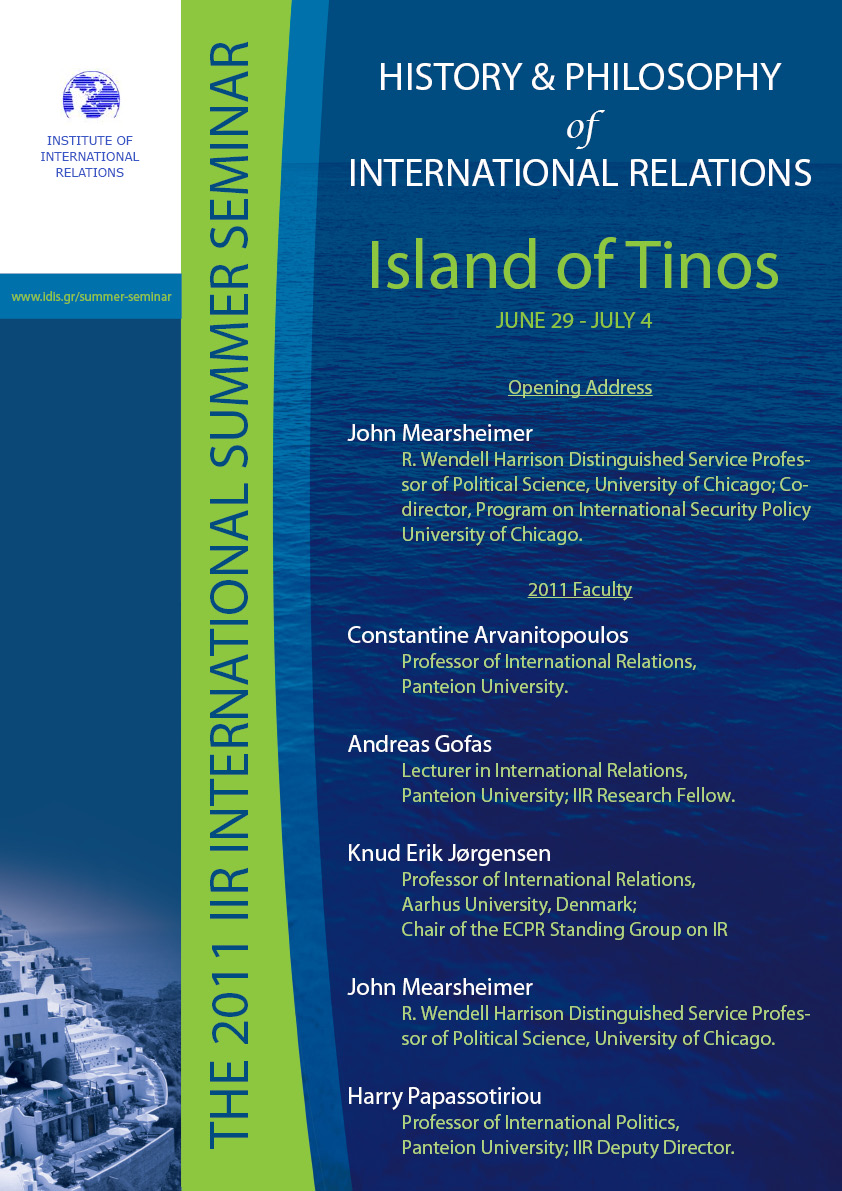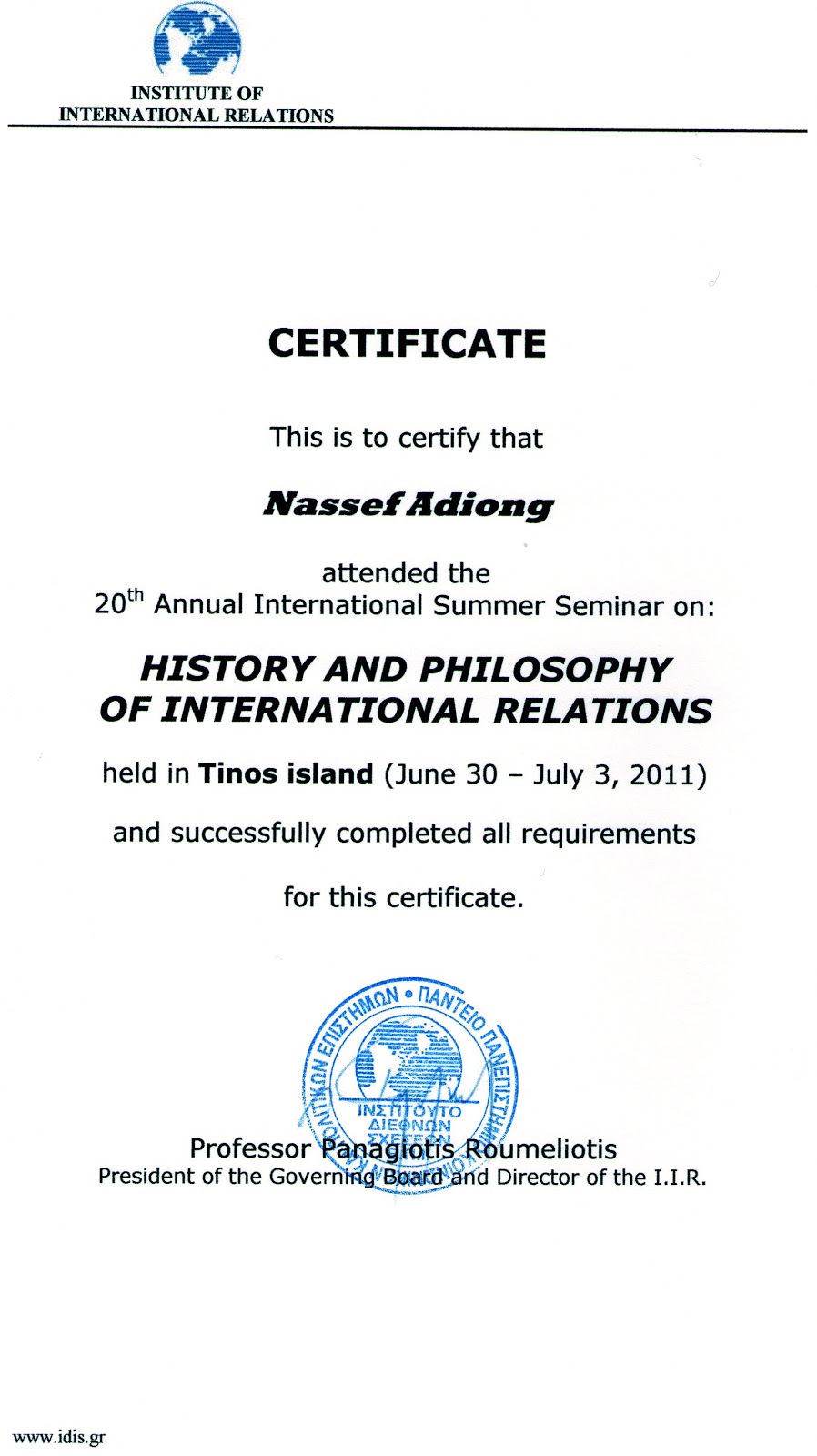
20th annual IIR seminar entitled "History and Philosophy of International Relations"

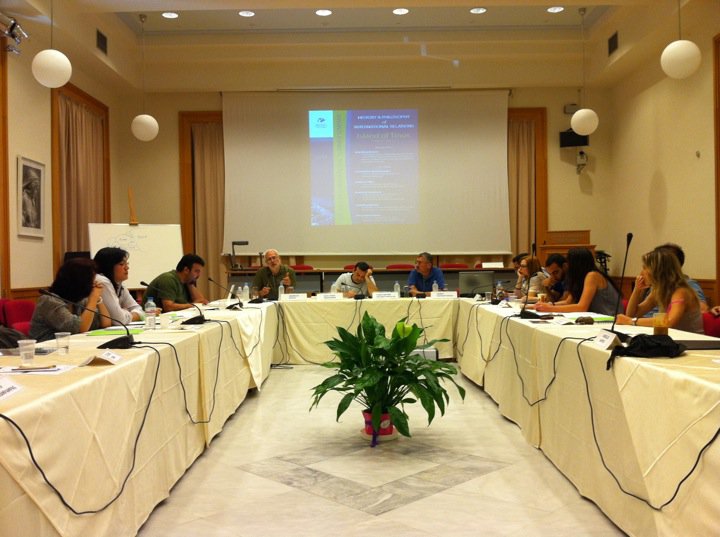
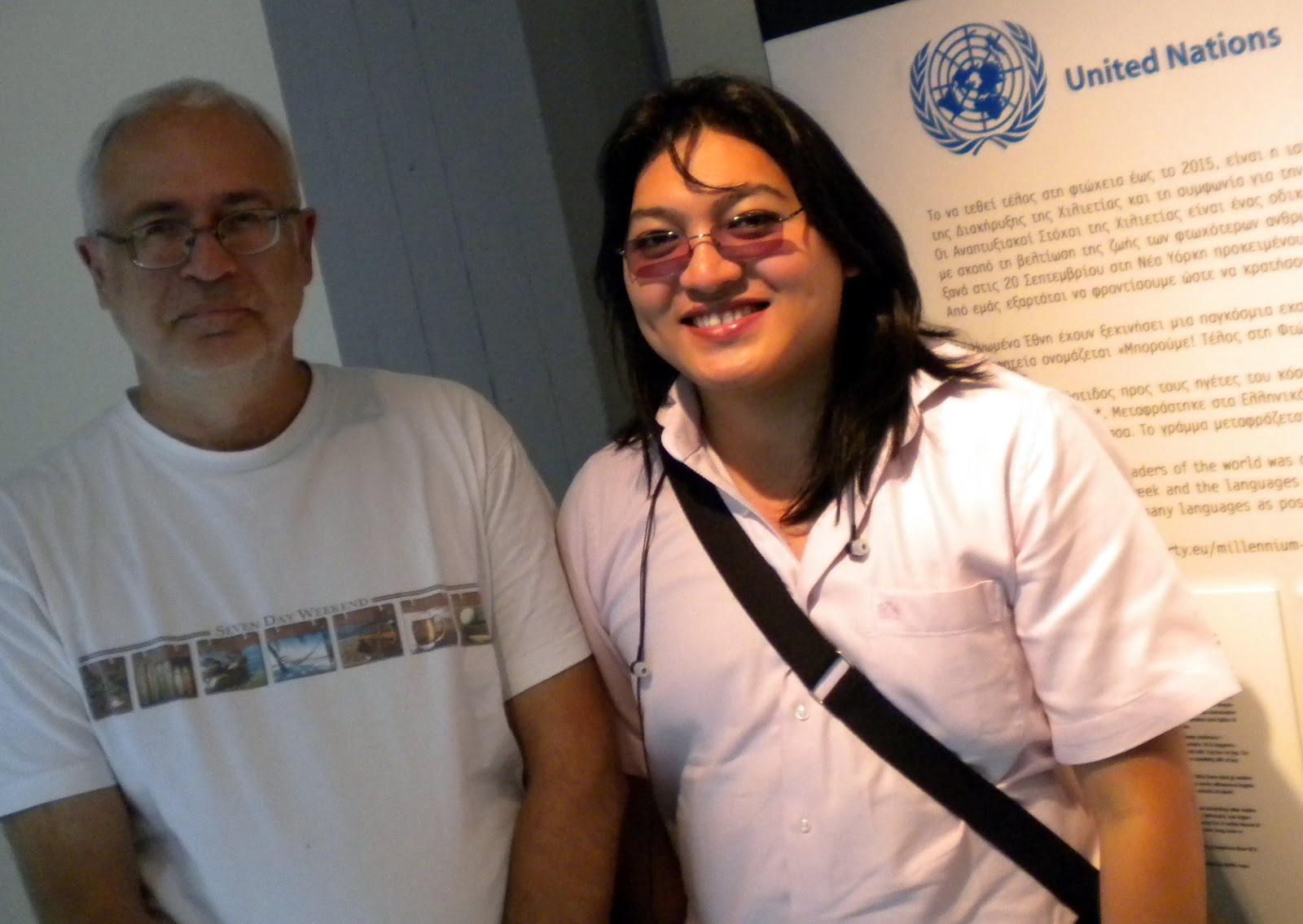
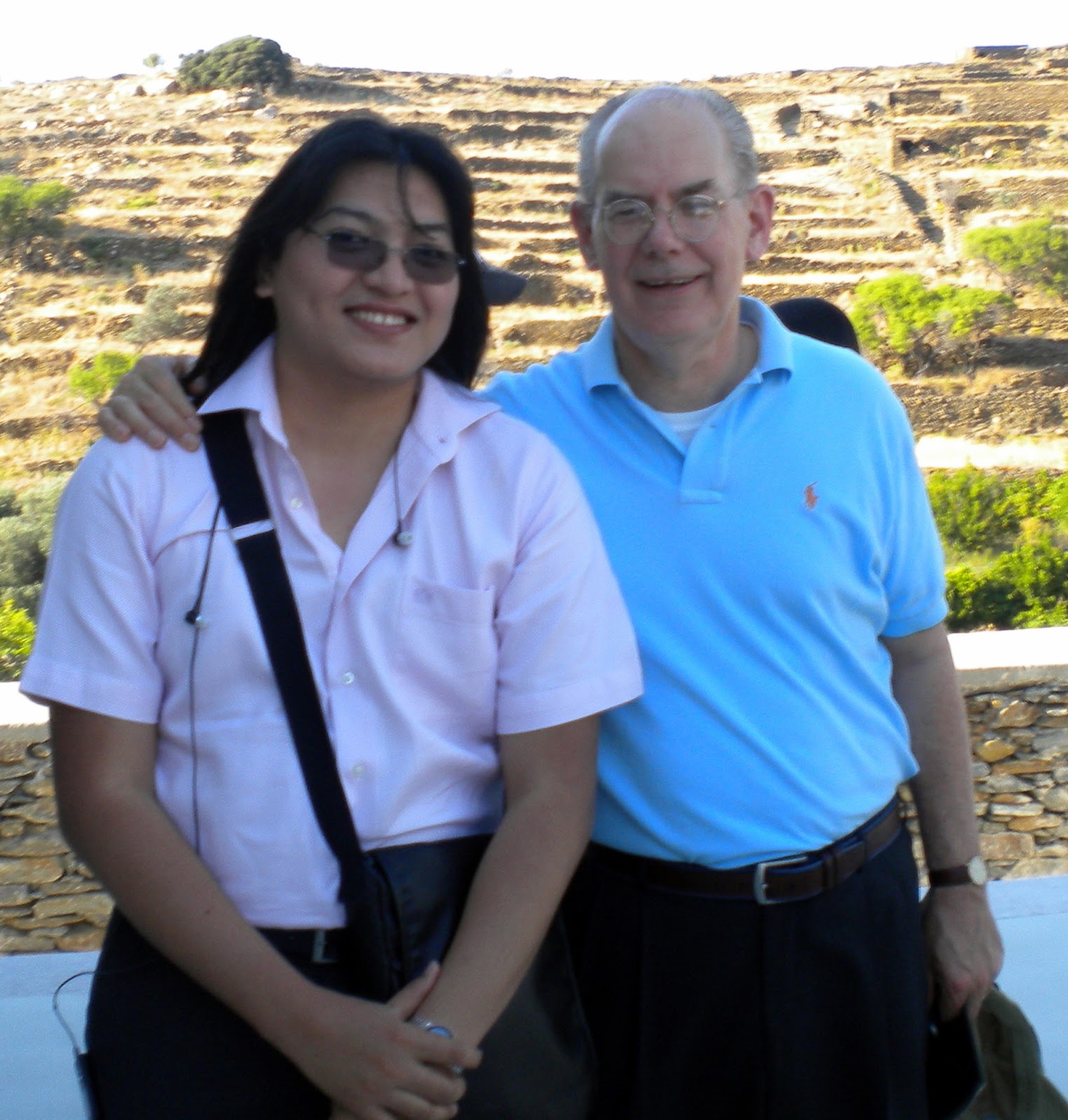
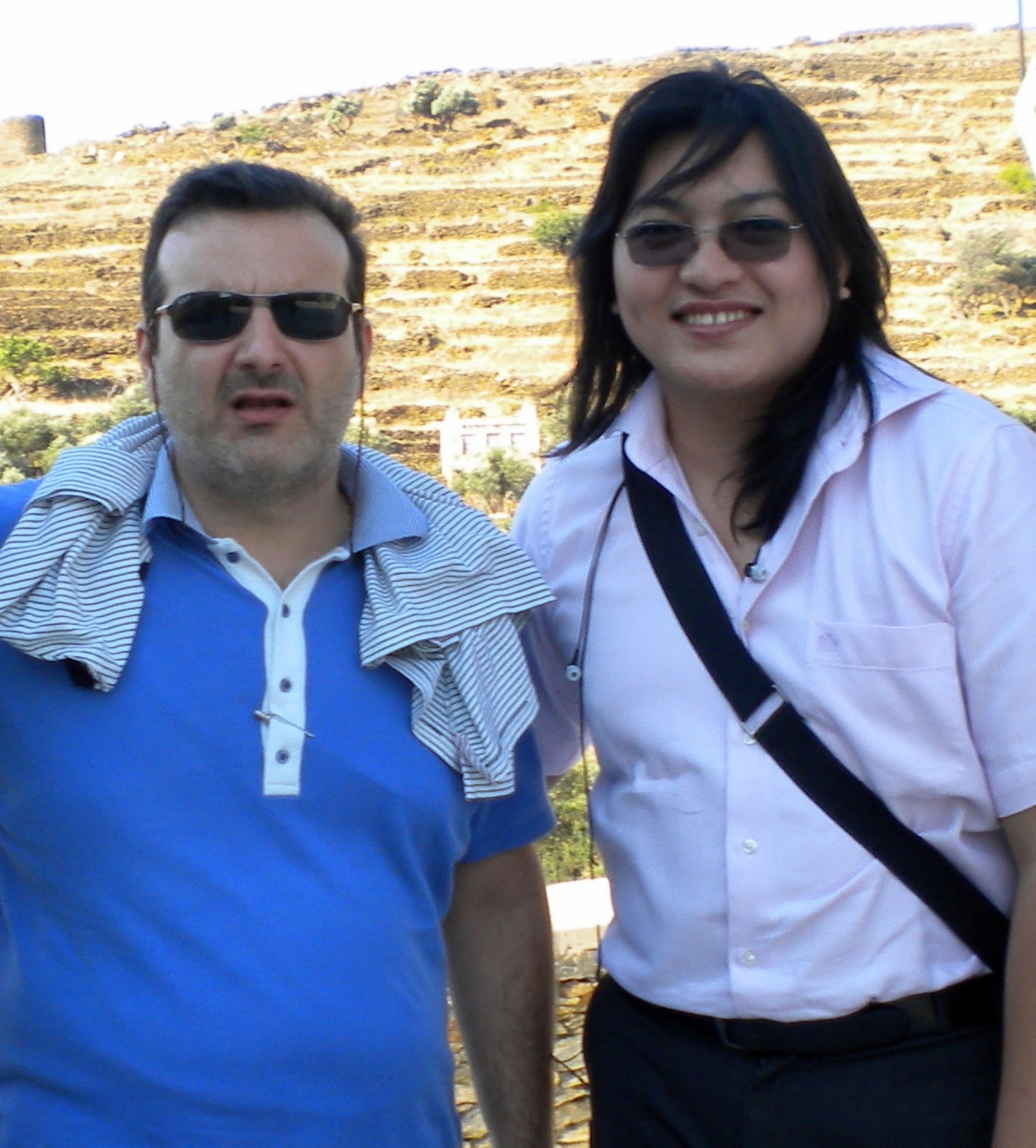
Participated by 28 graduate students mostly from Greece and spearheaded by two invited scholars Prof. Dr. John Mearsheimer and Prof. Dr. Knud Erik Jørgensen. This summer seminar is annually offered by the Institute of International Relations (IIR) affiliated with the Panteion University of Social and Political Sciences in Athens, Greece. However, it was held in the Island of Tinos from June 30 to July 3.
This photo was taken by Κοινόν Ωρωπίων.
Prof. Mearsheimer opened the discussion by presenting his offensive realism thesis and arguing that his theoretical framework has the best explanatory power. For a detailed information about his thesis, read his book entitled “The Tragedy of Great Power Politics”. Prof. Jørgensen discussed his nine perspectives in IR theorizing activity, these are: 1) identifying theories by means of maps (spatial) and decades (temporal), 2) deconstructing the relationship between theory and practice, 3) traditions of IR theories have all centered upon an aspect of “politics”, 4) distinguishing thoughts from traditional to complex, 5) deciphering the epistemology, 6) knowing how philosophy can be used as parameter, pointer, reference, and perspective in IR theorizing activity, 7) facing the challenge of hegemony of the US and UK scholars in IR theorizing activity, 8) choosing between monist or eclectic scholarship of IR theories, and 9) what’s left for the future IR theorizing activity particularly of the labelled ‘periphery’, i.e., non-Western (non-American/European) scholars.
Prof. Dr. Harry Papassotiriou oriented us about the ontology of IR as a discipline and Dr. Andreas Gofas gave us a unique lecture of making the relations of philosophy of science and IR historiography by comparing it with football games and terminologies of human afflictions and sensations. We ended the seminar by dividing the participants into four working groups tasked to synthesize and evaluate the whole seminar. My group presented the pathological observation of setting the agenda of the whole seminar. In to-to, it was a mix of learned experience from the shared knowledge of established scholars and enjoyable (networking) event from fellow participants.
 with Prof. Dr. Knud Erik Jørgensen
with Prof. Dr. John Mearsheimer
 with Prof. Dr. Harry Papassotiriou
with Dr. Andreas Gofas

METU Graduate Courses Performance Award 2011

Sayın Nassef Adiong
Uluslararası İlişkiler EABD

2009-2010 Akademik yılı, ODTÜ SBE Lisansüstü Ders Performans Ödülünü almaya, Doktora programında yedi dersinizi iki dönemde, EAB Dalınızdaki en yüksek GNO’lu öğrenci olarak tamamladığınız için hak kazandınız. Sizi bu başarınızdan dolayı kutluyorum.

Ödülünüz 02 Hazıran 2011 Perşembe Saat 15:00’de ODTÜ Mimarlık Amfisi’nde yapılacak Ödül Töreninde size verılecektir. Tören programı aşağıda verilmiştir.

Ödülü almaya hak kazandığınız için sizi tekrar kutlar, başarılarınızın devamını dilerim.

Prof. Dr. Meliha Altunışık
Sosyal Bilimler Enstitüsü Müdürü

Tören Programı:
– Açılış
– Dinleti
– Rektör Prof. Dr. Ahmet Acar’ın konuşması
– Tez ödüllerinin verilmesı
– Ders Performans ödüllerinin verilmesi
– Poster Sunumu

Courtesy of Google translation with revisions.
Dear Mr. Nassef Adiong
PhD student in International Relations program

Congratulations!
You will be receiving the “Graduate Courses Performance Award” for completing all your required PhD courses in only two semesters with a high grade point average.

The awarding ceremony will be held on 02 June 2011 (Thursday) at the Amphitheater of Department of Architecture. The program is stated below.

We wish you continued success.


Prof. Dr. Meliha Altunisik
Dean, Graduate School of Social Sciences

Program:
Opening Remarks
Musical Presentation
Prof. Dr. Ahmet Acar’s speech (METU’s President)
Best Dissertation awards will be given.
Graduate Courses Performance awards will be given.
Poster Presentation


Also, published in METU’s Bu Hafta at http://buhafta.metu.edu.tr/arsiv/1044.htm

Passed both the PhD in International Relations ‘written’ and ‘oral’ Comprehensive Examinations

The Written Part

First part: Questions for the Theories of International Relations

METU’s Professor of British School of International Relations
1. The Cambridge historian Herbert Butterfield is reported to have said: “I value every one of those fifty-two miles that separate Cambridge from Westminster” where the British government is  situated. According to a research held in the early 1990s, most members of the British International Studies Association want to advise the government. In a recent article (Review of International Studies, April 2000) Michael Nicholson asked: “What’s the use of International Relations?” to which his answer is that the immediate goal is abstract and the ultimate goal is to have some impact on the world. How would you evaluate the relations of theory/theorist (the academic discipline of International Relations to the practice/statesmen (the actual world of international relations)?
2. How would you define a theory of international relations and what is the use of it?
Bilkent’s former Chair of IR dept. and Director of the Turkish Fulbright Commission
A leading IR theorist once said that there is just one time in a scholar’s life that s/he is “closest to knowing everything” in the discipline, and that’s when writing the Ph.D. comprehensive exams. The important thing to keep in mind while writing today’s exam is that you must not only show that you “know everything” about what has been produced in IR, you must show that you know how to present your knowledge. You must present contending positions, and show that you can formulate your own position in an effective, creative, and scholarly manner. The presentation of ideas is the art of our profession. İt is your responsibility today to demonstrate your skillfulness at this art.
1. One of the current debates in Realism in general and Neo-Realism in particular, is over the so-called absence of balancing. Do you agree that there is an absence of balancing since the end of the Cold War? If yes, how should balancing theory therefore be revised? If no, what forms of balancing do you think exist, and what would they mean for balancing theory?  
2. IR scholars have increasingly come to terms with the fact that one single paradigm or theory of IR is insufficient for understanding the full nature of global politics. There have been efforts for inter-paradigm rapprochments, a particular case of which is that between Realism and Constructivism. Do you agree these two paradigms can be complementary? If so, how are they related? When combined, how could they help us deal with the major impasses in IR theorizing today? If not, discuss the shortcomings of this particular combination effort. Critically engage with these questions and illustrate with examples from current events and debates. Be sure to cite relevant literature.
Second part: Questions for the Middle Eastern Studies (major)
METU’s former Chair of IR dept. and Dean of Graduate School of Social Sciences
1. What is the relationship between the IR as a discipline and Middle East Studies as an area studies? How this relationship has evolved historically? What are the current debates?
2. Which IR theory do you think better explains regional security in the Middle East? Why?
METU’s Associate Professor in Middle Eastern Studies
1. Write an essay in which you discuss how relevant and important in your opinion are the following concepts in understanding the Middle East state system in the 2000s: sovereignty, hegemony, transnationalism, identity.
2. Ayubi writes that:  “That the Arab state is an authoritarian state and that it is so averse to democracy and resistant to its pressures should not, of course, be taken as a measure of strength of that state – indeed, quite the reverse”. Discuss this statement also by taking into account the recent developments in the region.
Third part: Questions for Nationalism (minor)
METU’s Assistant Professor in Nationalism and Religion
1. If you were to choose one question in the debates on nationalism, what would it be? Why do you think that is crucial in the study of nationalism? What are the terms of the debate on that particular question?
2. Hobsbawn argued that nationalism is no longer the historical dynamic, that is, it has no more the power it had during the period from mid-19th century to the First World War. Do you agree?

WOOLF Institute: E-Learning course entitled “Muslims and Jews: The Historical and Contemporary Encounter”

I am so glad that I participated and learned so much about the historical and contemporary relations between the Jews and Muslims. I am thankful to the WOOLF Institute for giving me a full bursary, without it I won’t be able to experience a modern methodology of learning and acquisition of knowledge regarding the subject-matter even am residing outside the UK. I wish to acknowledge my debt of gratitude to Dr. Kessler, Dr. Meri, Shayk Mumisa, Dr. Dominguez-Diaz, Dr. Rosmer, Mrs. Kessler, Dr. Cohen and to my fellow colleagues for their shared wisdom and intellect during the forum discussions and debates. 

I urge everyone to participate especially those who would like to understand Abrahamic faiths and their relations with each other, and try to argue beyond of who we are as Muslims, Jews, or Christians but as a human being driven with a thirst for knowledge and accepts the Other without preconceived perception(s) by opening up our mind. I commend this great endeavor and advocacy of the WOOLF Institute for fostering inter-faith dialogues through the academia and advancing the intellectual human civilization across space and time.


Here is an introduction about the E-learning course:

Relations between Muslims and Jews are often overshadowed by the conflict in the Middle East and by an increasing sense of insecurity felt by each community. But there is more to Muslim-Jewish relations than a history of discord. 

This pioneering course will study the historical periods of fruitful co-existence and tolerance, the encounters which brought Muslims and Jews together, and the shared rituals that are part of the fabric of everyday life. We will also ask difficult questions related to how perceptions of the ‘other’ are formed in the context of sacred narratives. And whether Islamophobia and Antisemitism are on the rise and how we should deal with them. The course will also address modern complexities, including the rise of modern Zionism and the place of Palestine in Muslim consciousness.

This challenging programme is divided into three modules of four weeks each. It will appeal to those interested in history as well as those interested in how faith is impacting on society today, particularly people working in and with faith communities. Past participants have included police officers, educators, human rights officers, lawyers, religious and community leaders, film directors and journalists.

The e-learning approach allows you complete flexibility; you can study wherever and whenever you choose and you will be supported by Woolf Institute tutors throughout. On completion of this course you will be awarded a certificate from the Woolf Institute.

Updated Version: The U.S. and Israel Securitization of Iran’s Nuclear Energy

2nd Virtual International Conference on Iran and World Contemporary Developments
 Imam Khomeini International University, Qazvin, Iran
Chief Organizer: Prof. Dr. Bahram Navazeni


The speech act made by the U.S. and Israel has been a tremendous effective instrument in convincing the world that the ambition of Iran of acquiring nuclear energy is capable to become an existential threat to the West Asian region and to the whole world that adhered to the concept of peaceful coexistence. It is in this regard that the proponent had scrutinized how the U.S. and Israel securitized Iran’s nuclear issue as a threat to world’s geopolitical stability.
The Copenhagen[1] School (CS) on securitization was utilized as the paradigm, which the paper had critically analyzed the process made by the U.S. and Israel. The following key points are the characters attributed from the CS thesis cognizant of this study: (1) Iran’s nuclear ambition as the security determined to be a social construction about the survival of the nuclear issue presented as posing an existential threat to a designated object. It is securitized when articulated by securitizing actor(s). (2) The governments of the U.S. and Israel were considered the securitizing actors. (3) The Americans and Israelis were the referent objects that possessed legitimate claim to survival and that their existences are ostensibly threatened. (4) This will be successful if the specific audiences i.e. the American and Israel political elites, businessmen and their public opinions are convinced. And (5) the most important is the language of security which is the ‘speech act’, this can be realized with the help of declarations, policies, speeches of leaders, and sensationalizing the issue through the medium of international media because it informs and influences the perception of reality and has direct impact on human behavior and outcome.
Consequently, the CS provided a framework to determine how and by whom a specific matter becomes a security, thus this study will explicitly shows what are the extraordinary actions which the U.S. and Israel have responded based on their asserted claims that Iran’s nuclear ambition is an existential threat in the Middle Eastern region and to the world per se. Therefore, the proponent concludes that base on historical facts; it shows that the U.S. and her allies were the culprit and perpetrators in giving Iran the capacity to develop nuclear energy, though a part of the blame should also go to the Shah’s administration or the Pahlavi dynasty’s thirst for power and greediness which were in contrast with Islamic principles and beliefs.


[1] Buzan, Barry and Wæver, Ole (1998) Liberalism and Security: The Contradictions of the Liberal Leviathan. Paper prepared for the Copenhagen Peace Research Institute.