
by Nassef Manabilang Adiong
My goal was to present and put forward the idea of finding a middle way between two bodies of knowledge which were conceived from two different hemispheres of the world. International Relations<!–[if supportFields]> XE “International Relations” <![endif]–><!–[if supportFields]><![endif]–> (IR), a social science discipline conceived in the UK and the US (comprising the West<!–[if supportFields]> XE “West” <![endif]–><!–[if supportFields]><![endif]–>), and Islam<!–[if supportFields]> XE “Islam” <![endif]–><!–[if supportFields]><![endif]–> or Islamic Studies which was conceived in the Arab world<!–[if supportFields]> XE “Arab world” <![endif]–><!–[if supportFields]><![endif]–> and developed in Iran<!–[if supportFields]> XE “Iran” <![endif]–><!–[if supportFields]><![endif]–>, Pakistan, Turkey<!–[if supportFields]> XE “Turkey” <![endif]–><!–[if supportFields]><![endif]–>, Malaysia, Indonesia and many non-Arab countries (comprising the East).
If scholars and members of the English School of International Relations<!–[if supportFields]> XE “English School of International Relations” <![endif]–><!–[if supportFields]><![endif]–><!–[if supportFields]> XE “International Relations” <![endif]–><!–[if supportFields]><![endif]–> were able to associate and converge their thoughts on conceptualizing International Relations with Christianity<!–[if supportFields]> XE “Christianity” <![endif]–><!–[if supportFields]><![endif]–>, this is of course majority of them are Christians and so Western Europe is. Then, it is a precedent and an indication that along the strand of the Abrahamic Faiths<!–[if supportFields]> XE “Abrahamic Faiths” <![endif]–><!–[if supportFields]><![endif]–> Islam<!–[if supportFields]> XE “Islam” <![endif]–><!–[if supportFields]><![endif]–> is putatively feasible and probable to understand and interpret International Relations (IR) and vice versa. Though the danger of this idea might suggests a myriad adherence to two extreme poles of risky paradigms: (1) those IR scholars who totally ignore Western concepts in Islam because it’s plainly un-Islamic and (2) those Islamic (ulama<!–[if supportFields]> XE “ulama” <![endif]–><!–[if supportFields]><![endif]–>) scholars who color Western concepts like IR within the Islamic prism by putting Islamic elements. This is a matter of how we are going to find tangency or via media<!–[if supportFields]> XE “via media” <![endif]–><!–[if supportFields]><![endif]–> between Islam and IR without committing submission to those extreme poles.
The proposed idea is on the study of relations between Islam<!–[if supportFields]> XE “Islam” <![endif]–><!–[if supportFields]><![endif]–> and International Relations<!–[if supportFields]> XE “International Relations” <![endif]–><!–[if supportFields]><![endif]–> which primarily presents the title of this edited “Islam and International Relations: Diverse Perspectives.” This was initially conceptualized with the aim of looking their conceived perceptions side by side, whether, how Islam is interpreted by IR scholars and vice versa. This has been the proponent’s quest to feasibly and scholarly presents Islam as a non-alien in the Western discourse of the IR field.
The aims of this initial initiative are to show juxtaposed positions of mutual perceptions or diverse perspectives between Islam<!–[if supportFields]> XE “Islam” <![endif]–><!–[if supportFields]><![endif]–> and IR based on conceived notions of contested conceptions, to eliminate deplorable and pejorative (mis)conceptions of IR scholars towards Islam and vice versa, and add or put Islam in the epitome of global discourse of international relations as a major causal factor that affects the behaviors of every actors (states, sub-state system, individuals, international and regional organizations, and multinational corporations) in the international community particularly those which have interest and peculiar relations to the Muslim world<!–[if supportFields]> XE “Muslim world” <![endif]–><!–[if supportFields]><![endif]–>. The process of constructing this initiative involves selecting perspectives and categories to bring to bear on the research idea.
Contemplating on the Idea of an Islamic IR?
The title alone of this essay will surely cause havoc in the Western academia of IR particularly those who were trained in an American IR school. European IR schools are somehow pluralistic in terms of how they view IR than their American counterparts. This initiative (an edited book project) is not an ‘all-knowing’ type of a term project, but it is delimited by an ‘interrogative’ descriptive structure of explanation. It will be about various perspectives and cases on the complex relations of “Islam<!–[if supportFields]> XE “Islam” <![endif]–><!–[if supportFields]><![endif]–> and IR.” How both conceptions perceived each other, its repercussions on implicit and explicit notions of human and society, and if there are mutual or reciprocal relations or even relative relatedness, or in short ‘interrelationships’ constructed?
But this question is apparently not the primal concern of IR; it may be more of an importance to sociology, psychology, theology, and political science. However, we cannot deny IR’s multidisciplinary approach as an academic discipline. For many years since the interwar (interbellum) period, a bulk of IR scholars’ research work has been dealing with statecraft<!–[if supportFields]> XE “statecraft” <![endif]–><!–[if supportFields]><![endif]–>, war and conflict studies, state-to-state relations, and the international system<!–[if supportFields]> XE “international system” <![endif]–><!–[if supportFields]><![endif]–> paying little attention to human affairs or human-to-human or human-to-society relations concomitant the roles of culture<!–[if supportFields]> XE “culture” <![endif]–><!–[if supportFields]><![endif]–>, religion<!–[if supportFields]> XE “religion” <![endif]–><!–[if supportFields]><![endif]–>, language, and other determining ‘given’ identities. Only then at the post-Cold War<!–[if supportFields]> XE “post-Cold War” <![endif]–><!–[if supportFields]><![endif]–> period, these matters were given importance, of course, ignited by the constructivist project in the US.
Looking for an Intellectual Patronage
When I arrived at a certain university I did some little research on the faculty list of the IR department and noted those who may help me in this endeavor. I initially talked to the chairwoman during the registration period and told me that she doesn’t know if my proposed thesis (this was done verbally not the formal process of submitting a thesis proposal) is feasible enough because in her view, ‘why there’s a need to formulate an international relations theory based on religious perspective, if so then, there should be Buddhist, Hindus, Christian and Jewish conception(s) of IR’ and I replied that this is not the point, it’s like you are saying that Islam<!–[if supportFields]> XE “Islam” <![endif]–><!–[if supportFields]><![endif]–> is similar or identical with other religions or ideologies.
Further, I lamented that ‘why can Western scholars particularly the pioneers of English School of IR associated their thoughts with Christianity<!–[if supportFields]> XE “Christianity” <![endif]–><!–[if supportFields]><![endif]–>’? Was this because of the Peace of Westphalia<!–[if supportFields]> XE “Peace of Westphalia” <![endif]–><!–[if supportFields]><![endif]–>’s resolutions to disputes between Catholics and Protestants, and later lead to the establishment of ‘sovereign’ nation-states<!–[if supportFields]> XE “sovereign’ nation-states” <![endif]–><!–[if supportFields]><![endif]–>. Whereby, sovereignty<!–[if supportFields]> XE “sovereignty” <![endif]–><!–[if supportFields]><![endif]–> has been so used (rehashed) word for research by IR scholars which resulted to grand concepts like anarchy, self-help system, balance of power, national interests, power, and complex interdependence among others. Though this is not to mean that when the notion of sovereignty emerged, grand concepts that I mentioned immediately were conceived. Simple causation here is not enough but complex method of correlation is the appropriate structure of explanation.
Another professor just shrugged me off and answered that my proposal is too ambitious (period). In my mind, there’s no ‘ambitious’ research proposal, only those who concluded their research and failed to defend their work that make it ambitious. Few other IR professors responded to my inquiry that they cannot help me in my research work because simply they are not expert on Islam<!–[if supportFields]> XE “Islam” <![endif]–><!–[if supportFields]><![endif]–>, but instead, gave me links and other important resources salient to my research. However, when I approached a certain professor (we had an interesting discussion that lasted almost an hour or so), it gave me hope and opened my thoughts to many possibilities.
First, he was asking me with several questions regarding what is really on my mind. He talked about vehemently avoiding two extreme poles which I discussed in the beginning. I asked: “can we find a via media<!–[if supportFields]> XE “via media” <![endif]–><!–[if supportFields]><![endif]–> or middle way from these two ends of spectrum” because I don’t want to pattern my research in a pendulum way, wherein I might get too adhering to the no. 1 or no. 2 extreme poles? And he answered, it’s possible, if we can rework (adjust) its ontological propositions<!–[if supportFields]> XE “ontological propositions” <![endif]–><!–[if supportFields]><![endif]–> and find or discover appropriate epistemology<!–[if supportFields]> XE “epistemology” <![endif]–><!–[if supportFields]><![endif]–>. The thing that I can think of is to use a method that is immune and has defensive mechanism in avoiding or capable of avoiding these extreme poles.
But for now I will focus first on asking questions, observing the phenomena, and gathering a plethoric survey of literatures. Secondly, he suggested for possible research undertakings like look into the works of Edward Said<!–[if supportFields]> XE “Edward Said” <![endif]–><!–[if supportFields]><![endif]–>, Mohammed Arkoun<!–[if supportFields]> XE “Mohammed Arkoun” <![endif]–><!–[if supportFields]><![endif]–>, Giorgio Shani, al-Zuhili and gave me the Sabet’s book to make some reports. Though I criticized Sabet’s book at first, but suddenly I am overwhelmed by the arguments he presented in his conclusion. He presented a conundrum style of inquiry (like puzzles designed to test for lateral thinking) and basically at those puzzles you can find answers. And lastly, he humbly suggested that probably I might alter my research inquiry instead of developing an Islamic theory of IR why not divert my attention to postcolonial studies because (in his words) it is appropriate and plausible.
Islam<!–[if supportFields]> XE “Islam” <![endif]–><!–[if supportFields]><![endif]–> and International Relations<!–[if supportFields]> XE “International Relations” <![endif]–><!–[if supportFields]><![endif]–>, Strange Bedfellows
Islam<!–[if supportFields]> XE “Islam” <![endif]–><!–[if supportFields]><![endif]–> and IR, two intricate terminologies, but how can I make them tangent (meeting along the same line or point)? This is not to sound like an orientalist<!–[if supportFields]> XE “orientalist” <![endif]–><!–[if supportFields]><![endif]–>; projecting the “incompatibility enterprise” thus you cannot find harmony or manipulating the study based on their upbringing or normative biases, e.g. Western culture<!–[if supportFields]> XE “culture” <![endif]–><!–[if supportFields]><![endif]–> as point of reference and making it superior than oriental culture<!–[if supportFields]> XE “oriental culture” <![endif]–><!–[if supportFields]><![endif]–>. The orientalist has done such a great deal to make Islam incompatible, or worst, hostile with Western values<!–[if supportFields]> XE “Western values” <![endif]–><!–[if supportFields]><![endif]–>, ideas, norms and traditions. Declaring and pronouncing Islam’s incompatibility with democracy<!–[if supportFields]> XE “democracy” <![endif]–><!–[if supportFields]><![endif]–> (hinting on Western “democratic peace theory<!–[if supportFields]> XE “democratic peace theory” <![endif]–><!–[if supportFields]><![endif]–>” that democratic countries or democracies do not go to war with one another, though this argument can also be associated to opposed totalitarian governments), human rights<!–[if supportFields]> XE “human rights” <![endif]–><!–[if supportFields]><![endif]–> particularly of women and gay rights, international law, etc.
How can we advance our scholarship if we already have a preconceived perception, notion, impression and biases against Islam<!–[if supportFields]> XE “Islam” <![endif]–><!–[if supportFields]><![endif]–> and its adherents, i.e. the Muslims? Why most IR scholars wrote that the area studies of Middle East<!–[if supportFields]> XE “East” <![endif]–><!–[if supportFields]><![endif]–> in the US failed miserably? According to them, experts of Middle Eastern studies in America failed to predict the war in Afghanistan and Iraq, failed to warn the West<!–[if supportFields]> XE “West” <![endif]–><!–[if supportFields]><![endif]–> about the rise of radical or fundamental Islamic revivalist movements<!–[if supportFields]> XE “Islamic revivalist movements” <![endif]–><!–[if supportFields]><![endif]–>, failed to suggest and give guidelines for policy making procedures or to their foreign policy that would have prevent wars or mitigate hostilities or tensions of the West with the Muslim world<!–[if supportFields]> XE “Muslim world” <![endif]–><!–[if supportFields]><![endif]–>.
I would argue that the reasons above were not the causes that made Middle Eastern studies vulnerable. There is a remarkable preconceived perception that Middle Eastern experts were unimportant in policy making and moreover, most of them were neoconservatives with ‘attached’ Israel propaganda on their belt, e.g., Daniel Pipes (director of the Middle East<!–[if supportFields]> XE “East” <![endif]–><!–[if supportFields]><![endif]–> Forum and Taube), Fouad Ajami (Harvard CIA/Nadav Safran Chair on Middle East<!–[if supportFields]> XE “Middle East” <![endif]–><!–[if supportFields]><![endif]–> Politics), Mark Steyn (a self-proclaimed expert on Muslim culture<!–[if supportFields]> XE “culture” <![endif]–><!–[if supportFields]><![endif]–>), Ibn Warraq (founder of the Institute for the Secularisation of Islamic Society), and among others.
Other reasons were my following assumptions or hunches: (1) you cannot penetrate the government’s circle of advisers to the president, the Congress and the Judiciary if your views are pro-Islamic world, (2) you cannot survive the academia in the US if you are straightforwardly criticizing Israel of course with an exception of established with security of tenure ‘Edward Said<!–[if supportFields]> XE “Edward Said” <![endif]–><!–[if supportFields]><![endif]–>’ and ‘Noam Chomsky<!–[if supportFields]> XE “Noam Chomsky” <![endif]–><!–[if supportFields]><![endif]–>’, and (3) be so outwardly visible and outspoken in the US public opinion of your rants against its foreign policy to the Middle East<!–[if supportFields]> XE “East” <![endif]–><!–[if supportFields]><![endif]–> and Israel. Anti-Israel has become a “taboo” in the public and academic spheres of the US.
Even Edward Said<!–[if supportFields]> XE “Edward Said” <![endif]–><!–[if supportFields]><![endif]–> experienced the orientalist<!–[if supportFields]> XE “orientalist” <![endif]–><!–[if supportFields]><![endif]–> backlash. It was right after the 1995 Oklahoma City Bombing, many reports were pointing out that the suspects were of Middle Eastern origin. Said’s office was bombarded with calls and emails from the media who wanted to know his opinion regarding the matter while he was in Canada giving lectures. Said thought that the reason they were calling him because he was apparently from the Middle East<!–[if supportFields]> XE “East” <![endif]–><!–[if supportFields]><![endif]–>; he was a Christian Palestinian. Little did they know that the suspect(s) was/were homegrown white American citizen(s).
How can we avoid, mitigate, and solve this “orientalist<!–[if supportFields]> XE “orientalist” <![endif]–><!–[if supportFields]><![endif]–> enterprise?” I suggest that Muslim countries or even non-Muslim countries who sympathized with the goals of Muslim countries can create a multilateral agreement condemning anti-Muslim acts. Muslim countries can invest in the international media to establish a worldwide News company vis-à-vis BBC or CNN. Invest more in the popular culture<!–[if supportFields]> XE “culture” <![endif]–><!–[if supportFields]><![endif]–> by creating movies, TV series, documentaries, concerts, and other tools propagating or germinating informative means that would directly hit or influence the people about the stories in the Muslim world<!–[if supportFields]> XE “Muslim world” <![endif]–><!–[if supportFields]><![endif]–>. Muslim countries particularly the Arab world<!–[if supportFields]> XE “Arab world” <![endif]–><!–[if supportFields]><![endif]–> can extensively invest in ‘international education’ by funding researches about Islam<!–[if supportFields]> XE “Islam” <![endif]–><!–[if supportFields]><![endif]–>, Middle East<!–[if supportFields]> XE “East” <![endif]–><!–[if supportFields]><![endif]–>, and Muslims around the world without political strings attached to it. However, this all changed after the 9’11 event.
Moving on, we should intensively and rigorously look into the etymology of Islam<!–[if supportFields]> XE “Islam” <![endif]–><!–[if supportFields]><![endif]–> and International Relations<!–[if supportFields]> XE “International Relations” <![endif]–><!–[if supportFields]><![endif]–>. If we talk about Islam are we referring to the religious aspects of it or the political Islam? Are we speaking of Islam as a total way of life that transcends beyond its religious status? How will Islam provide a structure of explanation in interpreting international relations theory? Is IR embedded within the realms of Islam naturally or constructively? IR scholars see Islam as ‘the Other’ while most of the Islamic scholars interpret IR as alien. I think this is because of the dogmas or fatwas imposed by the Hanafi<!–[if supportFields]> XE “Hanafi” <![endif]–><!–[if supportFields]><![endif]–> school of law which delineated Muslims from non-Muslims by identifying two abodes, the abode of Islam (Dar al-Islam<!–[if supportFields]> XE “Dar al-Islam” <![endif]–><!–[if supportFields]><![endif]–>) and the abode of war (Dar al-Harb<!–[if supportFields]> XE “Dar al-Harb” <![endif]–><!–[if supportFields]><![endif]–>). Sometimes most of the early Muslim jurists relegated abode of war as abode of unbelievers (Dar al-Kufr).
We should be careful in contextualizing these terms and apply it to the present. During the Ottoman<!–[if supportFields]> XE “Ottoman” <![endif]–><!–[if supportFields]><![endif]–> Empire, the Muslim jurists placed a third abode which is at the middle or between the first two abodes, the abode of covenant (Dar al-Ahd<!–[if supportFields]> XE “Dar al-Ahd” <![endif]–><!–[if supportFields]><![endif]–>). It refers to non-Muslim governments which have peaceful relationship (through binding agreements or treaties) with Muslim governments that prioritizes protection and security of Muslims’ land and property. The abode of Islam<!–[if supportFields]> XE “Islam” <![endif]–><!–[if supportFields]><![endif]–> does not only refer to Muslim nations or states, it also refers to Muslims practicing their faith in a non-Muslim country. The concept of ijtihad<!–[if supportFields]> XE “ijtihad” <![endif]–><!–[if supportFields]><![endif]–> or making some independent interpretation for legal decisions had greatly impacted Islam. Since the inception of the four schools of Islamic laws and jurisprudence within the strand of the Sunni<!–[if supportFields]> XE “Sunni” <![endif]–><!–[if supportFields]><![endif]–> tradition, the Hanafi<!–[if supportFields]> XE “Hanafi” <![endif]–><!–[if supportFields]><![endif]–>, Maliki<!–[if supportFields]> XE “Maliki” <![endif]–><!–[if supportFields]><![endif]–>, Shafi’I<!–[if supportFields]> XE “Shafi’I” <![endif]–><!–[if supportFields]><![endif]–>, and Hanbali<!–[if supportFields]> XE “Hanbali” <![endif]–><!–[if supportFields]><![endif]–> have developed Islam (on a positive note) more colorful and evolving.
But on the other hand, weakened Islam<!–[if supportFields]> XE “Islam” <![endif]–><!–[if supportFields]><![endif]–> because of their different legal interpretations concerning hadith (sayings of Prophet Muhammad) and sometimes they no longer refer to the original source of Islam, the Holy Qur’an<!–[if supportFields]> XE “Holy Qur’an” <![endif]–><!–[if supportFields]><![endif]–>. They made conflicting and contradicting fatwa (binding or nonbinding) and legal decisions implemented under the Shari’ah law<!–[if supportFields]> XE “Shari’ah law” <![endif]–><!–[if supportFields]><![endif]–>, a combination of the Holy Qur’an and Sunnah<!–[if supportFields]> XE “Sunnah” <![endif]–><!–[if supportFields]><![endif]–> (practices of Prophet Muhammad). But how this will affect in finding convergence with International Relations<!–[if supportFields]> XE “International Relations” <![endif]–><!–[if supportFields]><![endif]–>? Declaring and imposing different interpretations of Islam by Muslim jurists themselves made possible for other Muslim jurists in other parts of the world, e.g. in China, Malaysia, Indonesia, Tunisia, Turkey<!–[if supportFields]> XE “Turkey” <![endif]–><!–[if supportFields]><![endif]–>, Morocco and etc, to make their own interpretation and sometimes based it on their culture<!–[if supportFields]> XE “culture” <![endif]–><!–[if supportFields]><![endif]–> to express appropriateness or approximation, applicability, and adjustment.
IR scholars tend to perceive and study Islam<!–[if supportFields]> XE “Islam” <![endif]–><!–[if supportFields]><![endif]–> on the prism of secularist epistemology<!–[if supportFields]> XE “epistemology” <![endif]–><!–[if supportFields]><![endif]–> of great Judeo-Christian tradition, i.e. the concept of separation of Church and government. How is it possible to find a middle way between two ends of spectrum? Islam, where religion<!–[if supportFields]> XE “religion” <![endif]–><!–[if supportFields]><![endif]–> and politics<!–[if supportFields]> XE “politics” <![endif]–><!–[if supportFields]><![endif]–> are in unison, and in contrast with IR, where religion and politics are totally separated. It sounds like a melodramatic sentiment with ingredients of Rudyard Kipling famous saying, “Oh, East<!–[if supportFields]> XE “East” <![endif]–><!–[if supportFields]><![endif]–> is East, and West<!–[if supportFields]> XE “West” <![endif]–><!–[if supportFields]><![endif]–> is West, and never the twain shall meet.”
Finding a Remedy?
If we are going to look for some putative solution and avoid hindrances whether ascribing Islam<!–[if supportFields]> XE “Islam” <![endif]–><!–[if supportFields]><![endif]–> as an ideology or religion<!–[if supportFields]> XE “religion” <![endif]–><!–[if supportFields]><![endif]–> towards international relations, then we might find answers. Katerina Dalacoura’s text on “Political Islam<!–[if supportFields]> XE “Political Islam” <![endif]–><!–[if supportFields]><![endif]–> and International Relations<!–[if supportFields]> XE “International Relations” <![endif]–><!–[if supportFields]><![endif]–>: A Dangerous Case of Mutual Neglect?” in 2004 talks about the concept of globalization as a via media<!–[if supportFields]> XE “via media” <![endif]–><!–[if supportFields]><![endif]–> framework. She argued that “Islamist movements can be seen as examples of non-state actors par excellence and their impact on the international system<!–[if supportFields]> XE “international system” <![endif]–><!–[if supportFields]><![endif]–> can be understood in their capacity to bypass the state and establish direct relations with other societies” The problem I see here is how she will be able to differentiate those movements that were state-driven with irredentist motivation from those with Islamicate<!–[if supportFields]> XE “Islamicate” <![endif]–><!–[if supportFields]><![endif]–> characterizations. The context of globalization is still debatable whether how Muslim societies are affected and of course how they respond or react from it.
The remedy I can think of is to construct or reconstruct ontological propositions<!–[if supportFields]> XE “ontological propositions” <![endif]–><!–[if supportFields]><![endif]–> and find appropriate epistemology<!–[if supportFields]> XE “epistemology” <![endif]–><!–[if supportFields]><![endif]–> to decipher Islam<!–[if supportFields]> XE “Islam” <![endif]–><!–[if supportFields]><![endif]–> in the ‘schema’ or views of a specific or certain international relations theory. Put simply all possible ideas and concepts together and initially develop a theoretical or conceptual framework. It will guide me in determining what things or variables I should look for. Though I don’t want to use the word ‘variable’ because it’s a scientific term, however, I see it as a useful word for this initiative to denote cases supporting my claim or main idea. Consequently, most of what I have written here is inquiring ideas that bedazzling my mind regarding Islam and IR.


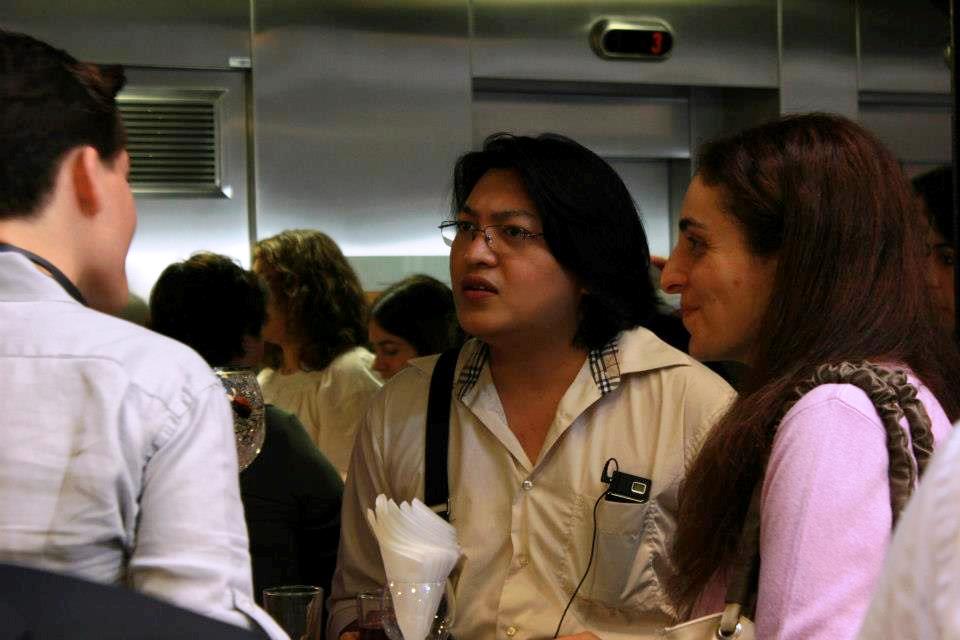

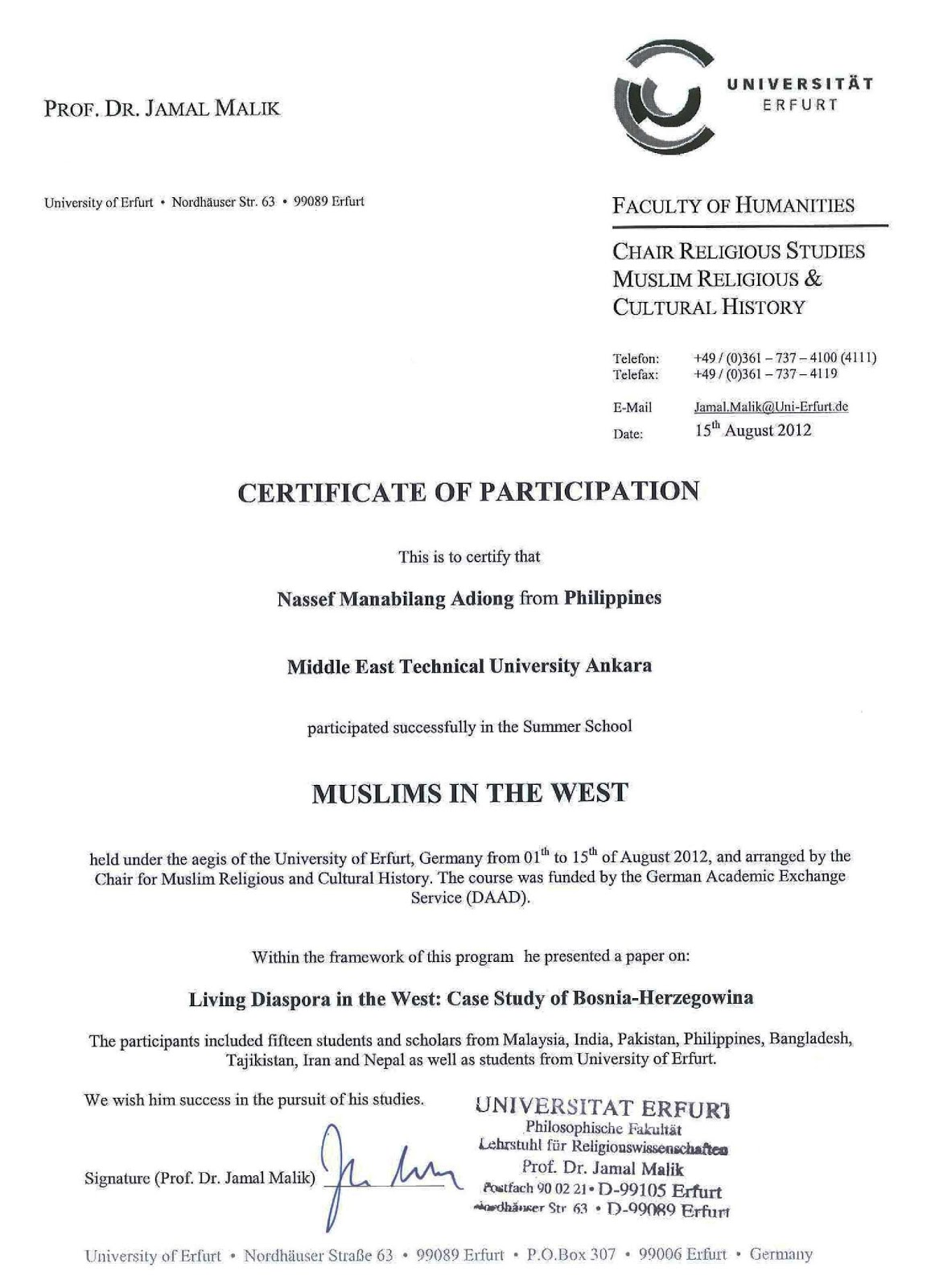
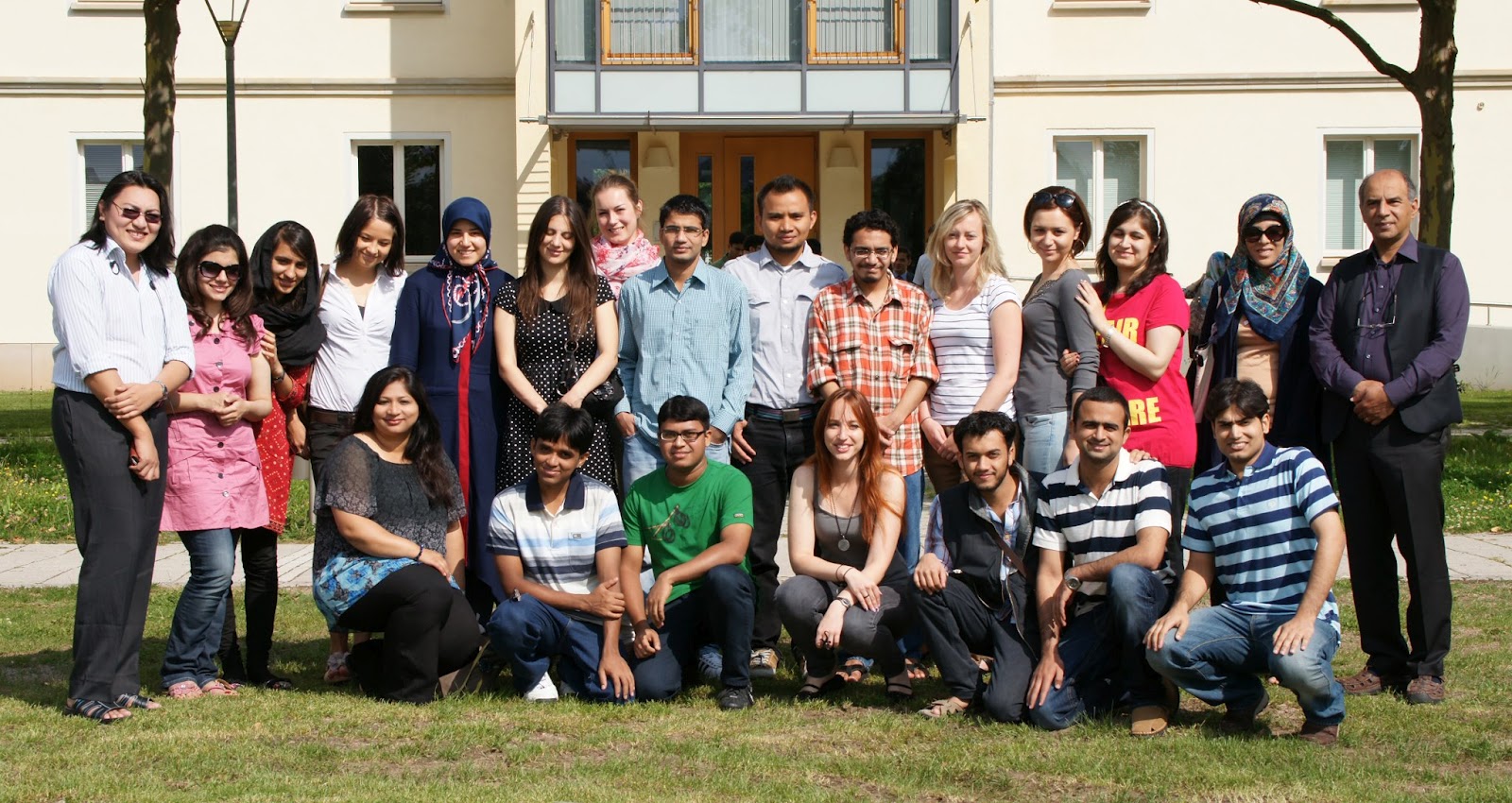







 Nassef Manabilang Adiong, PhD
You must be logged in to post a comment.