
Book Editors of “The Contemporary Bangsamoro”
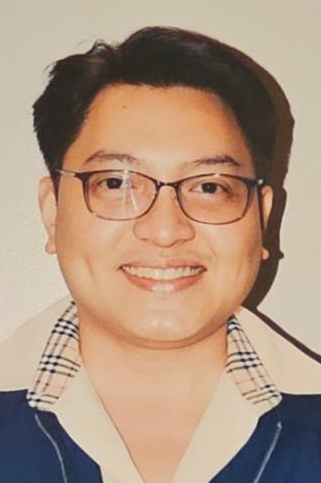
Dr Nassef Manabilang Adiong is the director of the Bangsamoro Autonomous Region in Muslim Mindanao – Parliament’s Policy Research and Legal Services (PRLS) and founder of four academic networks including the Philippine International Studies Organization (PHISO). He researches policy issues affecting the Bangsamoro society and explores decolonial knowledge sources of the global south as well as interdisciplinary study between Islam and International Relations. Since 2012, he has initiated the founding of one academic journal, five book series, and published a number of edited books, numerous journal articles, policy papers, book chapters, discussion papers, encyclopedic essays, and reference entries. Dr Adiong has received more than 23 accolades including the Noam Chomsky Global Connections Emerging Scholar Award, the BTA legislative resolution of commendation, UP Scientist conferment, UP Centennial Professorial Chair award, the Outstanding Young Men (TOYM) honor, PUP Professorial Chairholder award, amongst others.
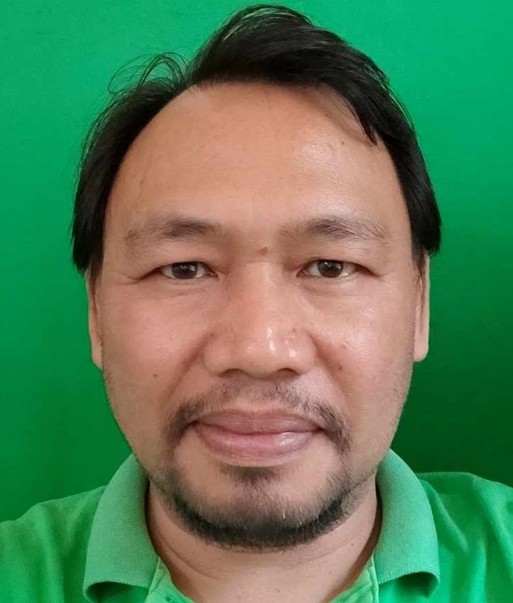
Dr. Acram A. Latiph serves as the Executive Director of the Institute for Peace and Development in Mindanao (IPDM) of the Mindanao State University (MSU) System and is a faculty member at the Department of Economics, MSU–Marawi Campus. He holds a BS in Economics from San Beda College, an MS in Finance from the University of the Philippines Diliman, an Executive Master’s in Public Policy and an Advanced Certificate in Conflict Resolution from the Maxwell School of Citizenship and Public Affairs at Syracuse University, and a PhD in Economics from the Australian National University. He is a recipient of several prestigious international scholarships, including the Fulbright Scholarship, the Australian Leadership Awards, and the NISGP Scholarship. His research focuses on development issues in Mindanao and the Bangsamoro, with particular interest in economic development, rural and fiscal policy, poverty, conflict resolution, Islamic economics, financial systems, sustainable development, peace and conflict studies, and preventing and countering violent extremism. Dr. Latiph has been engaged as a consultant and resource person by a range of institutions—international organizations, civil society groups, government agencies including the Bangsamoro Government, and local government units. He has contributed to the formulation of numerous studies, policy research, development and post-conflict rehabilitation plans in the Bangsamoro region, helping align economic policy with peacebuilding and inclusive growth.
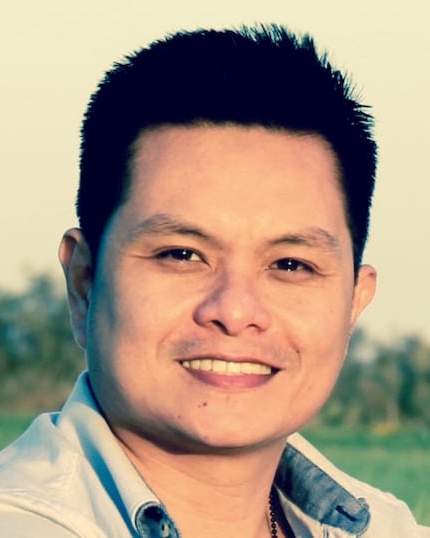
Almahdi “Aldean” Alonto is a dedicated peacebuilding scholar-practitioner with over 20 years of valuable experience in conflict resolution and post-conflict reconstruction. As a Chevening Scholar with an M.A. in Conflict Resolution from the prestigious Peace Department at the University of Bradford and a recipient of the Oxford Muntada Fellowship in Islamic Studies at the University of Oxford, he also earned an M.A. in Asian Studies and a B.A. in History from the University of the Philippines, Diliman. A highly respected scholar on Bangsamoro history and conflict resolution, his insights and publications have made significant contributions to the field. Currently, he serves as an Assistant Professor IV at the Graduate Department of Peace and Development Studies at Mindanao State University–main campus, where he also teaches in the History Department. Additionally, he leads important peace education initiatives as a Peace Education Officer at the Institute of Peace and Development in Mindanao (IPDM).

Bonjovi H. Hajan, a native of Sama Pangutaran, Sulu, is a scholar, educator, and researcher committed to advancing literacy, language, and cultural studies in the Bangsamoro and beyond. He currently serves as Director of the Sama Studies Center and the Sentro ng Wika at Kultura at Mindanao State University – Tawi-Tawi College of Technology and Oceanography (MSU-TCTO), where he is also an Associate Professor and Research Chair of the College of Education. He holds a Master of Arts in Education, specializing in English Language Teaching, from the Philippine Normal University in Manila, and graduated cum laude with a Bachelor of Secondary Education major in English from Western Mindanao State University. In 2024, he was recognized as one of MSU-TCTO’s top researchers for his Scopus-indexed publications. He has led and contributed to several funded projects, including a BARMM-MBHTE initiative on developing an Indigenous Peoples Education (IPED) framework for the Sama-Bajao, a USAID–Education Pathways project on teacher training needs assessment tools, a CHED-funded program on action research training, and an Australian Aid–supported policy review on Madrasah education in BARMM. Hajan is also Associate Editor of the Recoletos Multidisciplinary Research Journal (RMRJ) and the Journal of English Education and Linguistics Studies (JEELS) and serves as reviewer for several academic journals. He has published widely and presented research in the Philippines, Indonesia, Singapore, Hong Kong, Thailand, and the United States. In 2025, he represented the Philippines as a global scholar at the Translinguistics Research and Publishing Summer Institute at The Pennsylvania State University in the US. Through his research, teaching, and leadership, Hajan continues to amplify voices from the Bangsamoro, bridging local knowledge with global scholarship.

Mubarak M. Tahir, MAEd, LPT, is a Maguindanaon professional teacher, creative writer, researcher, and editor from Kitango, Datu Piang, Maguindanao del Sur. He earned his Bachelor of Arts in Filipino from Mindanao State University–Main Campus in Marawi City and completed his Master’s degree in Education at the University of Mindanao in Davao City. He previously served as a Special Science Teacher in Filipino at the Philippine Science High School in Davao City. At present, he is an Assistant Professor IV at Mindanao State University–General Santos City, while pursuing his doctorate in Creative Writing (Malikhaing Pagsulat) at the University of the Philippines–Diliman. In 2017, he became the first Maguindanaon to receive the national literary award, Don Carlos Palanca Memorial Awards for Literature, winning for his personal essay “Aden Bun Besen Uyag-Uyag” (Life Persist). He has published more than 20 literary works in anthologies, literary magazines, newspapers, online journals, and other platforms. As a cultural bearer, his writings reflect the socio-political and socio-cultural realities of the Maguindanaon people. He is also the editor of Kulintangan ad Gandingan: Tunog ng Pag-usbong ng Panitikang Bangsamoro, a book on language and literature in the Bangsamoro Autonomous Region in Muslim Mindanao (BARMM), published by the Komisyon sa Wikang Filipino. He likewise served as the official documenter of the MNLF Transformation Program, implemented by the Office of the Presidential Adviser on Peace, Reconciliation, and Unity (OPAPRU), in partnership with the Mindanao State University System and Mindanao State University–General Santos City.

Shariful Hashim S. Mansul was born in Jolo, Sulu, and is currently a graduate student taking up MA Philippine Studies at the Asian Center, University of the Philippines Diliman. He is also a Senior Research Assistant at the UP Institute of Islamic Studies. He finished BA Philosophy from Ateneo de Zamboanga University in 2022. His most recent academic engagements include his presentations entitled “Commencing the Colonial Anthropocene: Steam and the Subjugation of Pelagic Alliance in the Balanguingui Expedition of 1848” at the Jeju National University, South Korea and “Repopularizing the Dunia Melayu: The Bangsamoro between Filipino and Maritime Southeast Asian Identities” at the Chinese University of Hong Kong, China, among others. His body of academic and literary works have been published in various platforms such as the Bangsamoro Literary Review, National Commission on Culture and the Arts (NCCA), UP Writer’s Club, and different anthologies on Bangsamoro identity/ies, where he engages in discourses of history and society and their critical place in larger questions and practices of nationhood. He is also a founding officer of the UP Bangsamoro Studies Group, a student-led organization committed to the study and advocacy of the Bangsamoro. His research interests are Sulu history, decolonial theory, criticism, and maritime Southeast Asia.
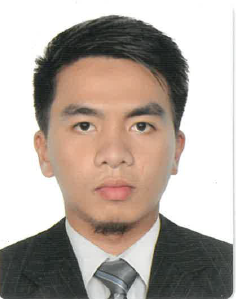
Abdul Kabir A. Gonzales, a son of a Jama-Mapun, is a Researcher, Educator, Speaker, Analyst, Author, and Human Rights Advocate with extensive leadership and community service experience. He currently works at the Office for International Affairs (OIA), Department of National Defense (DND). He graduated with First-Class Honours in Political Science (Rector’s List Awardee) at the International Islamic University of Malaysia (IIUM) and is a recipient of a fully funded scholarship from Al-Muntada Al-Islami for both undergraduate and postgraduate degrees. He has topped (2nd) in Islamic Studies Course at Almaarif Educational Center Inc. and has completed certificate courses in Islamic Economics and Fiqh & Usul Al-Fiqh from IIIT and IIUM. He has published numerous academic essays, articles, analyses, and insights Online. His research interests are international relations, Islam and politics, defense diplomacy, maritime security, federalism, public policy, populism, human rights, and international law.

Dr. Junsu Seo is senior programme specialist of the International Centre for Documentary Heritage under the auspices of UNESCO and guest researcher at the Center for Southeast Asian Studies in Hankuk (Korea) University of Foreign Studies. His researches focus on Southeast Asian Studies, including conflict resolution, democracy, international cooperation and non-security (cultural) approaches for peacebuilding. He has a special interest in Mindanao, which led him to publish researches on international mediation to establish a peace process, legal foundation of autonomy through judicial review, Islamic worldview and application to the Bangsamoro, global significance of peace agreements as documentary heritage. From 2021 to 2024, he worked as a columnist on global issues at Korea Newspaper of Public Policy and as a researcher for translation of “Institutional Economics” and “Legal Foundation of Capitalism” by John Commons, funded by National Research Foundation of Korea. In collaboration with the National Commission for Culture and the Arts (NCCA), since 2024, he has been leading a international project for inscription of Mindanao peace agreements in UNESCO’s Memory of the World International Register. Currently, he leads introduction of Global Citizenship Education with the combination of UN SDGs and Memory of the World for high schools. He also serves as international director of the Korean Association of Thai Studies.

 Nassef Manabilang Adiong, PhD
You must be logged in to post a comment.