Critical Relations between International Relations and Islam

Call for papers and/or panels for the section on the “Critical Relations between International Relations and Islam” chaired by Nassef Manabilang Adiong.
18-21 September 2013
Warsaw, Poland
Organized by the Standing Group on International Relations (European International Studies Association) in cooperation with the Institute of International Relations, University of Warsaw and the Polish Association for International Studies.
For a very long time, the Muslim world was regarded as an outsider from the cultural and normative pretext and state relations of the West. Even during the reign of the Ottoman Empire, scholars of International Relations (IR) excluded her as a subordinated stealth ally or non-ally of major European powers. 
The shift from Bush to Obama in their foreign policies toward the Muslim world, Imam Khamenei’s position about nuclear weapons, transitional political elites such as Egypt’s Pres. Morsi (Muslim Brotherhood) and Tunisia’s PM Jebali (Ennahda Movement), and Malaysia and Indonesia’s rising Salafi (political) movements are few examples that it is now apparent that there is an imperative motivation why Islamic discourses gradually dominate contemporary international relations, and how it affects the West in a theory-praxis spectrum.
The objectives of this section are to show juxtaposed positions of mutual or diverse perceptions between IR and Islam based on conceived notions of contested conceptions like sovereignty, nation-state, human rights, gender, etc., and place Islam in the epitome of global discourse of international relations as a major causal factor that affect the behaviors of actors in the international system. 
It hopes to examine two inquiries:
1. How International Relations scholars perceived the field of Islam since the Interwar period (1919-39) until now?
2. How Islamic scholars (Muslims or non-Muslims) perceived the field of IR since the Interwar period until now?
Tentative themes within the disciplines of IR and Islamic Studies:
– Towards the Idea of an Islamic IR theory?
– Islamic episteme and methodology: (In)Applicable to IR
– IR and Islamic Interpretations on the principal element of nation-state
– Probable fifth IR’s Great Debate: An Islamic (religious and cultural) challenge to the mainstream IR paradigms and theories?
– Examination of current positions, status, and progress of scholars, practitioners, and students engaged in the research of both IR and Islamic Studies.
Tentative themes in the practice or phenomena of international relations and Islam:
– Revisiting integration studies of Muslim migrants in Europe and their present political climates in shaping EU’s foreign policy.
– How Islamic symbols like veils and minarets affect the political life in Europe and the United States in their creation of domestic policies affecting the issue on Muslim’s minority rights
– Depiction of Prophet Muhammad in printed literature and films in the West, and the reactions of Muslims worldwide
– The victory of Islamists parties in post-Arab Spring in Tunisia and Egypt, and their foreign policies toward the West (specifically the US, EU, and Israel)
– Iran’s velayat-e faqih and the nuclear issue
– Efficient or not: Organization of Islamic Cooperation (OIC), Arab League, and the Gulf Cooperation Countries (GCC) 
– The Muslim youth and the social media (Google, Facebook, Twitter, etc.) in the Arab Spring process.
– The relations of Israel and the Muslim world
– Turkey’s AKP positions in Middle Eastern issues, e.g. Syria’s ongoing civil war, Iran’s nuclear energy or Palestinian question 
– Updates on the US War-On-Terror in Afghanistan and Iraq
– Pakistan-US relations after Osama’s capture
– The rise of Wahhabi and Salafi’s movements in Southeast Asia and how it will affect ASEAN (Association of Southeast Asian Nations)

Instructions

Abstract of your paper/panel proposal(s) should be 150-200 words. A panel proposal must have a chair, discussant, and 4 to 5 paper presenters.
Proposals must be submitted via the online submission system at https://www.conftool.pro/paneuropean2013/index.php?page=login
After submitting your proposal, please send a copy of it including an autobiographical statement to info@nassef-m-adiong.com.
For more information on the conference, please go to http://www.8thpaneuropean.org/ or email europeanisa@gmail.com.
The closing date for paper and panel proposals is midnight CET on Sunday (24 February 2013).
Best Ph.D. Student Paper 2012

Competition now open.

The European International Studies Association (EISA) invites nominations for a competition to judge the Best Ph.D. Student Paper 2012.  The main criteria for judging the papers will be outstanding scholarship and originality. Papers may have been presented at a workshop or conference or published during 2012. The award will be announced at the upcoming EISA Pan-European Conference in Warsaw, Poland (18-21 September). 

Nominations and a copy of the paper should be sent to the selection committee chair, Professor Karin Fierke (kf30@st-andrews.ac.uk). 

The deadline for nominations is 1 May 2013.

This call for this particular section was also announced in the following websites (click each entry to view it):
Asfar: The Middle Eastern Journal
British International Studies Association

Turk and Arab Youth Congress

Dear Turk and Arab Youth Congress,
Thinking that I will get accepted to participate in a youth congress dedicated to Turk and Arab youths only is beyond disbelief. My application, probably one of my random applications sans contemplating if ever I will have the chance to be one of the participants, was remarkably candid, yet I answered the essay questions wholeheartedly, honestly, and with a sense of (hopefully) wittiness.  
My application strives from deep curiosity and research passion to observe a culmination of cultural and intellectual exchanges among youths, with the assistance of invited learned-scholars and practitioners, of two ancient civilizations (Ottomans/Selcuks and Arabs) engraved with a rich history, cultural heritage, and a legacy of the immense contribution of intellectual stamina for the progress of the entire human civilization.
I was at awe and excited when I learned that I was accepted, especially that all participants are entitled of free return tickets and board and lodging over the entire duration of the congress. I was also amused that my second flight was a business ticket. Indeed, a large amount of financial resources is necessary for an international congress or conference to be held successful. So, thanks to the organizers particularly to the Istanbul Metropolitan Municipality Youth Assembly.

Poster made by the organizers.
In the very beginning, before the congress started, there were administrative and technical hurdles and struggles that the coordinators and organizers faced. I hunched that they encountered a long bureaucratic process in waiting for approvals from authorities in receiving their budget. We were also informed that some organizers/coordinators have had familial difficulties. This was in no doubt some common obstacles especially that the organizers, as all of them admitted, were first-timers or novice.
Accepted participants were anxiously waiting for updates regarding the logistics and course-program. Some of the pathological vulnerabilities experienced  by the participants were: updated information was given one to two days prior the commencement of the program (this was unacceptable since there are international recipients who needed to processed-out their visas and other pertinent preparations), some (isolated) youth participants have to find the venue (the university and dorms) themselves while most were accompanied, and confusing verbal instructions from different coordinators have taken placed upon the entry of participants inside the vicinity. However, we are hoping that, in the subsequent congresses, these problems would be overcome.
One of the disappointing news in the program was the last-minute cancellation of invited keynote speakers who have been confirmed. I was personally excited in meeting John L. Esposito, but he cancelled abruptly due to ‘unknowable’ flight issue problem(s). Even some local personalities cancelled their appearances. This is why the organizers have to resort to their back-up plans or plan B, C, or D onwards, thus affecting the entire supposedly ‘grandeur’ program. However, it was intellectual delightful to listen and learn some inputs from Prof. Dr. Heba Raouf Ezzat on ‘civil society’ and Bilal Macit on ‘leadership’.

Certificate given by the organizers.

The workshops were like ‘open forum’ about sharing anecdotes on social networking, electronic revolutions, and personal advocacies. I raised questions that somehow would ‘positively’ provoke the participants and directors of workshops to brainstorm on Noam Chomsky’s thesis of manufacturing consent and Howard Zinn’s quotes. But, no one bother to expound or contemplate on my inquiries despite briefly explaining them. I was interested when academicians such as Ali Murat Yel et al have opened the discussions on Muslims in the West particularly on American Muslims while I shared my thoughts on European Muslims concomitant Turkish, Arabs, and Iranians counterparts.
Although there were historical tensions between the relations of Arabs and Turks since the Arab revolt against the Ottomans or the allying of Turkey with the West since the post-Cold war era … it has come to present attention that Turkey’s political and economic relations with her eastern neighbors (mostly Arab countries) are gradually strengthening based on positive economic indicators and the determination to maintain Turkey as one of the hegemons within the region. Becoming more vocal regarding the plight of the Palestinians against Israel’s cruel unilateral occupation and suspicious ethnic cleansing, partaking to the Iranian nuclear talks, and the consideration of Arab countries in adopting a Turkish model for their transitional government phase from (military) dictatorships to democracies have all transcribed to reach an ‘insurmountable’ via media (middle way) between Turks and Arabs.  
Consequently, there were explicit pluses and minuses transpired in the course of the congress. The important is I was able to share my thoughts and learn from participants whom I have the privilege to meet once and some twice including Rosen Dimov (PhD colleague I met from the Eurosphere program at Sabanci University), Vedat Yılmaz and Omar Aljuhani (fellow IMOICs, i.e. International Model Organization of Islamic Cooperation, I met in Kazan, Russia), Verena Walther (effervescent and beautiful friend from Germany), Gülay Kaplan (the workaholic coordinator and a role model for everyone), Wasif Wan (my Southeast Asian fellow), Eyüp Ersoy (PhD colleague from Bilkent University whose research is on the concept of ‘influence’), Mohammed Al-Shibany and Omar Alzwawi (two smart and suave Libyan delegates), Omar Abdurahman (with his undying and transcending principles), Tata Shengelia (and her beautiful Georgian dialect), Buğra Erarslan, Deniz Baran, Salih Gundogdu, and Ibrahim Nalcaci (they helped me in various administrative and technical things), and many honorable participants.
“We are surely proud to say that once this was just a dream, but now it has come true” as Zeyd Böhürler, the president of the organizing team, said in his speech during the closing ceremony. Definitely, this is just a beginning but a start of something big to come in the near future. I am looking forward to your future projects and youth advocacies.
More power and Godspeed!

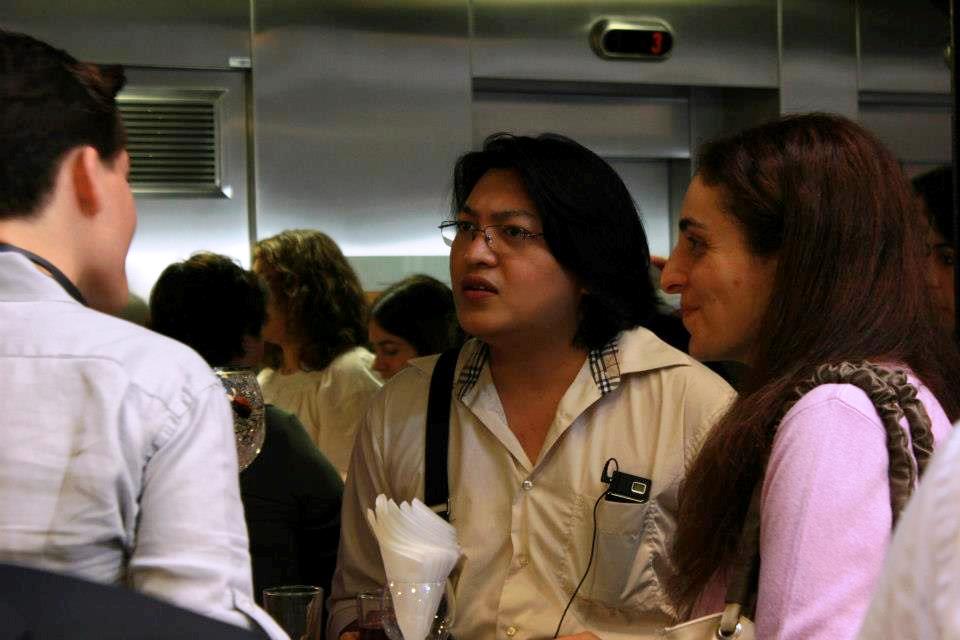
My photo taken by the Turk & Arab Youth Congress team,
which was posted in their official facebook account. 


Nassef Manabilang ADIONG
Batch 2012

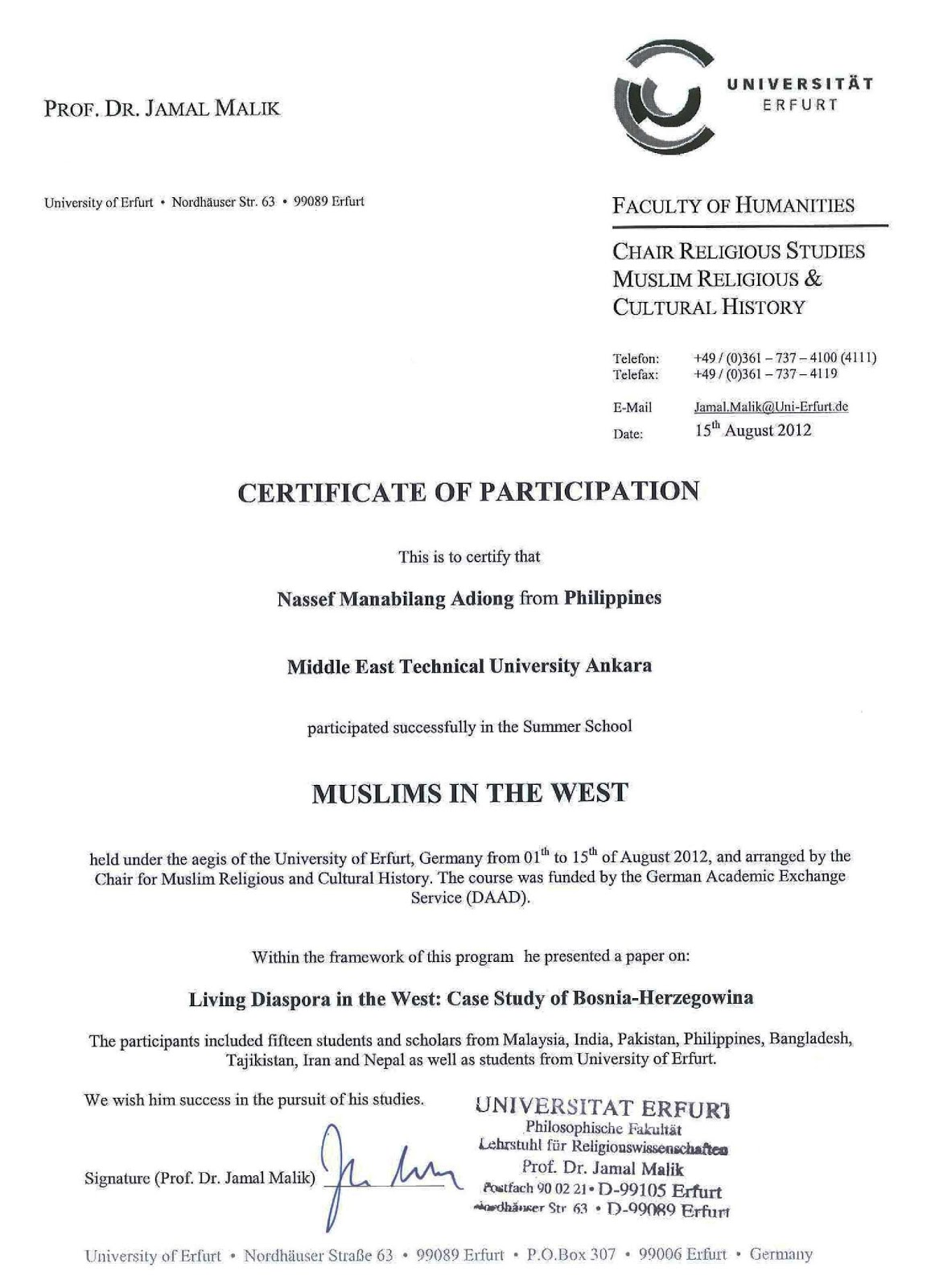
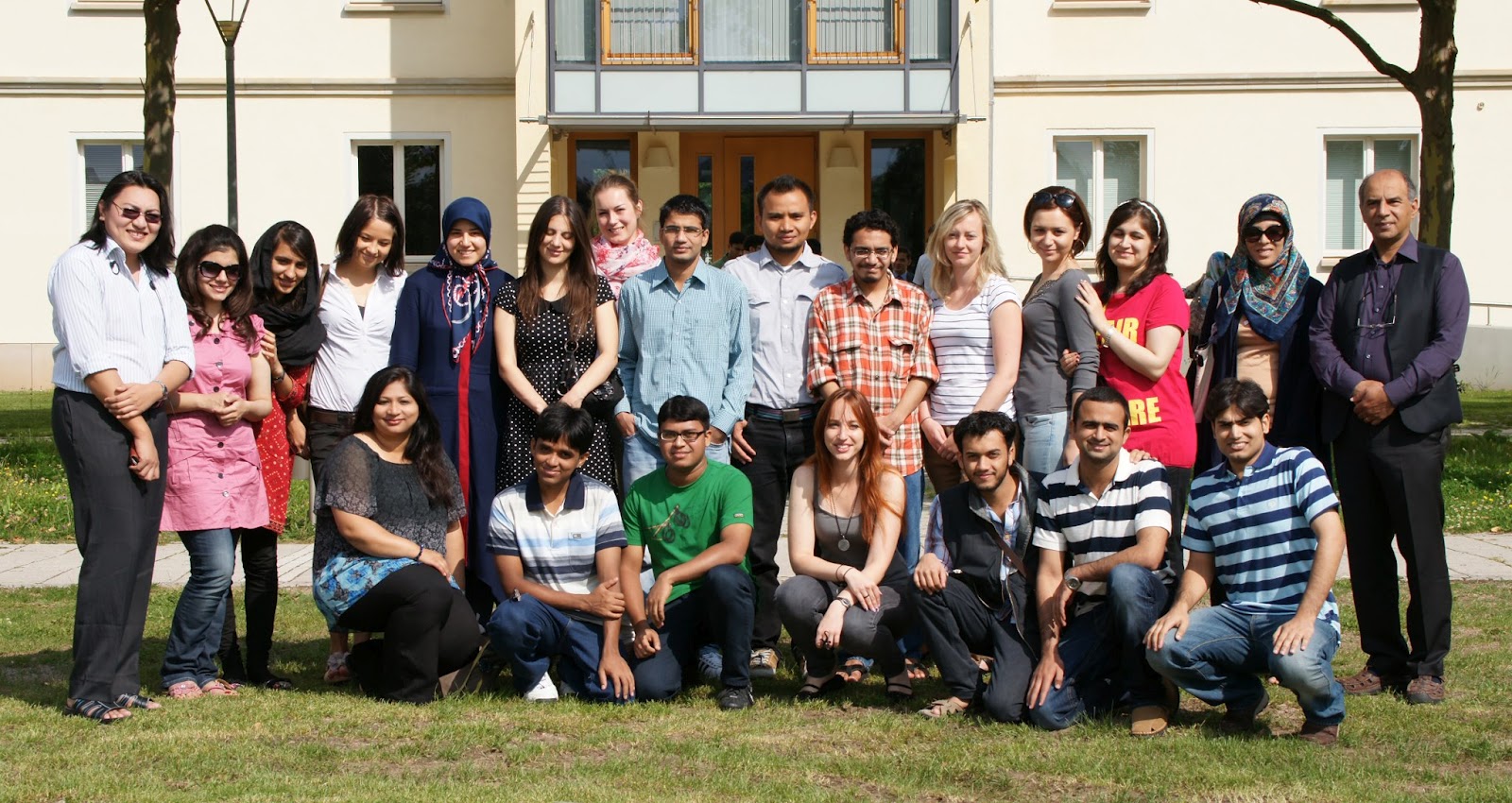
Erfurt’s 11th Summer School on "Muslims in the West"

Description written below were taken from this URL link: 
In the aftermath of terrorist attacks of 9/11 the Chair of Islamic Studies participated in “Dialogue with Islam” an academic activity initiated by the German Academic Exchange Service (DAAD). Ever since debates on “Islam and the West” has become part of the tradition of Chair of Islamic Studies. The importance of a continuous and permanent dialogue is even more obvious, as the terrorist attacks do not end, but rather seem to rise, as the latest incidents in London and Egypt demonstrate.
With the initiation of the international Summer School “Muslims in the West” the Chair of Islamic Studies intents to contribute to this dialogue. Muslims from different countries and cultures (India, Pakistan, Turkey, Saudi Arabia, Iran, Yemen, South Africa, Sudan, Malaysia) have been participating for the last five years. Thus, the promotion of a direct dialogue between students and Alumni led to a better mutual acceptance, tolerance and understanding.
The summer school has always been a very successful vehicle not only in strengthening the dialogue, but also in increasing the international reputation of University of Erfurt. So far more than 100 students have participated in this summer school and many more have shown interest, to participate fruitfully in the ongoing mutual understanding of “Islam” and the “West”.
A considerable number of Muslim migrants in Europe, especially in Great Britain and France, come from countries in South Asia, in particular, India, Pakistan, and Bangladesh, and from North Africa. The importance of these regions is further acclaimed by the fact that very large Muslim populations in the world are concentrated in these regions.
News video can be seen at this URL: 
Courtesy of the University of Erfurt’s facebook page.

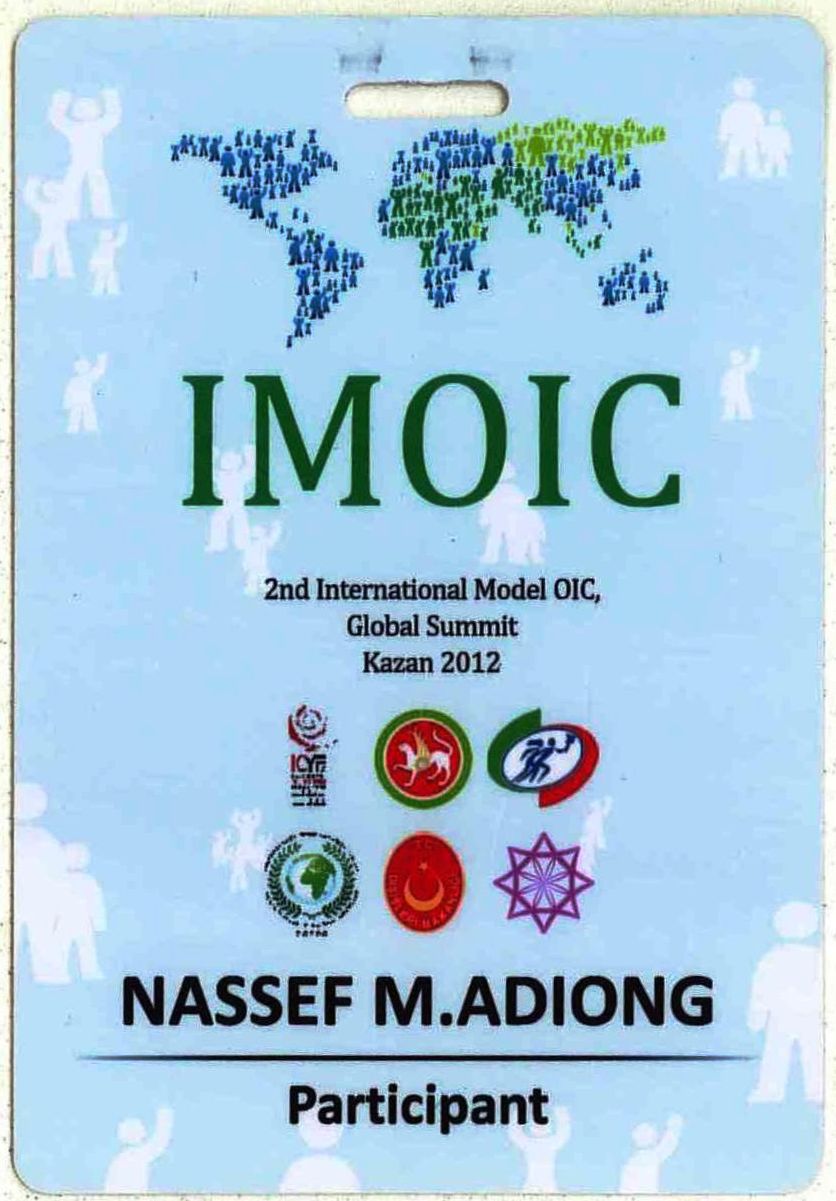
2nd International Model Organization of Islamic Cooperation (IMOIC)

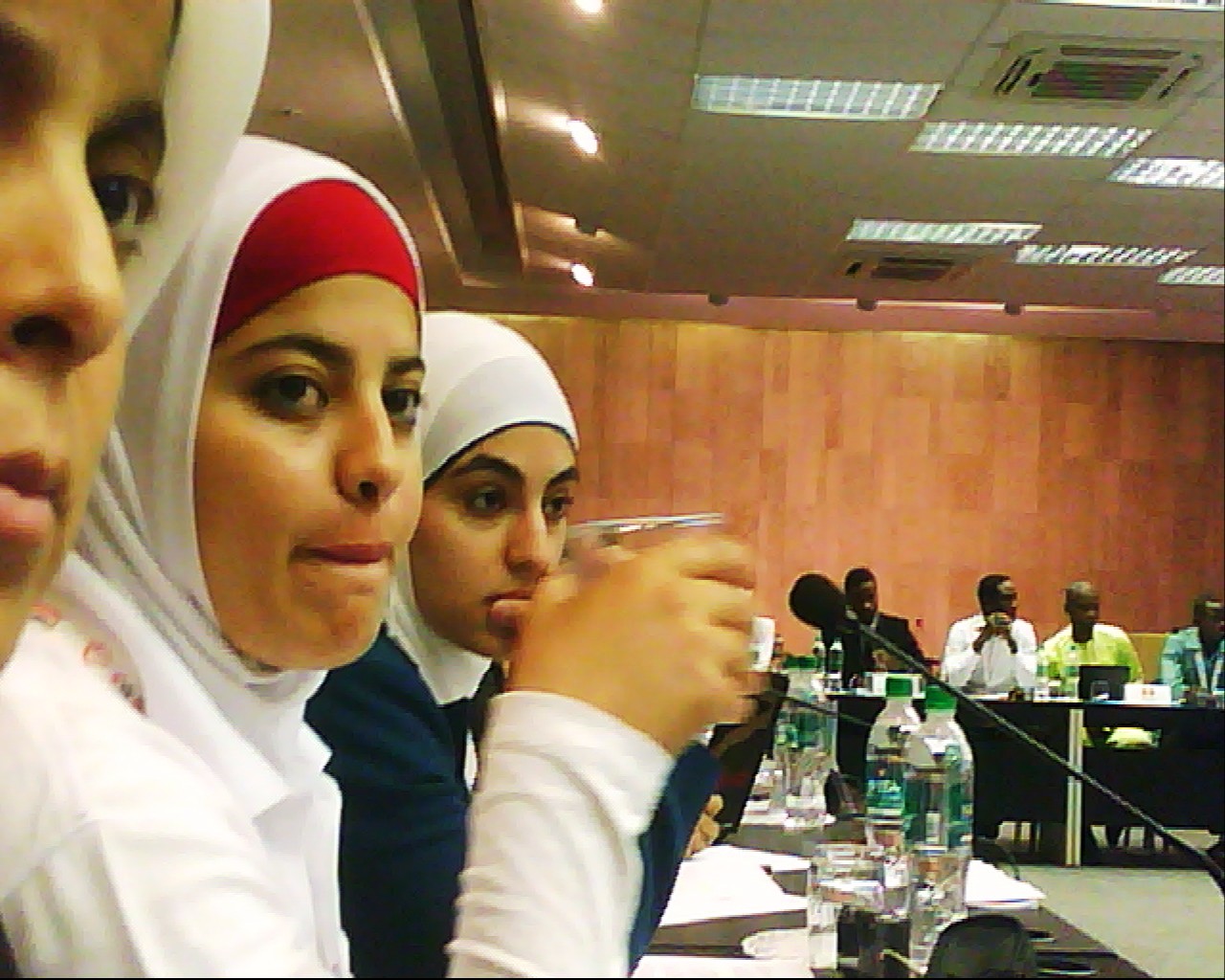
Solely and humbly representing the Muslim minority (13-ethnic) groups of the Republic of the Philippines or (officially) the Moro National Liberation Front (MNLF) as an observer at the 2nd global summit of IMOIC in the beautiful and cosmopolitan City of Kazan of the Republic of Tatarstan in Russia on 3-10 July 2012. 

Credit goes to MOIC Egypt.
The summit addressed issues on (1st agenda) religious and political sectarian gaps in Iraq and Myanmar, (2nd agenda) transitional governments in Tunisia, Egypt, and Libya, (3rd agenda) Iran’s nuclear energy, (4th agenda) Muslim minority groups in the Balkan peninsula, and (5th agenda) passing an emergent resolution on the Nagorno-Karabakh conflict.
Erratum in spelling: ‘knowledgeable
This recognition given to the Philippine delegate was designated by the trainers from MOIC Egypt.
Credit goes to the MOIC Egypt.

Credit goes to the OIC Youth Forum.

Personal critique: It is quite apparent and seemingly appalling on how such ridiculous process and absurd manner of repassing the failed resolution on the issue of Iran’s nuclear energy just to please some member-state sponsors’ interests by the organizing team.

Credit goes to the OIC Youth Forum.
Credit goes to the honorable Indonesian delegate Mr. M Sya’roni Rofii.

In addition, the satirical handling of moderating two panels regarding the OIC youth empowerment and issues of governance of countries involved in the Arab Spring phenomenon were highly preposterous.

Acknowledgement: Regardless of my personal critique, I am expressing my heartfelt thanks and congratulations to the Organization of Islamic Cooperation (OIC), Ministry of Foreign Affairs of the Republic of Turkey, Ministry of Youth Affairs, Sport and Tourism of the Republic of Tatarstan, Center of Civilizations Studies and Dialogue of Cultures (CCSDC), ICYF-DC Eurasian Regional Center, and Tatarstan Republican Youth Public Fund “Selet” for a successful 2nd IMOIC global summit. 

I am hoping that this will be a continuous annual tradition, which will lead to the ramification of the mission-vision of IMOIC, i.e., “to educate participants about civics, current events, effective communication, and multilateral diplomacy. It will also help create a network between Islamic universities and youth organizations around the world.”
A souvenir given by the Egyptian trainers.
NB. As a sole delegate from the Philippines, the trainers decided to shift my representation in a specified agenda. In 1st and 5th agenda, I represented the MNLF (Philippines) as observer, respectively; in 2nd and 4th agenda, I represented the United Nations as observer, respectively; while in the 3rd agenda, I represented the Syrian Arab Republic as a bona fide member with inclusive amendment rights and voting rights in the resolution process. 
A souvenir given by the Egyptian trainers.
The organizers tentatively announced that the 3rd IMOIC global summit will be held in Kuala Lumpar, Malaysia which will be hosted by the International Islamic University Malaysia (IIUM).
Simulations!
The honorable delegates from Palestine sitting beside me.
The biggest version of the Holy Qur’an.
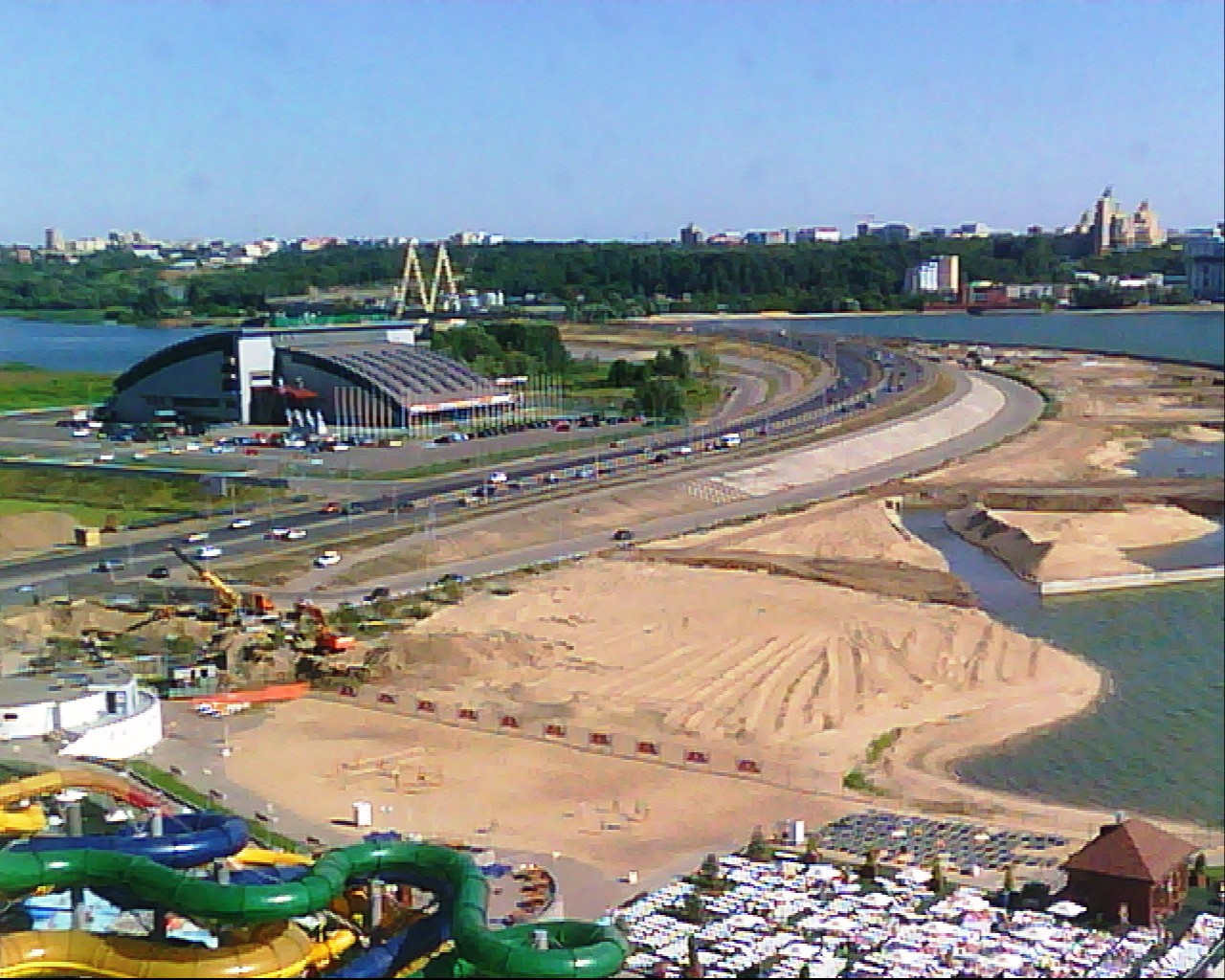
 City of Kazan, Republic of Tatarstan

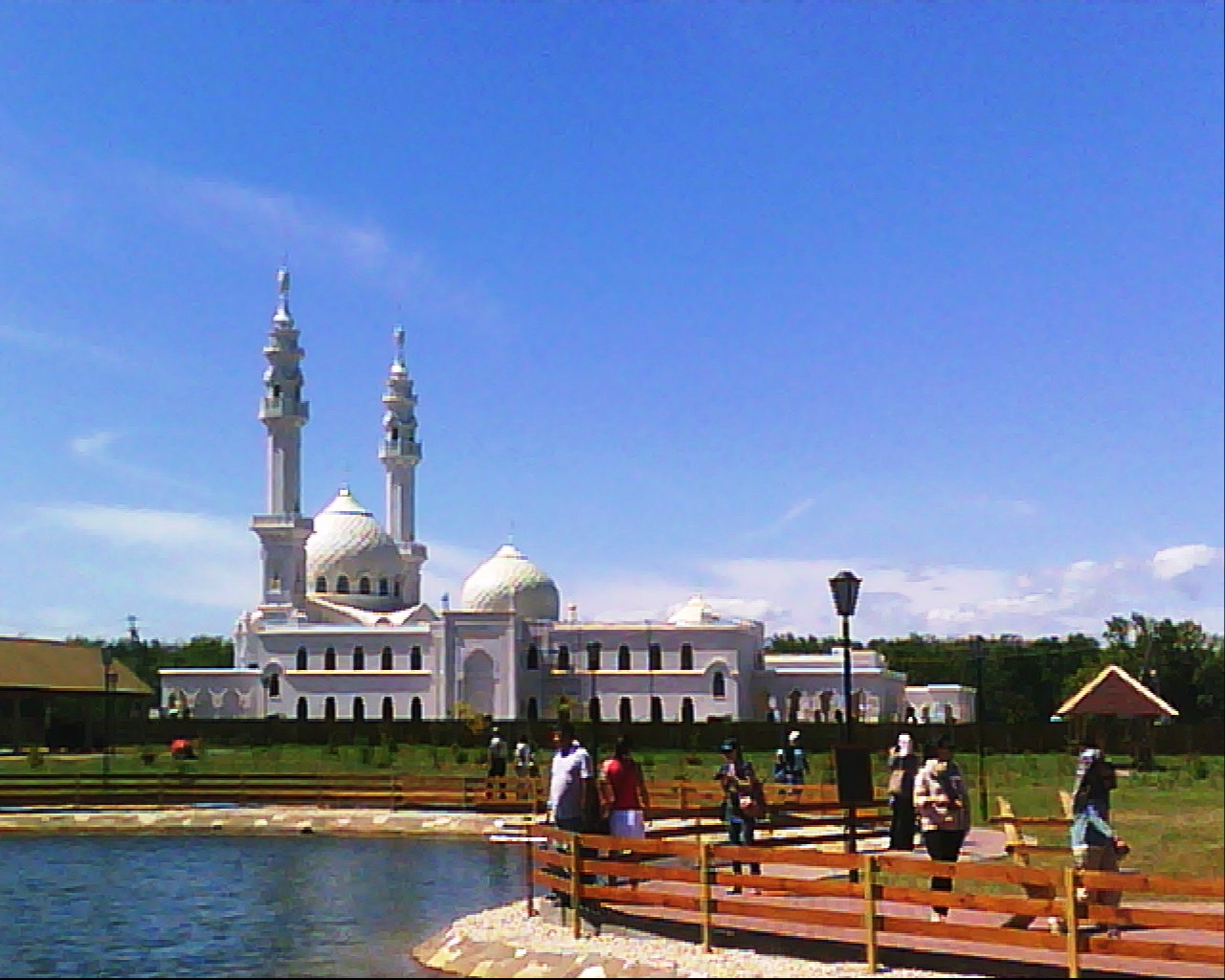
 City of Bolgar, Republic of Tatarstan

City of Kazan, Republic of Tatarstan

Members of the IR-IS Research Cohort

Personalities who expressed to help and be part of the cohort so far:

ABDELKADER, Deina is currently an assistant professor in the department of political science at the University of Massachusetts at Lowell. Abdelkader is a Comparitivist and International Relations specialist. Her scholarly interests and research, focus on the Middle East and North Africa, Comparative Democratization in the Muslim World, Islamic Activism, and the Role of Muslim Women in Religious Interpretation. She is the author of Social Justice in Islam (2000) and Islamic Activists: The Anti-Enlightenment Democrats(Pluto Press, 2011). She has also authored a number of articles; her latest is: Coercion, Peace and the Issue of Jihad in the Digest of Middle East Studies, and a forthcoming book chapter titled: “Modernity, Islam and Religious Activism“, The New Global Order and the Middle East, Ashgate Publishers, (forthcoming Fall, 2012). Abdelkader is also one of two women on the Islamic Jurisprudential Council of North America (Fiqh Council of North America) and she is also part of the editorial board of the Digest of Middle East Studies, and the new President of Voile: “Voices of Islamic Law and Ethics”. <deina_abdelkader@uml.edu>

ACOSTA, Eduardo Erazo is a sociologist at the Research on Religion and Migration at the University of Nariño in Pasto, Colombia. <rueduardo2000@hotmail.com>

ADIONG, Nassef Manabilang is the founder of the IR-IS Research Cohort. <info@nassef-m-adiong.com>

ARAJ, Victoria Dimitri is currently a Marie Curie Research Fellow in the Faculty of Arts and Social Sciences at Sabanci University in Istanbul, Turkey and a PhD candidate in the Department of Peace Studies, University of Bradford, UK.  Her research interests include Turkish Foreign Policy, the Israeli-Palestinian conflict, relations between Turkey and Israel, state building and peace building. <victoriaaraj@sabanciuniv.edu>

ARNAKIM, Lili Yulyadi Bin is a visiting scholar at the Centre for Policy Research and International Studies at Universiti Sains Malaysia. <yulyadi@yahoo.com>

DALAY, Galip is a PhD student in International Relations at the Middle East Technical University in Ankara, Turkey. He is also a research assistant under the political research wing of SETA Foundation for Political, Economic and Social Research in Ankara. He has co-authored with Hatem Ete and Mustafa Altunoglu the “Dominant Party Politics and Justice and Development Party” (SETA Foundation, 2013). <galip.dalay@gmail.com>

DUDERIJA, Adis is a senior lecturer in gender studies at the University of Malaya. He is the sole author of “Constructing Religiously Ideal Believer and Muslim Woman Concepts: Neo-Traditional Salafi and Progressive Muslim Methods of Interpretation (Manahij),” (Palgrave, 2011) and a forthcoming edited book entitled “Maqasid Al Shari ah and Contemporary Muslim Reformist Thought” (Palgrave, 2014). His research interests in Islamic Studies are gender and Islam, contemporary reformist Muslim thought, and Islamic hermeneutics. <adisduderija@gmail.com>

ERSOY, Eyüp is a PhD candidate in International Relations at Bilkent University in Ankara, Turkey. He is an assistant editor of Review of International Law and Politics published USAK International Strategic Research Organization. His article on “Bringing Religion Back In: Debating Religion in International Politic” was published in All Azimuth: A Journal of Foreign Policy and Peace in 2012. He has written a book entitled “Turkish-Chinese Military Relations: Spinning More, Moving Less” (Ankara: USAK Publications, 2008). <eyupersoy@hotmail.com>

HAQUE, Mohammad Mohibul is an assistant professor of the department of political science at Aligarh Muslim University in India. In 2011, he authored a book entitled “International Terrorism and Violence: A Human Rights Perspective” published by Manak Publications (New Delhi) in collaboration with Aligarh Muslim University Press (Aligarh). He also contributed several articles and research papers in national and international journals, magazines, and newspapers. He has been a panelist for discussions on TV and other public fora. He is the recipient of the President of India Dr. Shankardayal Sharma Gold Medal. His areas of interest are Political Theory, International Politics, Poltical Islam, Indian Polity, Terrorism and Human Rights. His email address is <mohibulhaque@gmail.com>. 

KIDWAI, A.R.M. Saleem is a professor in School of International Studies at Jawaharlal Nehru University in New Delhi, India. He was a twice recipient of Fulbright Fellowship. He has authored four books and several journal articles. He is the director of the International Centre for Peace Studies in New Delhi and the president of the Centre for the Study of Muslim World and Democracy. He travelled extensively and visited Pakistan, Bangladesh, Saudi Arabia, China, Thailand, Austria, the UK, France, and the USA. <kidwaisaleemjnu@gmail.com>

KUMAR, Rajeesh is a doctoral candidate at the Centre for International Politics, Organization and Disarmament in the School of International Studies at Jawaharlal Nehru University in New Delhi, India. He co-edited with Navaz Nizar the “Islam, Islamist Movements and Democracy in Middle East: Challenges, Opportunities and Responses” (New Delhi: Global Vision Publishing House, 2012), and co-edited with Daniel Daianu, Giorgio Basevi and Carlo D’Adda the “Eurozone Crisis and the Future of Europe:  Political Economy of Further Integration and Governance” (London and New York: Palgrave Macmillan, forthcoming in 2013). <rajeeshkumaar@gmail.com>

MAURIELLO, Raffaele is an Italian historian of the modern Middle East. He holds a PhD in Islamic Civilization: History and Philology from the Sapienza, University of Rome (Italy). He has published several peer-reviewed essays and chapters in edited volumes on Shi‘a Islam history and on Iranian and Iraqi geopolitical affairs. He is also a translator of both Arabic and Persian languages. In 2013, he was awarded the World Prize for the Book of the Year of the Islamic Republic of Iran in the field of Islamic Studies for his monograph Descendants of the Family of the Prophet in Contemporary History: A Case Study, the Šī‘ī Religious Establishment of al-Naǧaf (Iraq) published on December 2011 by Fabrizio Serra. He can be contacted through his email address, i.e. <raffaele.mauriello@me.com>.

PARRAY, Tauseef Ahmad is a doctoral candidate at Aligarh Muslim University in India. His research interests involve Islam and democracy, modern Islamic political thought, and Qur’anic studies. His latest article is ‘Democracy in Islam: Views of Several Modern Muslim Scholars’ published in American Journal of Islamic Social Sciences. <tauseef.parray21@gmail.com>

SAYIN, Yusuf is a PhD candidate in International Relations at Selçuk University. He has written a master thesis entitled “Uluslararası İlişkiler ve Din: İslam’ın Dış Politika Kuramı (International Relations and Religion: Islam, Foreign Policy Theory).” <yusuf.sayin@hotmail.com.tr>