The Co-IRIS team will participate at this year’s World Congress for Middle Eastern Studies (WOCMES) in Seville, Spain. We are very proud that one of our founders, Dr. Raffaele Mauriello, is a member of the Scientific Advisory Committee. The Co-IRIS has a symposium composed of 5 panels and 1 meeting-in-conjunction.
SY-11: Co-IRIS: Islam and International Relations
Organized by:
Nassef Manabilang Adiong, University of the Philippines Diliman,
Raffaele Mauriello, Allameh Tabataba’i University, and
Deina Abdelkader, University of Massachusetts Lowell.
Panel 1. Islamic Law and International Law II (1/5)
Wednesday, 18th July 2018
9:00 a.m. – 11:00 p.m.
Room: 203
Chair: Nassef Manabilang Adiong
Miguel Ángel Fernández Fernández, Universidad de Granada: ‘Erdogan: toward the Sunni leadership‘.
Husnul Amin, International Islamic University – Iqbal Int. Inst. for Research and Dialogue: ‘Islamic political parties through the lens of their electoral manifestoes in Pakistan‘.
Nicole Beckmann Tessel, The University of Chicago: ‘Ottomans and afsharid negotiations to the treaty of Kerden (1746)‘
Wardah Alkatiri, Universitas Nahdlatul Ulama Surabaya: ‘Ijtihad for the planet and a postmodern critique of the modern nation-State‘.
MIC-5. Meeting of Co-IRIS: Islam and International Relations
This event is open to public participation.
Wednesday, 18th July 2018
11:30 a.m. – 1:30 p.m.
Venue: University Board Meeting Room
Panel 2. Islamic Law and International Law I (2/5)
Wednesday, 18th July 2018
2:30 p.m. – 4:30 p.m.
Room: 209
Chair: Nassef Manabilang Adiong
Nassef Manabilang Adiong, University of the Philippines Diliman: ‘Muslim views on the “International‘.
Tahar Abbou, University of Adrar: ‘War prisoners in Islam and in the International Law: a comparative study’.
Badry Roswitha, Freiburg University: ‘Recognition of the Human Rights of sexual minorities as an ongoing contentious issue – a look at the situation in Arab countries‘.
Radhika Kanchana, Centre de Recherches Internationales (CERI): ‘How do Muslim countries treat their “outsiders”? Islamic practice on naturalisation and the relationship with International Law and norms‘.
Liyakat Takim, McMaster University: ‘Islam and democracy‘.
Panel 3. Diplomacy in Islam: past and present (3/5)
Thursday, 19th July 2018
9:00 a.m. – 11:00 a.m.
Room: 109
Chair: Raffaele Mauriello
Laila Dandachi, University of Vienna: ‘The significance of Islamic arms and armour in diplomatic encounters between the Habsburg monarchy and the Islamic Empires in the Early Modern Period‘.
Raffaele Mauriello, Allameh Tabatabai University: ‘Looking at diplomacy in Islam from the Islamic Republic of Iran: the perspective from the Iranian academia‘.
Heidarali Masoudi, Shahid Beheshti University: ‘Islamic metaphors in Iranian diplomatic rhetoric‘.
Hsiu-Ping Bao, National Chengchi University: ‘“Revival of Islam” and “Establishment of the Nation”: the public diplomacy of Hui Muslims to the Middle East during the Sino-Japanese war (1937-1945)‘.
Victoria Araj, University of Bradford: ‘Post-Islamism as a response to the double-security dilemma: a case study of the Justice and Development Party (AKP)‘.
Amjad Al-Dajani: ‘Sheikh al-Islam of the British Isles, Sheikh Abdullah Quilliam‘.
Panel 4. Islam and Democracy I (4/5)
Thursday, 19th July 2018
11:30 p.m. – 1:30 p.m.
Room: 109
Chair: Deina Abdelkader
Ahmed Ali Salem, Zayed University: ‘Islam and democratization: a theoretical-empirical critique of Huntington’s misunderstandings‘.
Housamedden Darwish, University of Cologne and University of Duisburg-Essen: ‘Islam and democracy in the thought of Sadik J. al-Azm‘.
Mushtaq Ahmad Wani, Ibn Khaldun University: ‘Democracy and Islam in modern Turkey‘.
Deina Abdelkader, University of Massachusetts Lowell: ‘Old wine in new bottles: the Muslim Brothers and the limits of secularism‘.
Panel 5. Islam and Democracy II (5/5)
Thursday, 19th July 2018
2:30 p.m. – 4:30 p.m.
Room: 114
Chair: Deina Abdelkader
Iraj Esmailpour Ghoochani & Tilman Weinig, Inside Out: ‘Picture-thinking-consciousness as a radical solution for the radical Islam‘.
Rajeesh Kumar, Institute for Defence Studies and Analyses, New Delhi: ‘Islamist political movements and democratic discourse‘.
Haldun Karahanli, Ibn Haldun University: ‘The predicament of democracy: the modernicate and the untransmutated Islamicate‘.
Naveed Sheikh, Keele University: ‘Is Islam hostile to democratization? The normative questions revisited‘.
Muhammad Ahmad, Institute of Information Technology-Abbottabad. COMSATS: ‘Religion, democracy and electoral politics in Pakistan (1988-2013)‘.
This is the second time that Co-IRIS participated at WOCMES. The first one was held in Ankara, Turkey.


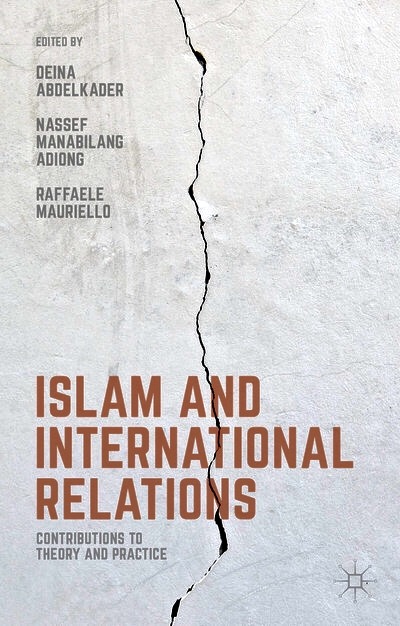
 Islam in International Relations: Politics and Paradigms analyses the interaction between Islam and IR. It shows how Islam is a conceptualization of ideas that affect people’s thinking and behaviour in their capacity to relate with IR as both discipline and practice. This approach challenges Western-based and defined epistemological and ontological foundations of the discipline, and by doing so contributes to worlding IR as a field of study and practice by presenting and discussing a broad range of standpoints from within Islamic civilization. The volume opens with the presentation and discussion of the international thought of a major Muslim leader, followed by a chapter that addresses the ethical practice of IR, from traditional pacifism to modern Arab political philosophy. It then switches to applying constructivism as a tool to understand Islam in world affairs and proceeds to address the issue of how the ethnocentric approach of Western academia has hindered our understanding of world affairs. The volume moves on to address the ISIS phenomenon, a current urgent issue in world affairs, and closes with a look at Islamic geopolitics. This comprehensive collection will be of great interest to students, scholars and policy-makers with a focus on the Muslim world. [Download the flyer here]


 Nassef Manabilang Adiong, PhD
You must be logged in to post a comment.