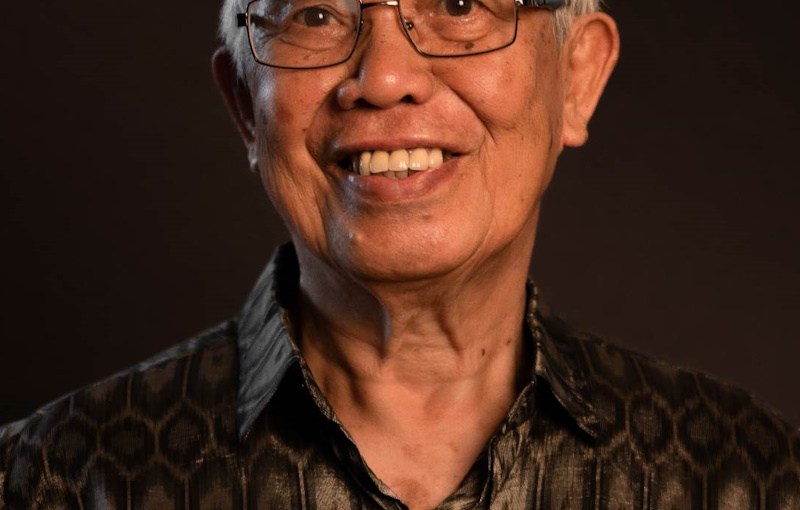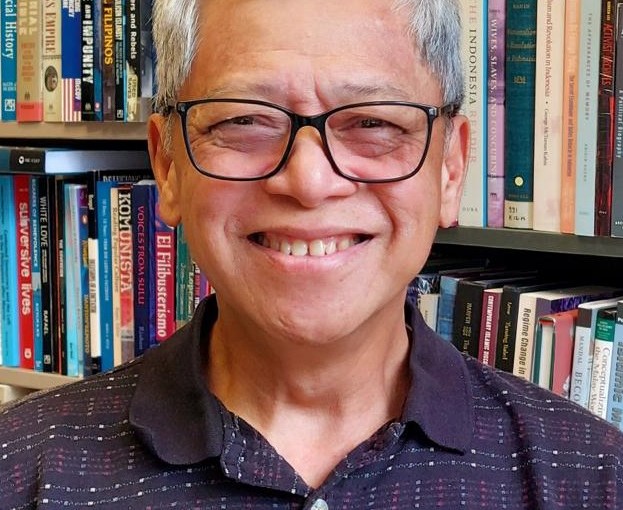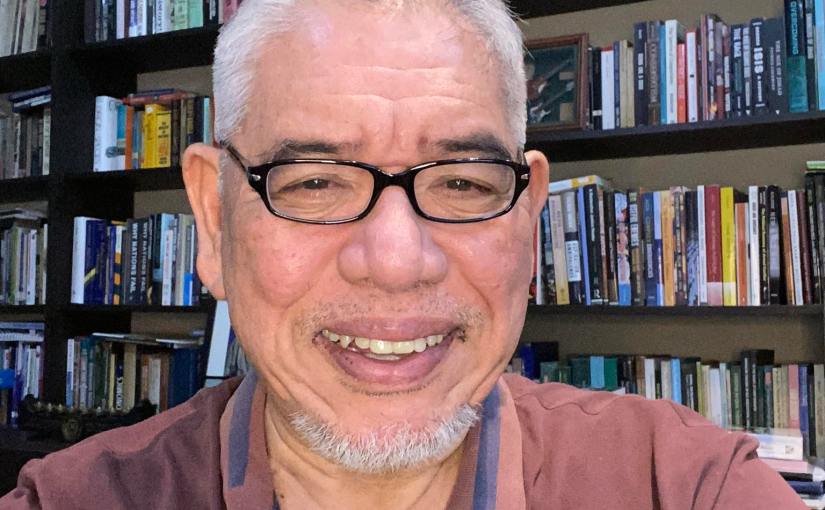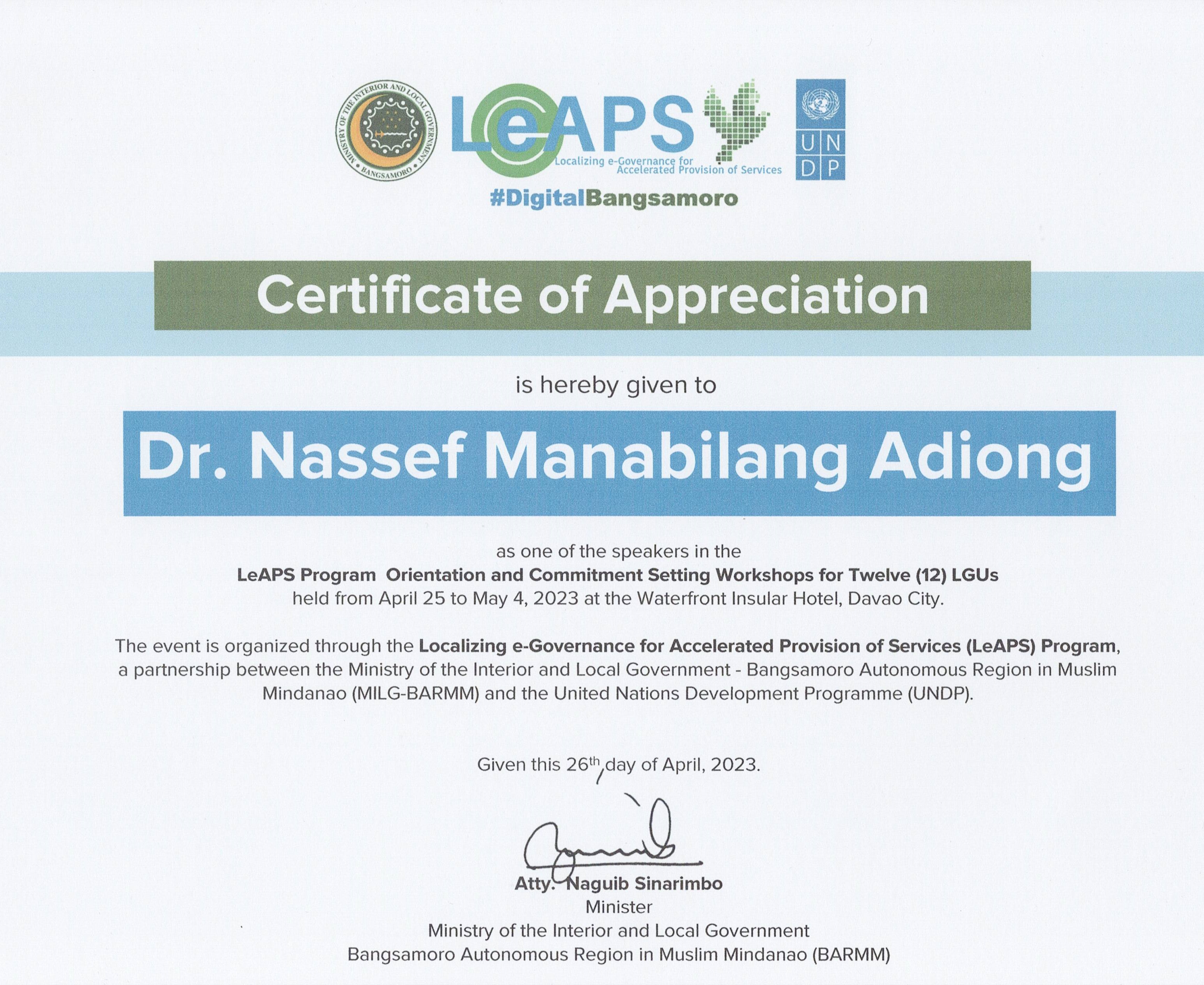
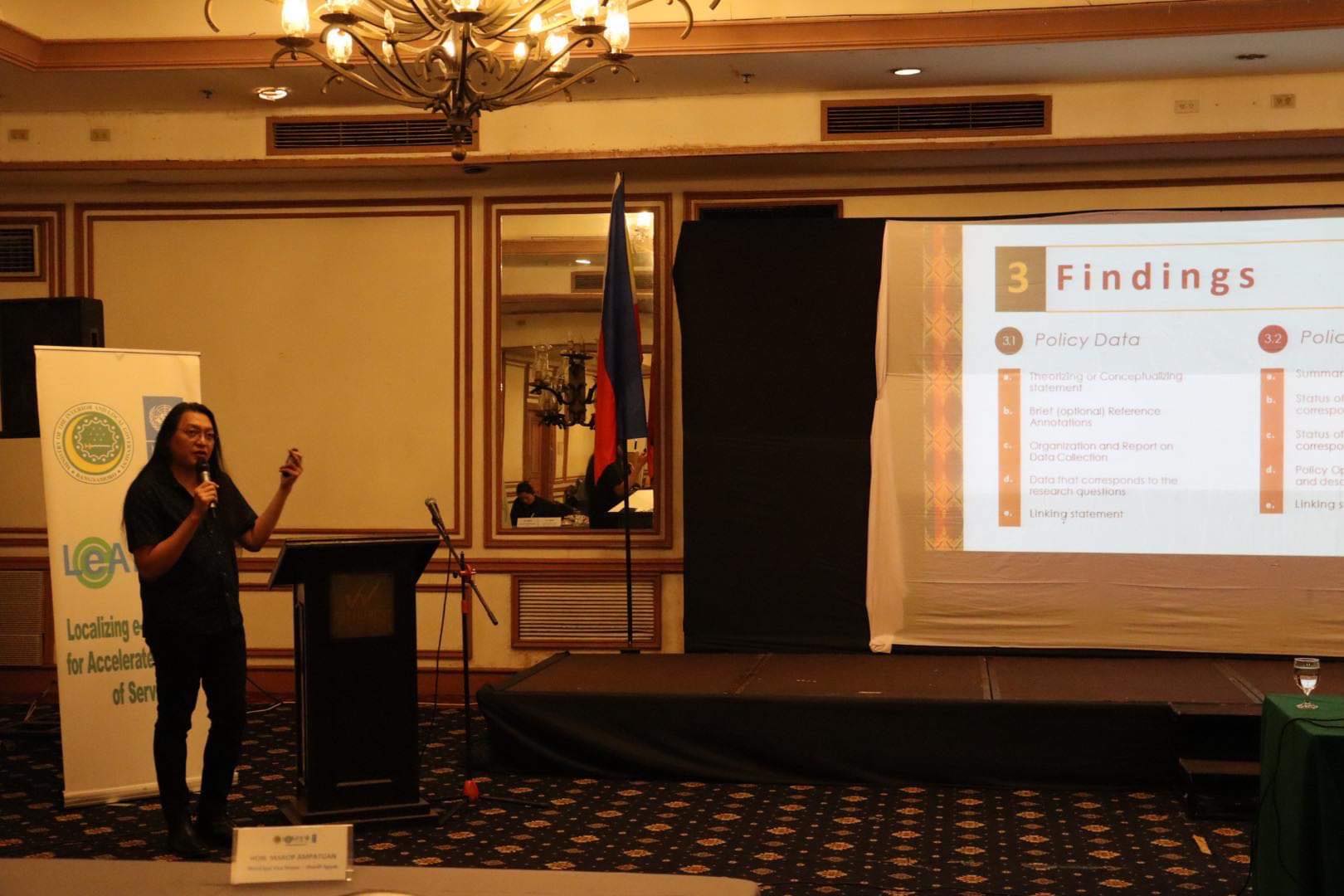
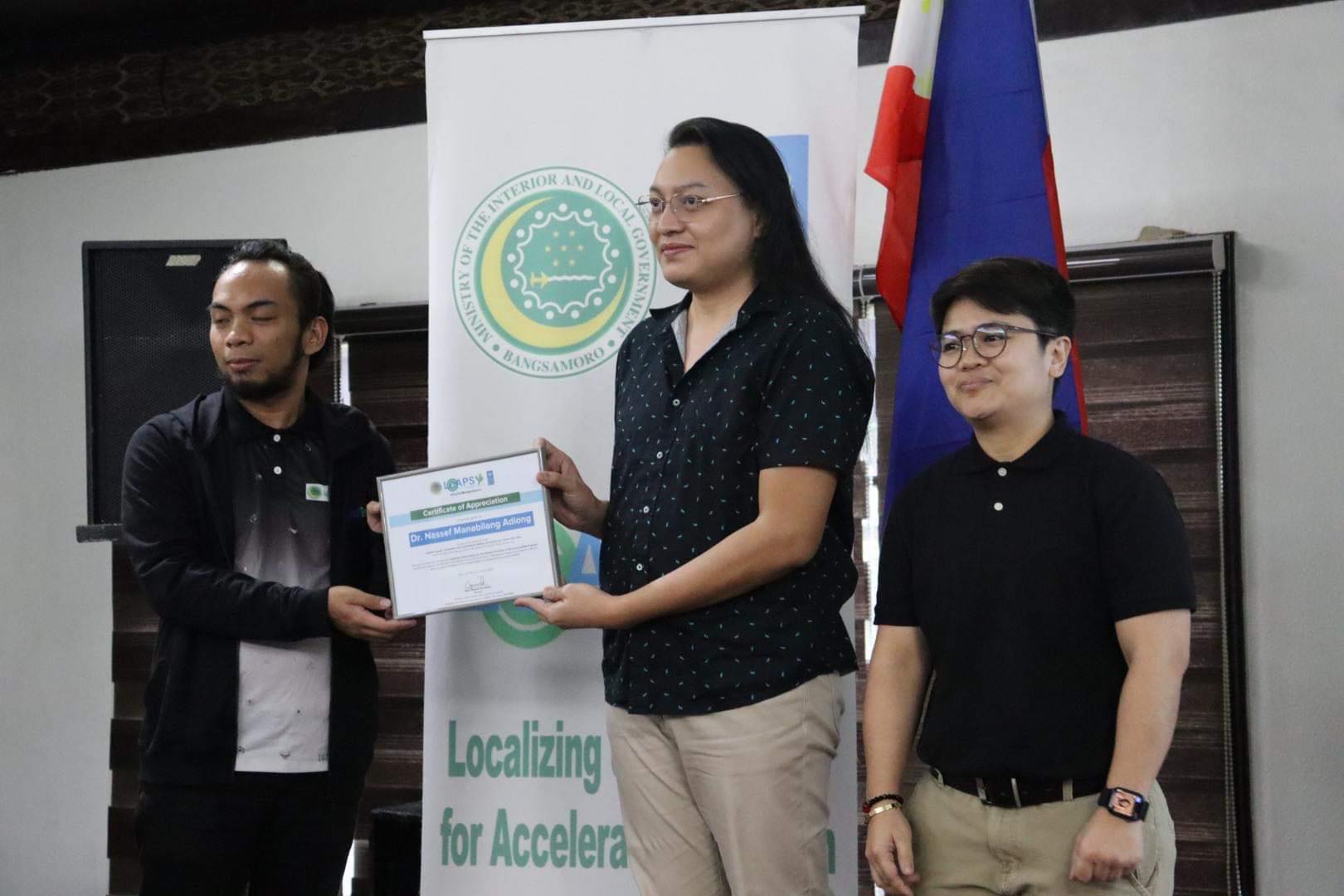
Nassef is the founder of PHISO (Philippine International Studies Organization), BRLN (Bangsamoro Research and Legal Network), DSRN (Decolonial Studies Research Network), and Co-IRIS (International Relations and Islamic Studies Research Cohort). He researches policy issues affecting the Bangsamoro society and explores decolonial knowledge sources of the global south as well as interdisciplinary study between Islam and International Relations.
Author: Nassef Manabilang Adiong
Nassef is the founder of Co-IRIS (International Relations and Islamic Studies Research Cohort), PHISO (Philippine International Studies Organization), DSRN (Decolonial Studies Research Network), and BRLN (Bangsamoro Research and Legal Network). He works on interdisciplinary research between Islam and International Relations and explores the Bangsamoro society as he heads the Policy Research and Legal Services (PRLS) of the Bangsamoro Parliament. Visit https://nassef.info/ for more details.
The rehabilitation and restoration of Moro civil society hinges on the recovery of multiple narratives from below, many of which had been suppressed by war. This lecture suggests areas where this is urgently needed, and proposes a collaboration between Moro scholars, public intellectuals and civil society groups with the support from Moro leaders amnd colleagues from “the outside” to pursue this critical endeavor.
Patricio N. Abinales is from Ozamiz City and is currently a professor at the Department of Asian Studies, University of Hawaiʻi-Manoa.
Conflict data has helped the Bangsamoro peace and subnational state building by filling the critical gap in information that could increase the pressure for an immediate end to hostilities, uncover the true cost of war, and institutionalize a political settlement for peace and stability to endure. However, few have turned to conflict data except for media purposes. The developmental role of conflict data has not been explored as much—why is this the case? The paper addresses the incentives and disincentives in using conflict data by subregional authorities with fragile political authority and the dilemmas faced by development actors who need to account for the peace building impact of their projects and programs. The paper posits a way out of these dilemmas and a better method for determining peacebuilding impact.
Professor Francisco J. “Pancho” Lara Jr. PhD is a Professor at the University of the Philippines and Senior Peace and Conflict Adviser (Asia) to International Alert UK. He holds an undergraduate degree from the University of the Philippines, and both an MSc (Master of Science) and PhD (Doctor of Philosophy) in International Development from the London School of Economics. He was research associate at the LSE Crisis States Research Centre (2006-2010); taught classes at the LSE Development Studies Institute (2006-2008); and wrote on political economy issues in Indonesia and the Philippines for the LSE-IDEAS Emerging Markets Bulletin from 2007-2009. He authored the book, Insurgents, Clans, and States: Political Legitimacy and Resurgent Conflict in Muslim Mindanao, published by the Ateneo de Manila University Press (2014). He also co-edited and wrote the research methodology chapter of the book on Mindanao’s shadow economies and their links to violent conflict entitled: Out of the Shadows: Violent Conflict and the Real Economy of Mindanao (2016) that won the Philippines National Book Award for the Social Sciences in the same year. In 2021, he co-wrote the chapter on qualitative methodologies in researching smuggling and illicit cross-border trade entitled “Lorries and Ledgers: Describing and Mapping Smuggling in the Field,” in the volume: The Routledge Handbook of Smuggling (2021).
The keynote presentation explores the unique challenges involved in establishing the Bangsamoro Autonomous Region in Muslim Mindanao (BARMM) in the Philippines. Lingga discusses the multifaceted complexity of creating a new government system in an area marked by diverse cultural traditions, religious beliefs, and a history of violent conflicts. He examines political, socioeconomic, and institutional hurdles, such as the negotiation of power dynamics, managing resource allocation, and the transformation of Moro revolutionary organizations into effective governing bodies. Lingga also delves into the issue of integrating Islamic law within the broader Philippine legal system and the potential implications this has for human rights and gender equality. The presenter argues that overcoming these obstacles is not just crucial for peace and stability in the Bangsamoro region but can also provide insights for conflict resolution and autonomy-building in similar contexts worldwide. Lastly, Lingga proposes several recommendations for enhancing the capacity of the Bangsamoro government and fostering inclusive growth and sustainable development.
Abhoud Syed Lingga, a pivotal figure in contemporary Bangsamoro studies and peace advocacy, has played a defining role in the Bangsamoro people’s pursuit of self-determination and peace. As a distinguished scholar and peace advocate, he has contributed significantly to the Bangsamoro region and the broader Philippines. Born and raised in Buug, Zamboanga Sibugay, Lingga’s journey is reflective of the spirit of the Bangsamoro people. He dedicated his life to understanding the unique challenges faced by his people, earning his Master of Arts in Education at Philippine Harvardian College followed by a Master of Arts in Islamic Studies at the University of the Philippines Diliman. Later in his career, Lingga was recognized with the degree of Doctor of Humanities (Honoris Causa) in Peace and Development from Notre Dame University in 2017, a testament to his tireless pursuit of peace and progress in the region.
Lingga’s career is rich with positions of influence and leadership. He served as the Chairman of the Bangsamoro Consultative Council and Executive Director of the Institute of Bangsamoro Studies, playing an instrumental role in facilitating dialogue and disseminating research on the Bangsamoro struggle for self-determination. From 2010 to 2016, he lent his expertise to the Moro Islamic Liberation Front Peace Panel, underscoring his deep commitment to finding peaceful solutions to the conflict in the region. As a scholar, Lingga has made significant contributions to Bangsamoro studies. He has authored numerous research works that delve into various aspects of the Bangsamoro struggle for self-determination. Notable among these are his papers such as ‘Democratic approach to pursue the Bangsamoro people’s right to self-determination’ (2002), ‘Assertions of Sovereignty and Self-Determination: The Philippine-Bangsamoro Conflict’ (2003), ‘Understanding Bangsamoro Independence as a Mode of Self-Determination’ (2004), and ‘Peace is for Everyone: Bangsamoro stories of hope, survival, pain and resilience’ (2016).
In his most recent works like ‘Building the Bangsamoro government’ (2018), Lingga continues to provide insights into the complexities of establishing a new government in the BARMM. His prolific body of work provides essential insights and rich scholarly context to the ongoing peace process and the dynamics of the Bangsamoro self-determination movement. To summarize, Abhoud Syed Lingga, with his dedication and commitment to the peace process and the betterment of the Bangsamoro people, has left an indelible mark on Bangsamoro studies and peace advocacy. His life and work embody a profound understanding of the complex history, culture, and aspirations of the Bangsamoro people. His unwavering dedication to the cause of peace and self-determination continues to inspire and guide the region towards a harmonious future.
Results of three exploratory studies on the intersections of climate change, conflict, gender and social exclusion in selected localities in the Bangsamoro autonomous region have surfaced several structural realities that privilege men over women, resulting to devastating impacts felt more sharply by women rather than by men. Men and women have different levels of vulnerabilities, owing to social norms in a largely patriarchal society. The adverse effects of both extreme weather events – like flooding and long dry spells (droughts) – are exacerbated by pre-exiting deficits in gender relations and dynamics of social exclusion. All these provide a compelling case for adopting more participatory processes in planning and decision-making, (planning with rather than planning for), especially in terms of responding to human-induced disasters (armed conflicts) and those created by extreme weather events contributing to climate change.
Rufa Cagoco‐Guiam has “changed tires”, or retired from Philippine government service as Full Professor III, Sociology Department, College of Social Sciences and Humanities, of the Mindanao State University – General Santos City, since December 2016. She is a professionally trained cultural anthropologist, both at the Silliman University (MA Anthropology) and at the University of Hawaii (non-degree) for her advanced studies in the same field. Since her retirement, Prof Guiam has been engaged in various social development consulting with various offices and agencies in the Bangsamoro Autonomous Region, focusing mainly on the following themes: gender and social inclusion, and peace and conflict studies.
Prof Guiam has published numerous articles and chapters in books, largely focused on the following topics: child soldiers, gender and armed conflict, gender and livelihoods among internally displaced communities, peace and development communities, illegal drug trade and its intersections with political violence and armed conflict in Muslim Mindanao; and lately, on transitional justice in the Bangsamoro communities in Mindanao.
She is a Senior Asian Public Intellectual (API) Fellow of The Nippon Foundation in 2008-2009 and an Executive Education Grantee of the Institute of Politics, Harvard School of Government, Harvard University, in 2009. She recently was a visiting scholar at the College of Intercultural Communications, Rikkyo University, Tokyo, Japan in October 2018.
Currently, Ms. Guiam is one of the Conveners of the Independent Working on Transitional Justice – Dealing with the Past (TJ – DwP), an offshoot of her two-year engagement as the Lead Coordinator of the Listening Process of the Transitional Justice and Reconciliation Commission (TJRC) in the Bangsamoro. The TJRC was part of the Joint Normalization Committee provided for in the Comprehensive Agreement on the Bangsamoro (CAB) signed between the Philippine government and the Moro Islamic Liberation Front. She used to do a variety of consultancy work, in particular with the UN Women (mapping of initiatives to prevent Violent Extremism in the Bangsamoro and for the Conciliation Resources, London, for inclusive localized peace platforms; and more recently with the Asia Foundation and the UNICEF for projects providing technical assistance to the new government in the Bangsamoro. In between her consultancy work, she writes a fortnightly column in the Opinion Page of the Philippine Daily Inquirer (PDI), under Kris-Crossing Mindanao (starting last June 18, 2018).
The presentation encapsulates issues and challenges that leaders of the Bangsamoro Transition Authority (BTA) face and new leaders of the BARMM, with the upcoming 2025 parliamentary elections, have to confront. It identifies a number of policy concerns and advocates general recommendations in the interest of relatively surmounting the historical and lingering socio-cultural and economic and political concerns in the Bangsamoro region in particular and Mindanao in general. These are challenges entrenched in present-day mosaic democracy and heterogeneous development. They require the state, not simply the BARRM to redefine itself and adopt an institutional framework of governance that would allow the expression of democracy in kaleidoscopic forms and a system of governance that is inclusive, comprehensive, and participatory towards the fulfilment of the Bangsamoros’ hopes, aspirations, and opportunities.
Rizal G. Buendia is an independent political analyst, consultant, and researcher in Southeast Asian Politics and International Development based in Wales, UK. He is the Philippine Country Expert of the Global V-Dem Institute, University of Gothenburg, Sweden; Non-Resident Fellow of Stratbase ADR Institute for Strategic and International Studies (ADRi) is an independent, international research organization focused on the in-depth analysis of economic, social, political and strategic issues influencing the Philippines and the Indo-Pacific region, and Honorary Fellow of the Bangsamoro Parliament’s Policy Research and Legal Services of the Bangsamoro Autonomous Region of Muslim Mindanao (BARMM).
He was a former Teaching Fellow at the Politics and International Studies Department and the Department of Development Studies, School of Oriental and African Studies (SOAS), University of London; former Chair and Associate Professor at the Political Science Department, De La Salle University-Manila; Senior Lecturer at the National College of Public Administration and Governance (NCPAG)-University of the Philippines-Diliman; and Special Lecturer at the Department of Economics and Politics, Polytechnic University of the Philippines-Sta Mesa, Manila.
He obtained his Doctor of Philosophy (Ph.D.) degree in Political Science at the National University of Singapore (NUS) under the NUS by-research Ph.D. scholarship; grantee of the TODA Institute for Global Peace and Policy Research’s Doctoral Fellowship Program and of the Southeast Asian Studies Regional Exchange Program, Toyota Foundation and the Japan Foundation Asia Center’s research fellowship Program. He earned his Master of Public Administration (MPA) with Highest Distinction at NCPAG-University of the Philippines-Diliman.
You must be logged in to post a comment.