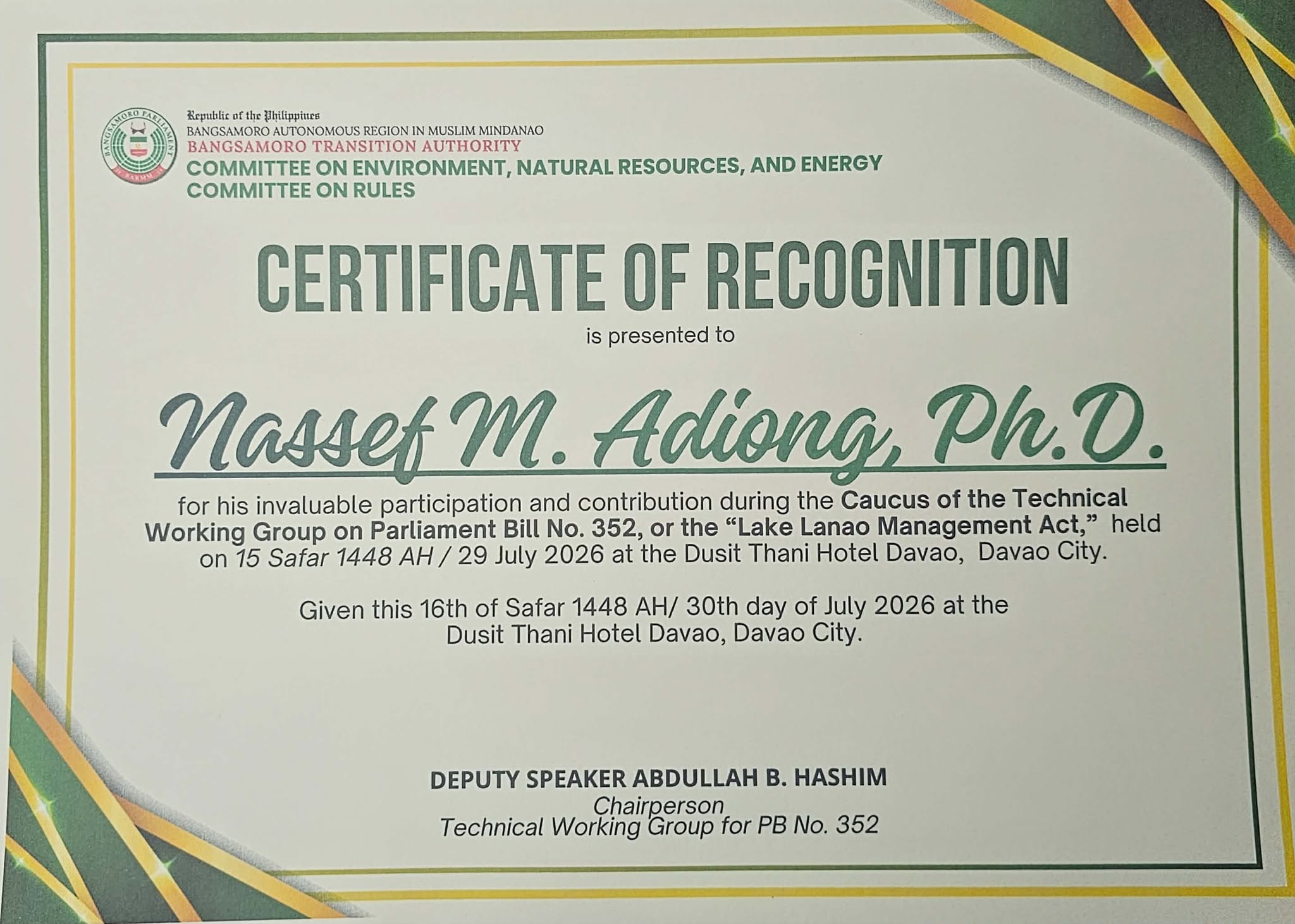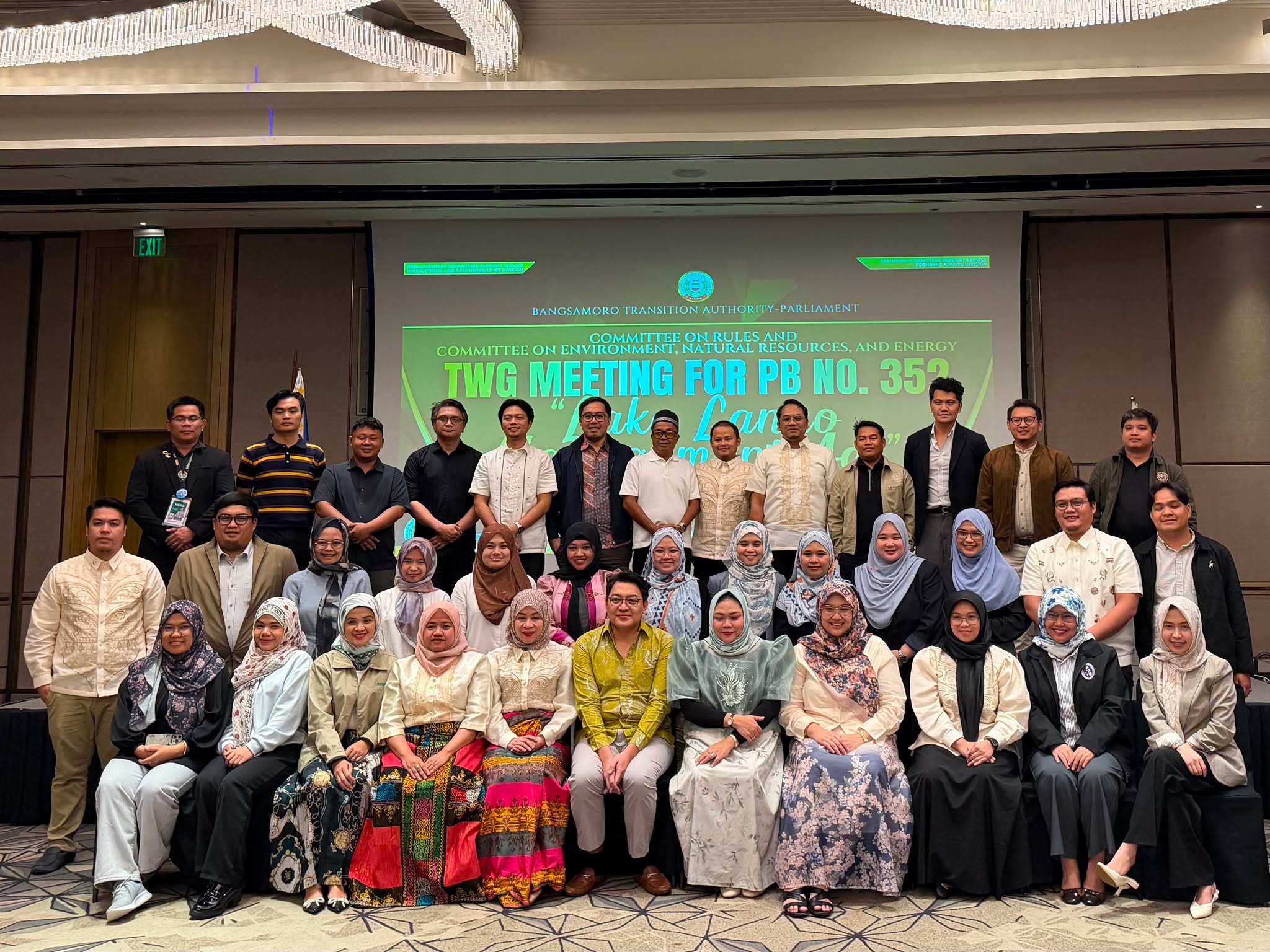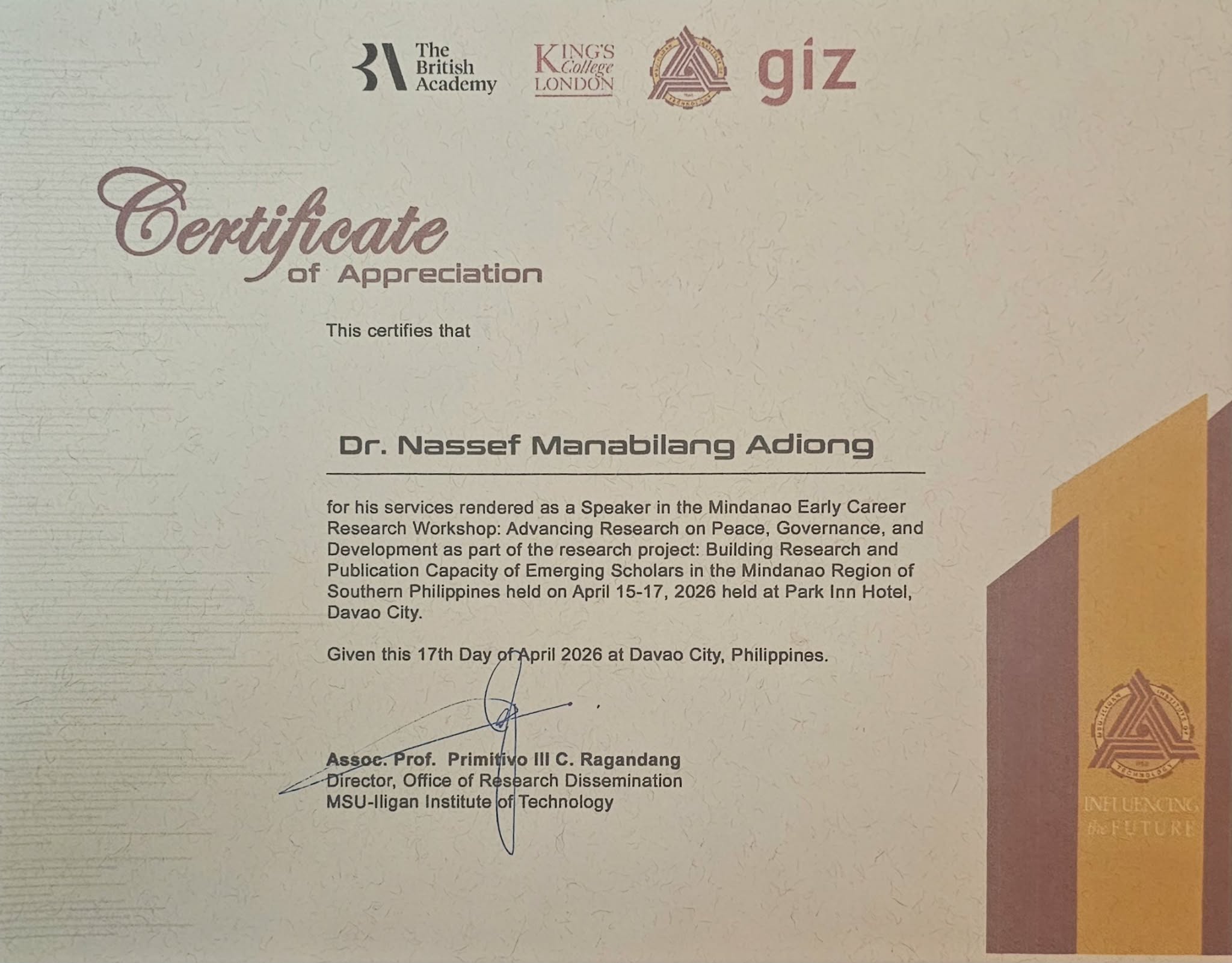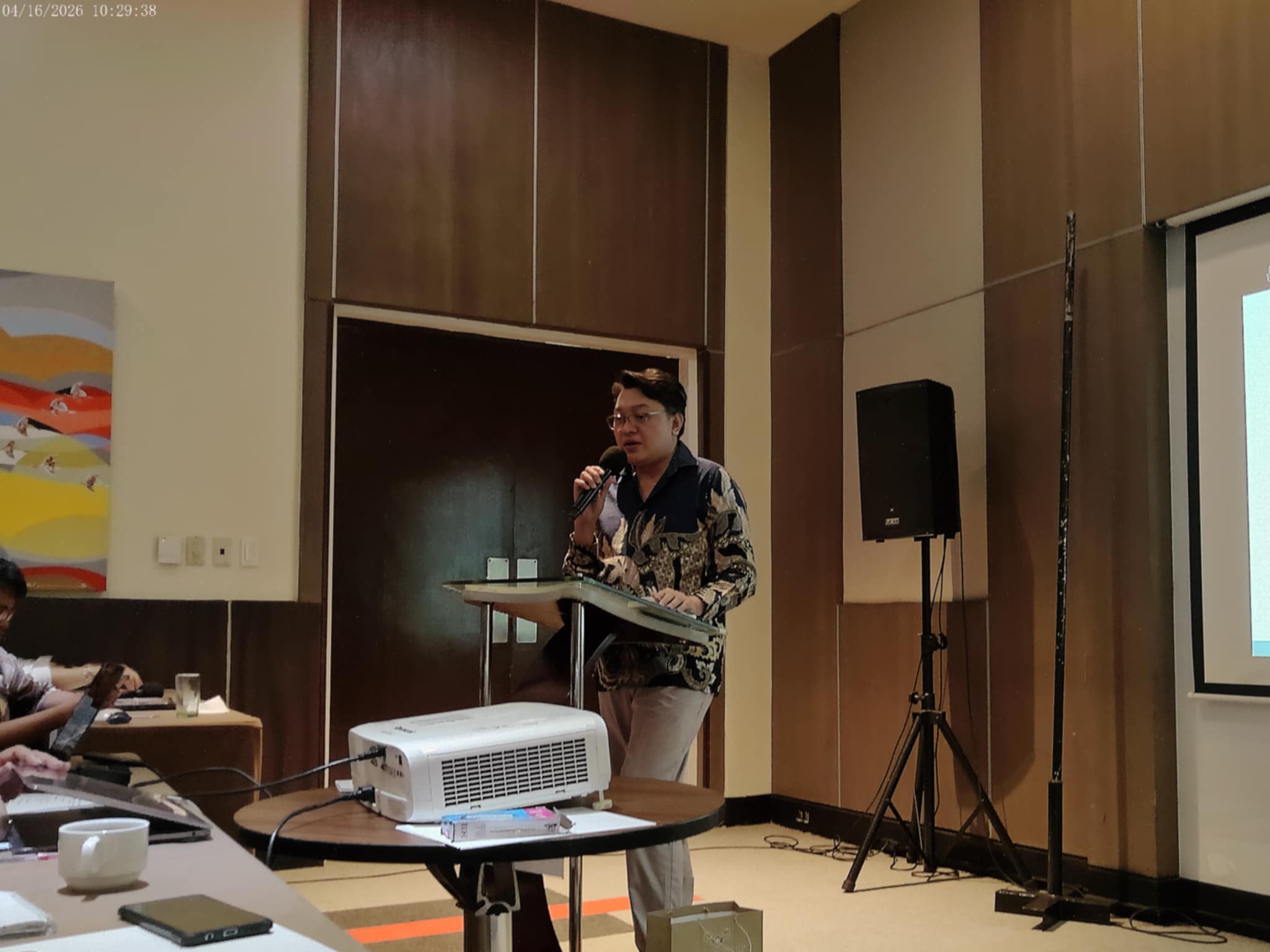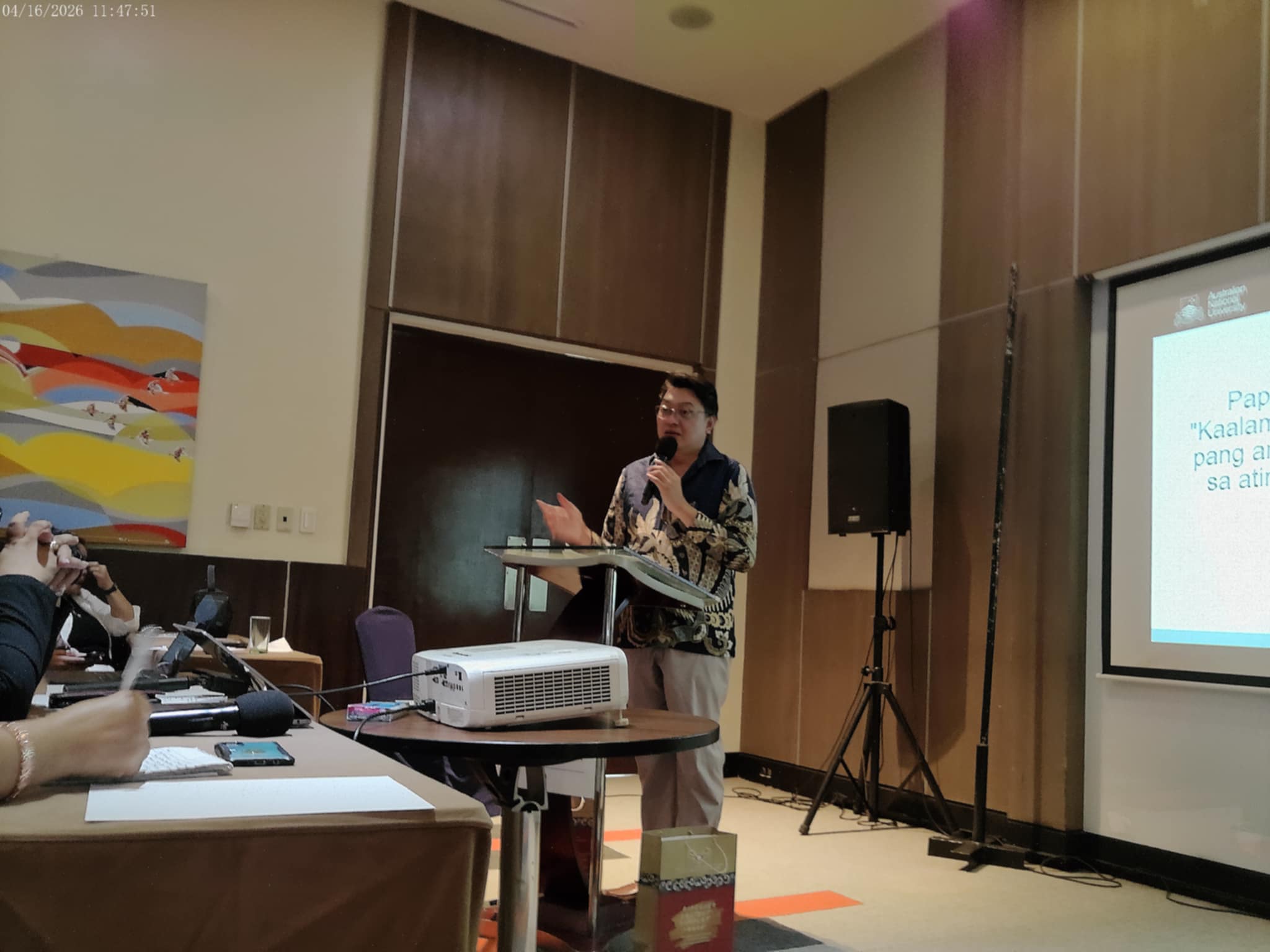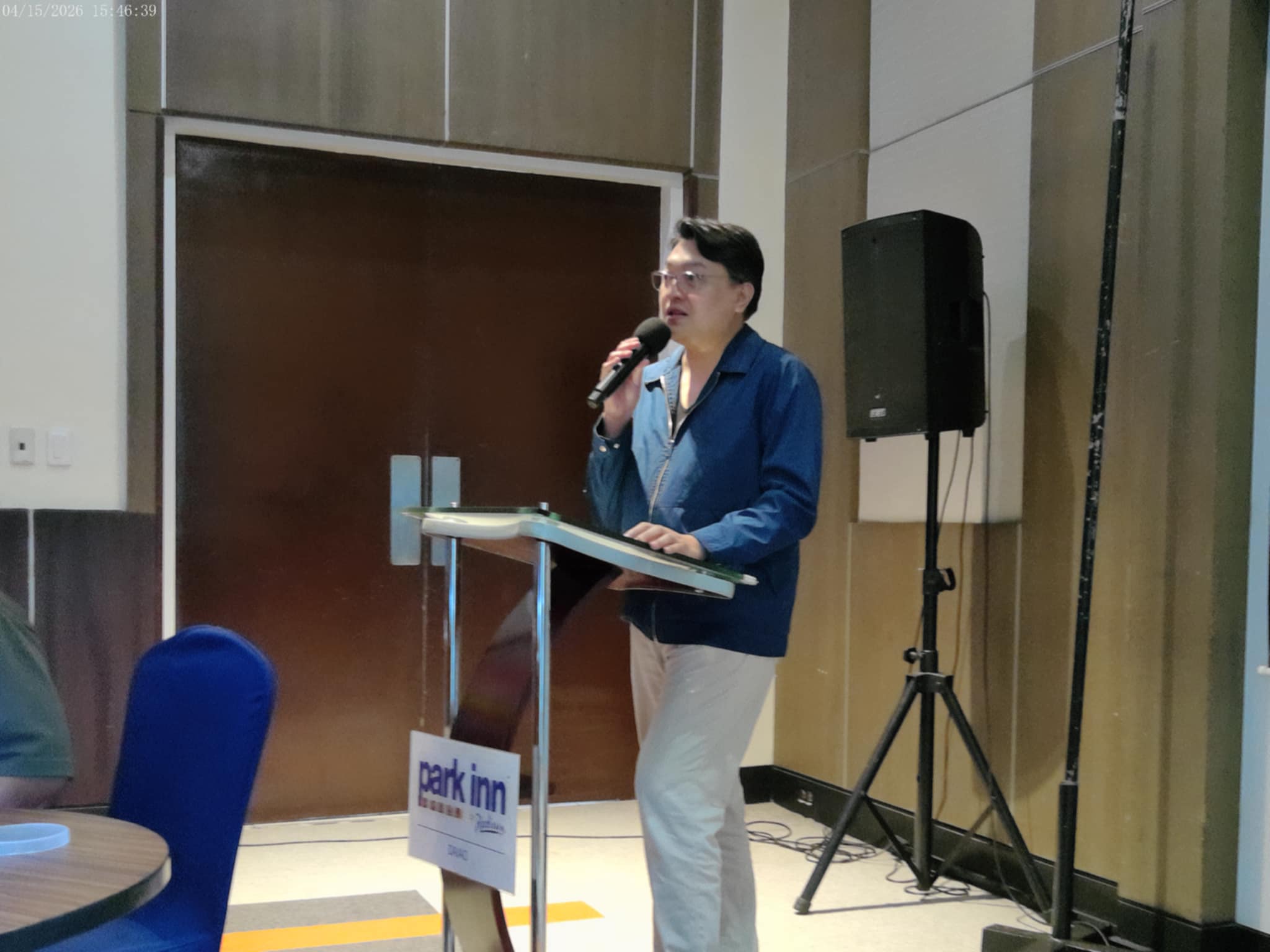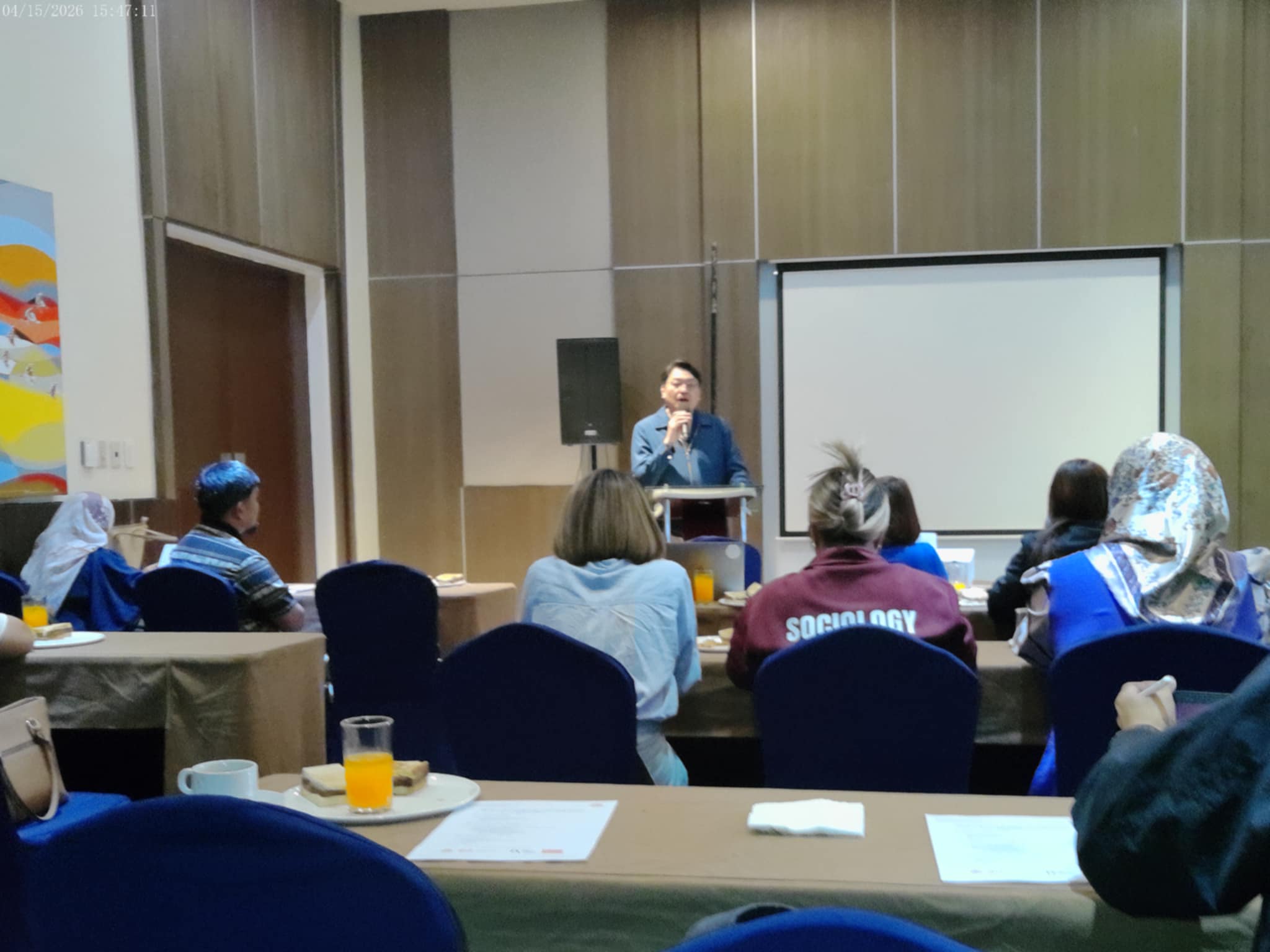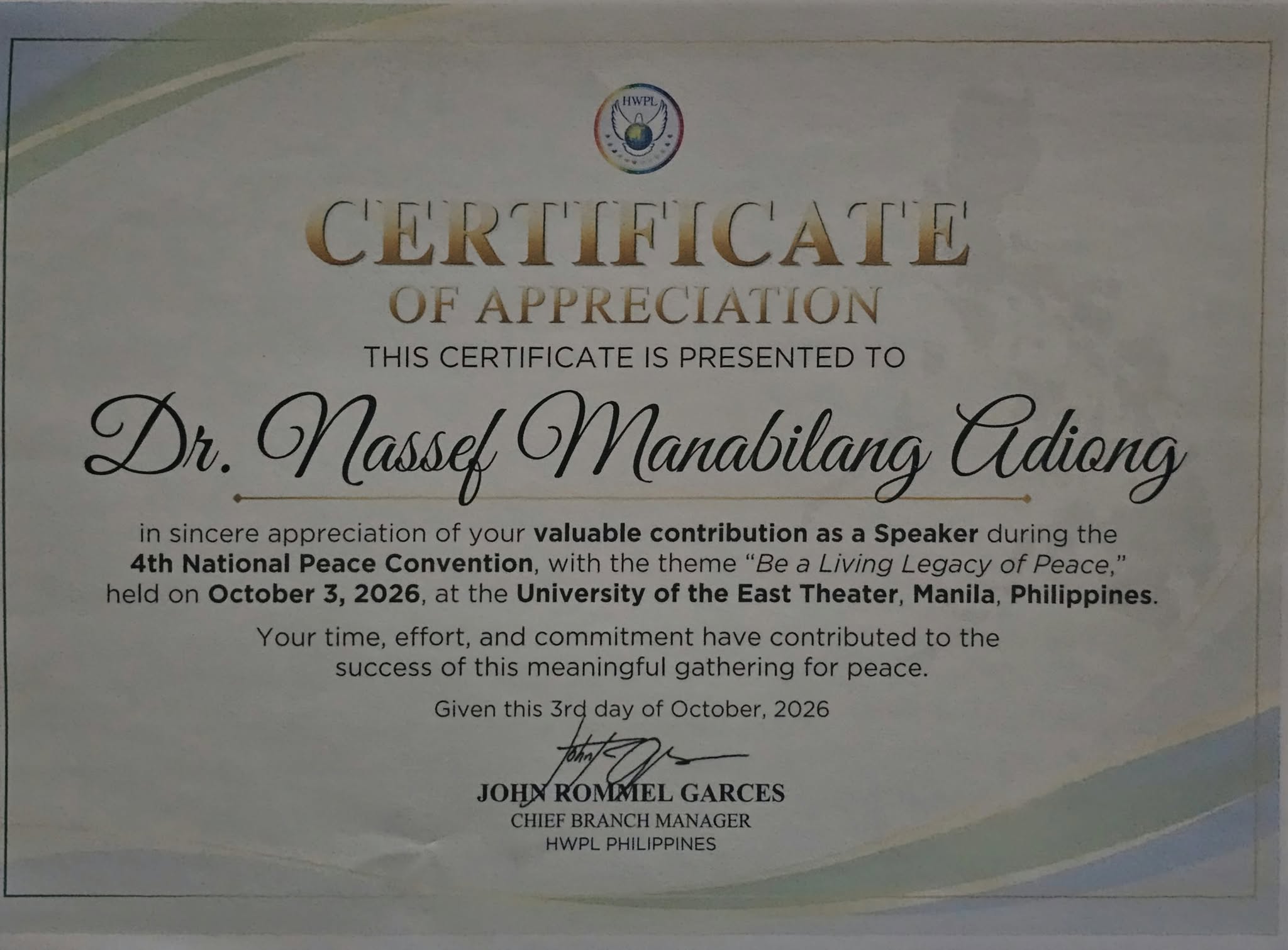
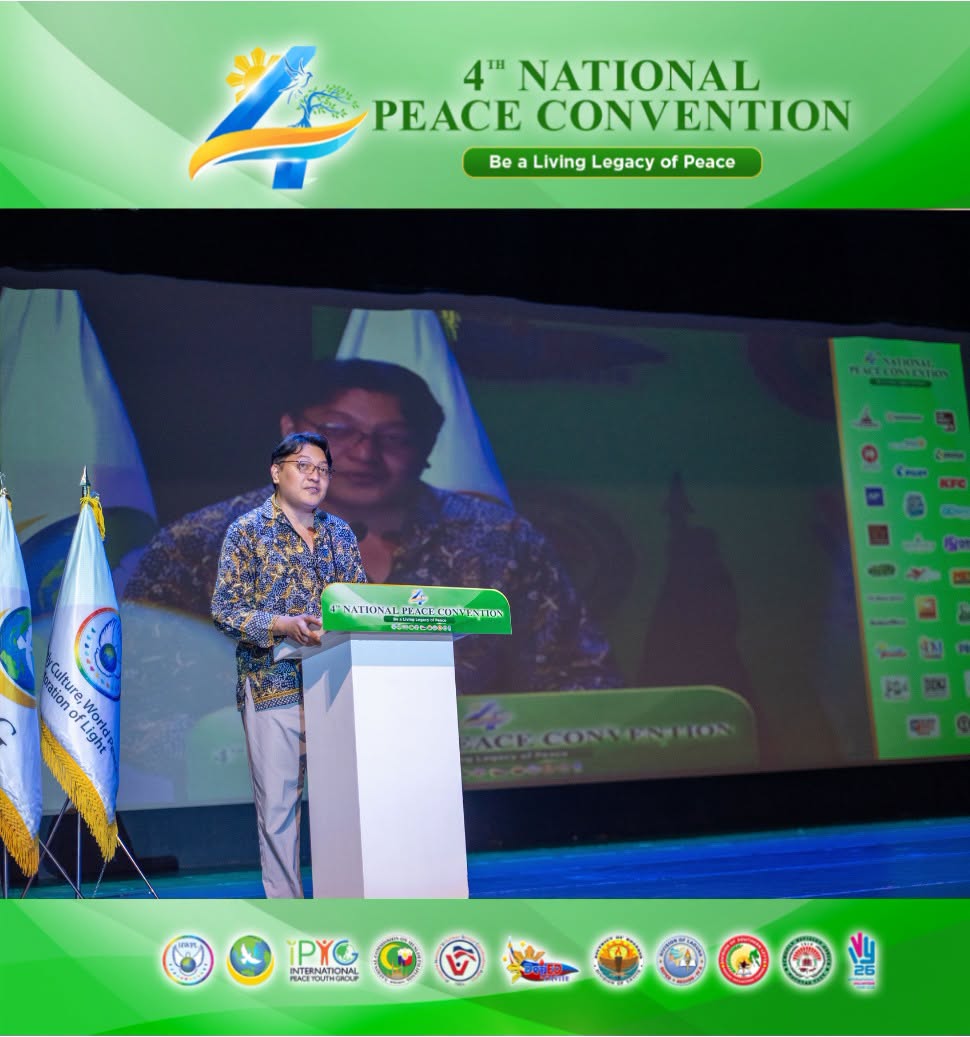


With the purpose of ‘in aid of legislation,’ Dir. Dr Adiong’s research presentation focuses on two accounts: one is how Bangsamoro became an orientalist object targeted and subjected to Christian Filipino’s political elites’ ploy while the second is marked by political responses that the Muslim Moros partake in utilizing morality and decoloniality as their defensive neo-orientalist cards through a strategic regional legislation mechanism of their reputed autonomous parliament.
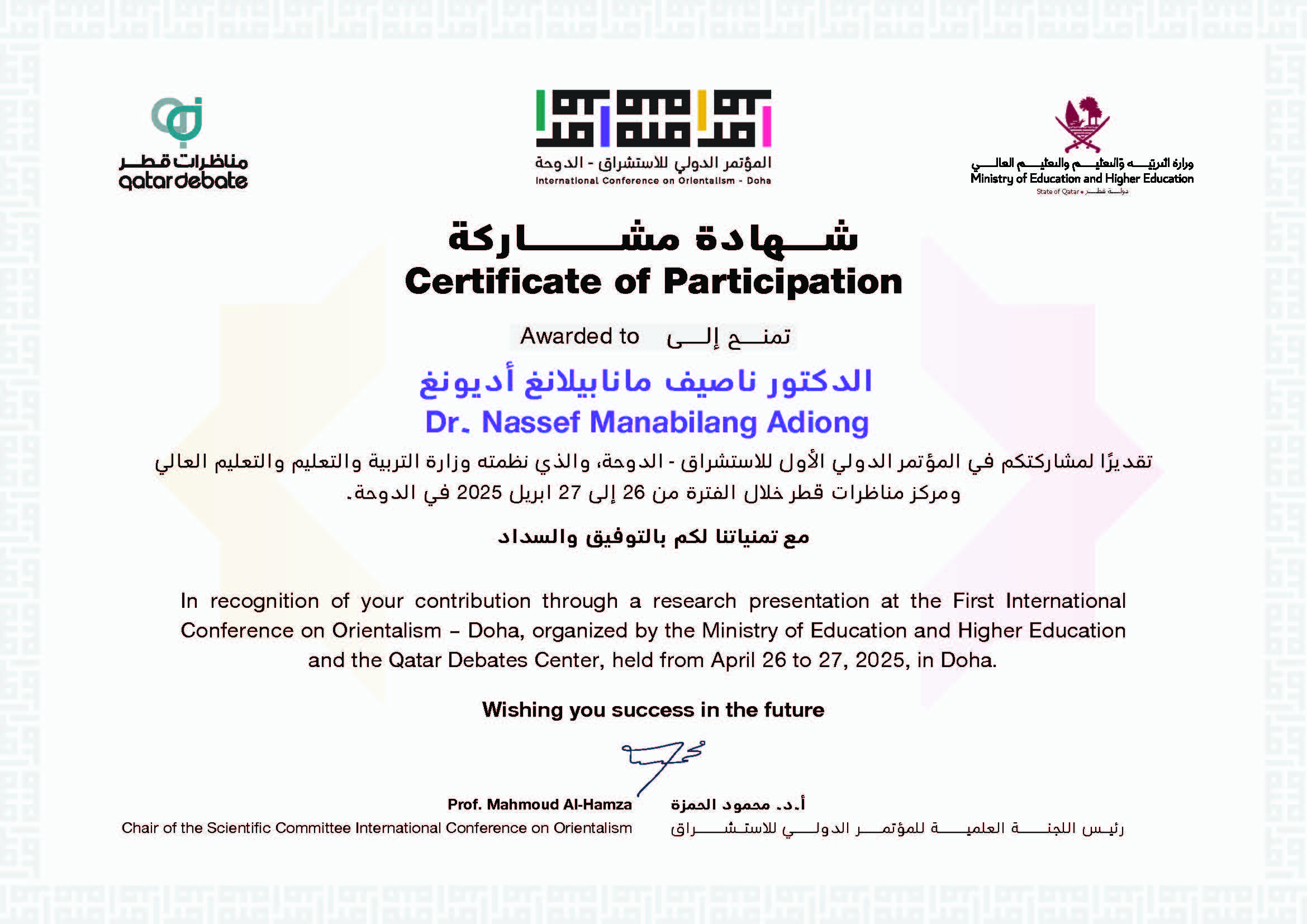
The research presentation, through conference network platforms, can shed light and provide legislative support to the following pending bills, namely, Bill no. 309 or protection of rights and welfare of community settlers, Bill no. 299 or Bangsamoro history towards autonomy museum, and Bill no. 31 or Bangsamoro Regional Institute for Higher Islamic Studies. It is without a doubt that this office supports Dir. Dr Adiong’s policy research endeavors in uplifting Bangsamoro lives through sound legislative advocacy by endorsing his request to participate in the Doha conference and gather data in aid of legislation.
Unbeknownst to a usual doxa rhetoric, Philippines is not a homogenous nation-state characterized by cultural or normative uniformity unlike their Asian counterparts of Malays, Chinese, Japanese, Koreans, and Thai descents who shared similitude of cultural traits, physical attributes, or civilizational values. Filipinos are culturally diverse with more than 195 spoken languages, 182 ethnolinguistic communities, majority (or 86% of its demography) are affiliated with the Christian faith represented by various Catholic and Protestant groups while a significant Muslim population exists in Southern Philippines alongside indigenous peoples (IPs) who settled across the country (Ileto 2001). There is a deep sense of favoring colonial experiences by Filipinos living in urban cities such as in Metro Manila, Cebu, or Davao as they have embraced Christianity from Spain and emulated the educational system, form of government, and whiteness culture of the US (Curaming 2009; Perez 2023). This “coloniality of being,” palpable and arguably claimed to be unique by those Christian Filipino urban dwellers, is the one thing that many Muslim Filipinos—particularly the Moro peoples—and IPs been struggling to accept and thus hereby resent until today (Alegre 2015; Mendoza 2023; Valencia 2022).
Borne from its self-conscious social and Islamic identity as Bangsamoro, these communities are composed of 13 ethnolinguistic Muslim groups where Meranaw, Maguindanaon, and Tausug dominate the entire representation. A cultural collectivity resulting from a struggle for self-rule and self-determination is deeply rooted in the historicity of the Muslims in the Philippines. Creating and organizing political representation is an orientalist strategy by Christian Filipinos’ political elites to address the age-old “Moro Problem,” also known as the “Mindanao Problem” or “Mindanao Conflict,” and purportedly gain peace dividends and capitalistic development. But the Bangsamoro response upends a certain decolonial dive of morality in which they called it “moral governance,” a process that denotes a system of order that is values-based and Islamically rooted. Islamic ethical philosophy is foundational to the Bangsamoro leadership framework that encompasses five immutable principles: Faith, Freedom, Moral Authority, Common Good, and Social Ethics (Adiong 2021).
Aside from the morality card as a response to Christian Filipino’s orientalist views and portrayals of Muslims in the Bangsamoro, the decolonial card is another response stemming from addressing colonial historical injustices by carving its own political trajectory through autonomy and resisting the replication of colonial-based politics. The discussion focuses on two accounts, one is how Bangsamoro became an orientalist object targeted and subjected to Christian Filipino’s political elites’ ploy and the second one is marked by political responses that the Muslim Moros partake in utilizing morality and decoloniality as their defensive neo-orientalist cards. And one approach that the Bangsamoro used is through regional legislation of their own autonomous parliament.
Call for Book Chapters
The Contemporary Bangsamoro
Editors
Nassef Manabilang Adiong ∙ Acram A. Latiph ∙ Almahdi “Aldean” Alonto
A book project collaborated by the Mindanao State University’s Institute of Peace and Development in Mindanao (MSU Marawi’s IPDM), Bangsamoro Research Network (BRLN), University of the Philippines Bangsamoro Studies Group (UP BSG), and the Heavenly Culture, World Peace, Restoration of Light (HWPL).
The project collaborators open the submission of book chapter proposals for the upcoming anthology “The Contemporary Bangsamoro,” a compendium of both academic and policy papers that engage the different aspects and angles of the Bangsamoro and the changing character of its society and politics, religio-cultural practices, history, economy, security, and environment. As a rapidly evolving autonomous region as well as a fluid sociopolitical identity, this monograph aims to shed light on historical issues alongside its current status, concerns, and future prospects. It offers a comprehensive, interdisciplinary examination of the Bangsamoro as it continues to navigate post-conflict governance, economic development, political transformations, and social change. The Contemporary Bangsamoro moves beyond a generalized view of the autonomous region by emphasizing provincial heterogeneity—how different provinces within the region experience governance, economic development, security, and social dynamics differently. It also includes perspectives and views of Moro societies outside the region both in the country and overseas. By integrating case studies from Maguindanao del Norte, Maguindanao del Sur, Lanao del Sur, Basilan, Sulu, Tawi-Tawi, Special Geographic Area (SGA) in North Cotabato, and Moro communities outside the region, the book provides a granular understanding of how local, national, and international variations affect policy implementation and development outcomes.
Prolegomenon
The use of the term “bangsa” alongside “Moro” is more than a hundred years old, with a newspaper in 1911 mentioning it as a counterpoint to “bangsa tau puti” or people of European descent, referring to those at the apex of colonial power. In 1924, we see its English translation “Moro Nation” resurface in the Zamboanga Declaration whereby prominent Moro leaders of the time expressed their protestations in being included in an independent Filipino nation. Here, it morphed as a counterpoint to the Filipino, and 11 years later, the Dansalan Declaration of 1935 further amplified the need for a distinct nation for the Moro people, binding the 13 Muslim ethnolinguistic groups of Mindanao, Sulu, and Palawan in a single political possibility. History did not favor this independence campaign, however, and more than three decades later, the Jabidah Massacre of 1968 prompted one of the biggest internal crises of the Philippines as it commenced the Bangsamoro struggle that continues to persist today in changing configurations.
With this brief overview, a far cry from the complex reality of its chronological journey, the delineation of the Bangsamoro identity grew in scope and meaning, now embracing both settlers and non-Moro indigenous peoples as a voluntary self-identification. The dynamism of the Bangsamoro as demonstrated by its historical antecedents, hence, demands a constant renewal of analysis. In this anthology, the project collaborators aim to breathe life into our current conceptual categories and empirical resources in understanding the Bangsamoro and its sociopolitical, historical, economic, religio-cultural, environmental and security aspects. With this overarching direction, it further aims to provide clarity as to its contemporary character, concerns, and potential trajectories as well as steer clear from ambiguities and misconceptions persistent in academic, official, and practical discussions and debates on the Bangsamoro.
Objectives
With the monograph’s emphasis on the contemporary condition of the Bangsamoro, its society and politics, history, culture, economy, religious practice, environment, and security, the book aims to achieve the following:
Themes
Bringing together leading Bangsamoro scholars, policymakers, and practitioners, this book addresses the following key themes:
Part I: Political Transformations and Governance: Examines governance challenges, the persistence of political dynasties, and institutional reforms across different provinces.
Part II: Economic Development and Informal Sectors: Analyzes economic diversification, informal economies, and the role of private sector growth across the Bangsamoro.
Part III: Peace, Security, and Justice: Investigates security threats, transitional justice, and law enforcement mechanisms in the provinces.
Part IV: Social Change, Identity, and Education: Explores socio-cultural diversity, educational reforms, and the role of women and youth in the provinces.
Part V: Provincial Perspectives and Comparative Analyses: Highlights the political, economic, and social heterogeneity of BARMM’s provinces, focusing on disparities, opportunities, and local governance models.
Part VI: Sustainability and Development Challenges: Addresses climate resilience, infrastructure gaps, and development planning within the region.
Contents
Introduction: The introductory chapter provides an overview of BARMM’s transition, the significance of examining its provinces individually, and the book’s interdisciplinary approach.
Part I: Political Transformations and Governance
01. The Bangsamoro Transition: Progress, Governance Gaps, and Provincial Disparities
02. Political Dynasties in BARMM: Continuities and Divergences Across Provinces
03. Decentralization and Local Governance: The Role of Provincial Governments
Part II: Economic Development and Informal Sectors
04. Economic Growth in BARMM: Provincial Disparities and Structural Barriers
05. The Informal Economy in Bangsamoro: Livelihoods and Survival Strategies
06. Islamic Banking, Halal Industries, and Investment Zones: Provincial Economic Models
Part III: Peace, Security, and Justice
07. Security Challenges in BARMM: Understanding Provincial Variations
08. Transitional Justice in the Bangsamoro: Addressing Historical Injustices
09. Local Peacebuilding and Traditional Conflict Resolution Mechanisms
10. Role of civil society and international cooperation in promoting peace
Part IV: Social Change, Identity, and Education
11. Education Reforms in BARMM: Provincial Access and Quality Disparities
12. Women and Youth in Bangsamoro’s Political and Economic Landscape
13. Cultural Diversity in the Bangsamoro: The Intersection of Ethnicity, Religion, and Governance
Part V: Provincial Perspectives and Comparative Analyses
14. Maguindanao del Norte and Maguindanao del Sur: The Political and Economic Divide
15. Lanao del Sur: The Maranao Economy and Post-Siege Reconstruction in Marawi
16. Basilan: Governance and Economic Resilience in a Conflict-Affected Province
17. Sulu: The Complex Interplay of Traditional Leadership and Governance
18. Tawi-Tawi: Border Trade, Maritime Economy, and Development Challenges
Part VI: Sustainability and Development Challenges
19. Climate Change, Disaster Resilience, and Environmental Governance
20. Infrastructure and Connectivity: Overcoming Development Barriers
21. Measuring Provincial Progress: Policy Implementation and Development Outcomes
Contribution to the Field
This book makes a pioneering contribution to the study of governance, development, and conflict resolution in the Bangsamoro by incorporating “we perspective” analyses. It provides:
Market and Target Audience
This book is intended for:
Contributors (tentative list)
Potential contributors may include scholars and experts from:
Submit your proposal by filling out the Google form below.
Click here to join the Facebook group of the Bangsamoro Research Network. Thank you! ![]()
Watch the awarding of best 10 research papers presented at the Bangsamoro Research Online Conference 2023.
You must be logged in to post a comment.