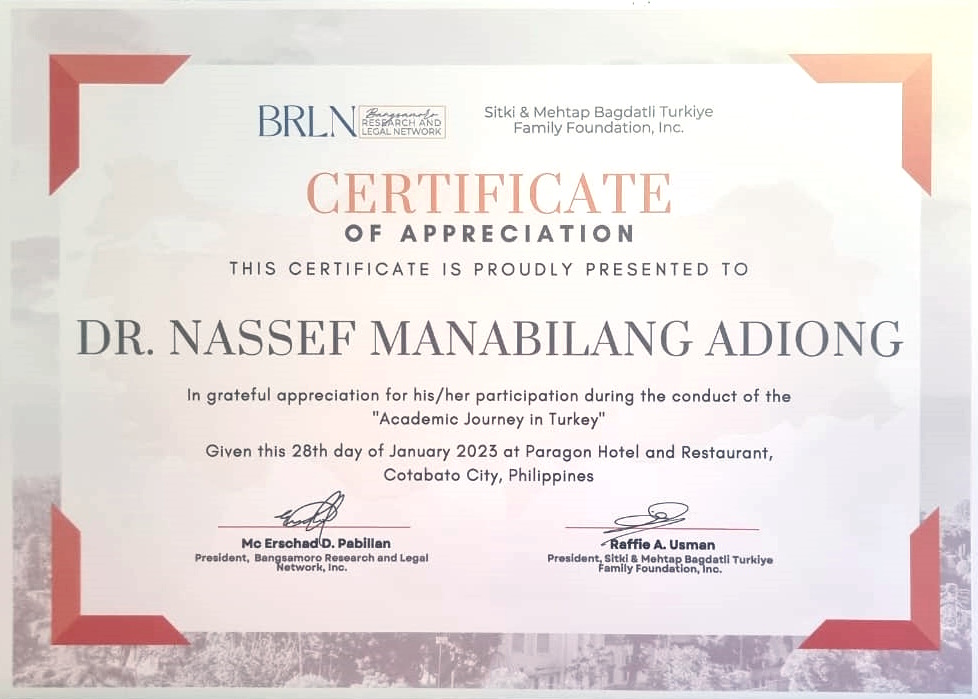
BRLN: Academic Journey in Turkey

Nassef is the founder of PHISO (Philippine International Studies Organization), BRLN (Bangsamoro Research and Legal Network), DSRN (Decolonial Studies Research Network), and Co-IRIS (International Relations and Islamic Studies Research Cohort). He researches policy issues affecting the Bangsamoro society and explores decolonial knowledge sources of the global south as well as interdisciplinary study between Islam and International Relations.
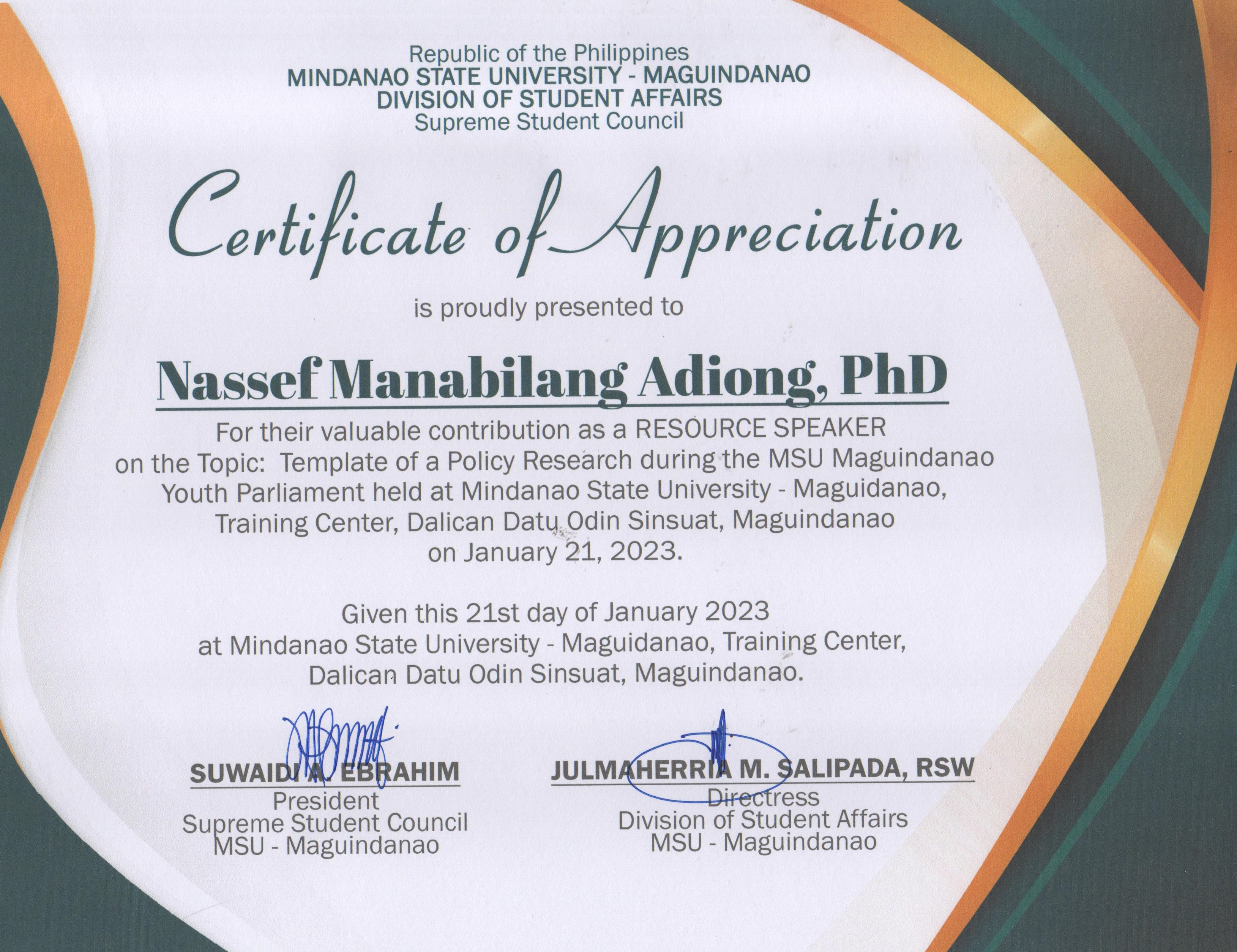
First BRLN event in collaboration with the MSU Maguindanao Youth Parliament on January 21, 2023.
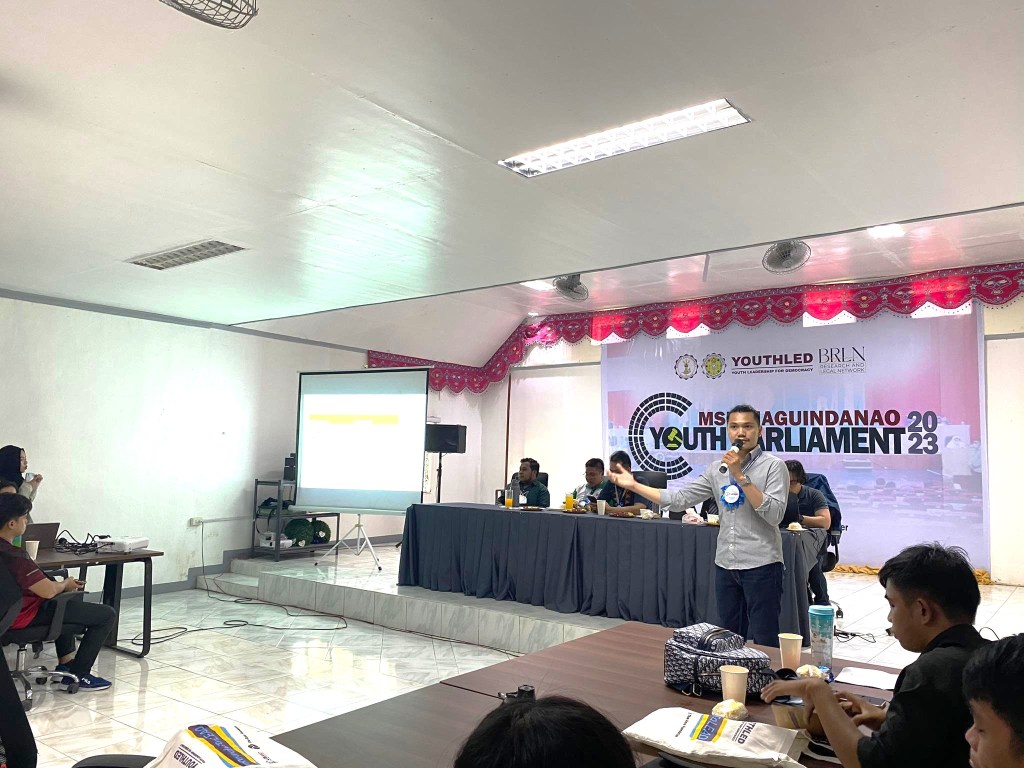


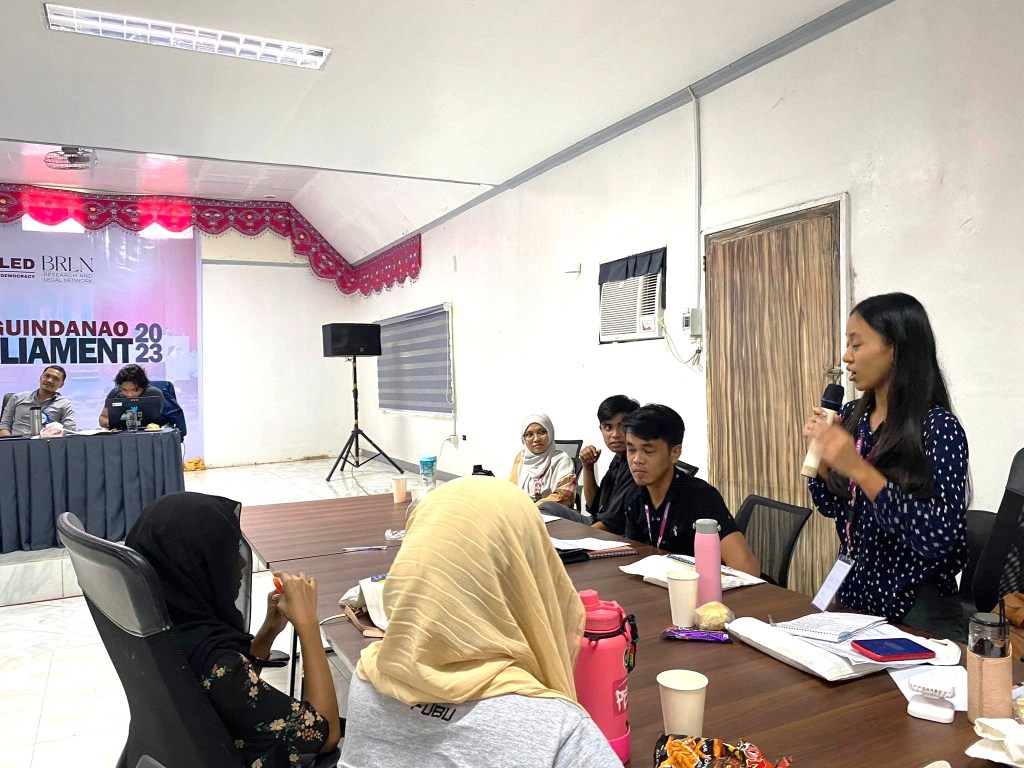
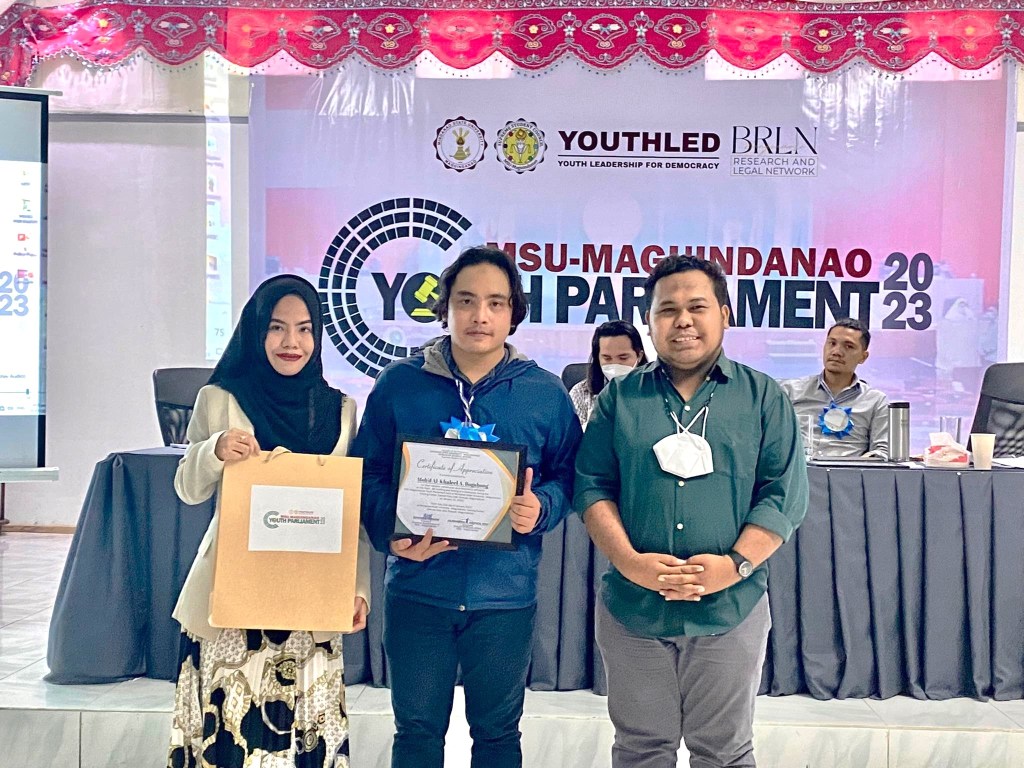

#MSUMagYP23 | Mr. Vincent L. Casil from the Bangsamoro Research and Legal Network, Inc. (BRLN) comprehensively discussed the unique feature of Parliamentary System of the Bangsamoro Government. Dr. Nassef M. Adiong of BRLN, exhaustively discussed every part of the template of policy research and its importance in drafting a policy paper. Mr. Kebart P. Licayan, also shared his expertise on research methods relevant to policymaking. And Mr. Moh’d Al-Khalil A. Bogabong also discussed Bill Drafting and Writing of Resolution.
Mr. Bogabong said during his lecture that “you don’t have to be a lawyer to make a bill and resolution, all you need is the intention to promote the general welfare of the Bangsamoro. Dr. Adiong also emphasized to the participants that “we have to listen to the grievances and demands of the people in order to understand them and make a concrete research and resolution.”
MSU Maguindanao Youth Parliament is a project of Supreme Student Council, funded by the YouthLed PH, in partnership with Bangsamoro Research and Legal Network, Inc.


 Nassef Manabilang Adiong, PhD
You must be logged in to post a comment.