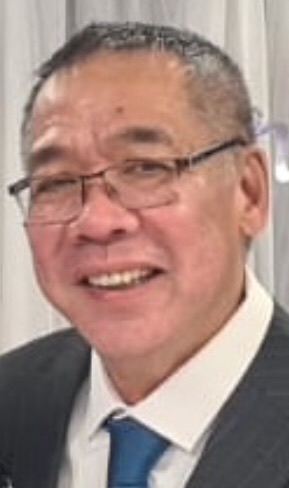
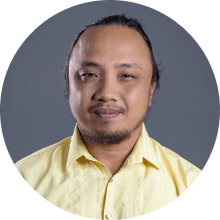
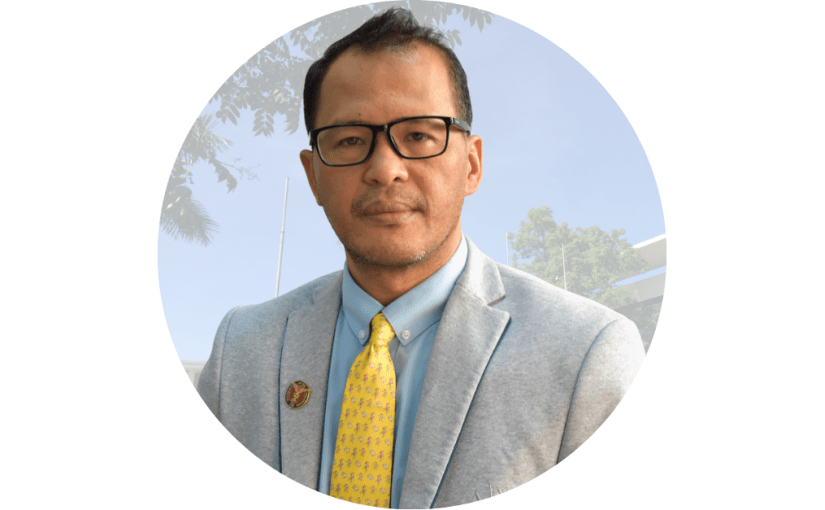
Abhoud Syed Lingga’s #BROC2023 keynote presentation on “Challenges on Building the Bangsamoro Government”

The keynote presentation explores the unique challenges involved in establishing the Bangsamoro Autonomous Region in Muslim Mindanao (BARMM) in the Philippines. Lingga discusses the multifaceted complexity of creating a new government system in an area marked by diverse cultural traditions, religious beliefs, and a history of violent conflicts. He examines political, socioeconomic, and institutional hurdles, such as the negotiation of power dynamics, managing resource allocation, and the transformation of Moro revolutionary organizations into effective governing bodies. Lingga also delves into the issue of integrating Islamic law within the broader Philippine legal system and the potential implications this has for human rights and gender equality. The presenter argues that overcoming these obstacles is not just crucial for peace and stability in the Bangsamoro region but can also provide insights for conflict resolution and autonomy-building in similar contexts worldwide. Lastly, Lingga proposes several recommendations for enhancing the capacity of the Bangsamoro government and fostering inclusive growth and sustainable development.


Abhoud Syed Lingga, a pivotal figure in contemporary Bangsamoro studies and peace advocacy, has played a defining role in the Bangsamoro people’s pursuit of self-determination and peace. As a distinguished scholar and peace advocate, he has contributed significantly to the Bangsamoro region and the broader Philippines. Born and raised in Buug, Zamboanga Sibugay, Lingga’s journey is reflective of the spirit of the Bangsamoro people. He dedicated his life to understanding the unique challenges faced by his people, earning his Master of Arts in Education at Philippine Harvardian College followed by a Master of Arts in Islamic Studies at the University of the Philippines Diliman. Later in his career, Lingga was recognized with the degree of Doctor of Humanities (Honoris Causa) in Peace and Development from Notre Dame University in 2017, a testament to his tireless pursuit of peace and progress in the region.

Lingga’s career is rich with positions of influence and leadership. He served as the Chairman of the Bangsamoro Consultative Council and Executive Director of the Institute of Bangsamoro Studies, playing an instrumental role in facilitating dialogue and disseminating research on the Bangsamoro struggle for self-determination. From 2010 to 2016, he lent his expertise to the Moro Islamic Liberation Front Peace Panel, underscoring his deep commitment to finding peaceful solutions to the conflict in the region. As a scholar, Lingga has made significant contributions to Bangsamoro studies. He has authored numerous research works that delve into various aspects of the Bangsamoro struggle for self-determination. Notable among these are his papers such as ‘Democratic approach to pursue the Bangsamoro people’s right to self-determination’ (2002), ‘Assertions of Sovereignty and Self-Determination: The Philippine-Bangsamoro Conflict’ (2003), ‘Understanding Bangsamoro Independence as a Mode of Self-Determination’ (2004), and ‘Peace is for Everyone: Bangsamoro stories of hope, survival, pain and resilience’ (2016).

In his most recent works like ‘Building the Bangsamoro government’ (2018), Lingga continues to provide insights into the complexities of establishing a new government in the BARMM. His prolific body of work provides essential insights and rich scholarly context to the ongoing peace process and the dynamics of the Bangsamoro self-determination movement. To summarize, Abhoud Syed Lingga, with his dedication and commitment to the peace process and the betterment of the Bangsamoro people, has left an indelible mark on Bangsamoro studies and peace advocacy. His life and work embody a profound understanding of the complex history, culture, and aspirations of the Bangsamoro people. His unwavering dedication to the cause of peace and self-determination continues to inspire and guide the region towards a harmonious future.

Click here to proceed to the conference page.

Rufa Cagoco-Guiam’s #BROC2023 keynote presentation on “Climate fragility risks and its intersection with gender and social exclusion in the Bangsamoro”

Results of three exploratory studies on the intersections of climate change, conflict, gender and social exclusion in selected localities in the Bangsamoro autonomous region have surfaced several structural realities that privilege men over women, resulting to devastating impacts felt more sharply by women rather than by men.  Men and women have different levels of vulnerabilities, owing to social norms in a largely patriarchal society.  The adverse effects of both extreme weather events – like flooding and long dry spells (droughts) – are exacerbated by pre-exiting deficits in gender relations and dynamics of social exclusion.  All these provide a compelling case for adopting more participatory processes in planning and decision-making, (planning with rather than planning for), especially in terms of responding to human-induced disasters (armed conflicts) and those created by extreme weather events contributing to climate change. 


Rufa Cagoco‐Guiam has “changed tires”, or retired from Philippine government service as Full Professor III, Sociology Department, College of Social Sciences and Humanities, of the Mindanao State University – General Santos City, since December 2016.  She is a professionally trained cultural anthropologist, both at the Silliman University (MA Anthropology) and at the University of Hawaii (non-degree) for her advanced studies in the same field. Since her retirement, Prof Guiam has been engaged in various social development consulting with various offices and agencies in the Bangsamoro Autonomous Region, focusing mainly on the following themes: gender and social inclusion, and peace and conflict studies.

Prof Guiam has published numerous articles and chapters in books, largely focused on the following topics:  child soldiers, gender and armed conflict, gender and livelihoods among internally displaced communities, peace and development communities, illegal drug trade and its intersections with political violence and armed conflict in Muslim Mindanao; and lately, on transitional justice in the Bangsamoro communities in Mindanao. 

She is a Senior Asian Public Intellectual (API) Fellow of The Nippon Foundation in 2008-2009 and an Executive Education Grantee of the Institute of Politics, Harvard School of Government, Harvard University, in 2009.  She recently was a visiting scholar at the College of Intercultural Communications, Rikkyo University, Tokyo, Japan in October 2018.

Currently, Ms. Guiam is one of the Conveners of the Independent Working on Transitional Justice – Dealing with the Past (TJ – DwP), an offshoot of her two-year engagement as the Lead Coordinator of the Listening Process of the Transitional Justice and Reconciliation Commission (TJRC) in the Bangsamoro. The TJRC was part of the Joint Normalization Committee provided for in the Comprehensive Agreement on the Bangsamoro (CAB) signed between the Philippine government and the Moro Islamic Liberation Front.  She used to do a variety of consultancy work, in particular with the UN Women (mapping of initiatives to prevent Violent Extremism in the Bangsamoro and for the Conciliation Resources, London, for inclusive localized peace platforms; and more recently with the Asia Foundation and the UNICEF for projects providing technical assistance to the new government in the Bangsamoro.  In between her consultancy work, she writes a fortnightly column in the Opinion Page of the Philippine Daily Inquirer (PDI), under Kris-Crossing Mindanao (starting last June 18, 2018).

Click here to proceed to the conference page.

Rizal G. Buendia’s #BROC2023 keynote presentation on “The Dream that is yet to be Realized”

The presentation encapsulates issues and challenges that leaders of the Bangsamoro Transition Authority (BTA) face and new leaders of the BARMM, with the upcoming 2025 parliamentary elections, have to confront. It identifies a number of policy concerns and advocates general recommendations in the interest of relatively surmounting the historical and lingering socio-cultural and economic and political concerns in the Bangsamoro region in particular and Mindanao in general. These are challenges entrenched in present-day mosaic democracy and heterogeneous development. They require the state, not simply the BARRM to redefine itself and adopt an institutional framework of governance that would allow the expression of democracy in kaleidoscopic forms and a system of governance that is inclusive, comprehensive, and participatory towards the fulfilment of the Bangsamoros’ hopes, aspirations, and opportunities.


Rizal G. Buendia is an independent political analyst, consultant, and researcher in Southeast Asian Politics and International Development based in Wales, UK. He is the Philippine Country Expert of the Global V-Dem Institute, University of Gothenburg, Sweden; Non-Resident Fellow of Stratbase ADR Institute for Strategic and International Studies (ADRi) is an independent, international research organization focused on the in-depth analysis of economic, social, political and strategic issues influencing the Philippines and the Indo-Pacific region, and Honorary Fellow of the Bangsamoro Parliament’s Policy Research and Legal Services of the Bangsamoro Autonomous Region of Muslim Mindanao (BARMM).

He was a former Teaching Fellow at the Politics and International Studies Department and the Department of Development Studies, School of Oriental and African Studies (SOAS), University of London; former Chair and Associate Professor at the Political Science Department, De La Salle University-Manila; Senior Lecturer at the National College of Public Administration and Governance (NCPAG)-University of the Philippines-Diliman; and Special Lecturer at the Department of Economics and Politics, Polytechnic University of the Philippines-Sta Mesa, Manila.

He obtained his Doctor of Philosophy (Ph.D.) degree in Political Science at the National University of Singapore (NUS) under the NUS by-research Ph.D. scholarship; grantee of the TODA Institute for Global Peace and Policy Research’s Doctoral Fellowship Program and of the Southeast Asian Studies Regional Exchange Program, Toyota Foundation and the Japan Foundation Asia Center’s research fellowship Program. He earned his Master of Public Administration (MPA) with Highest Distinction at NCPAG-University of the Philippines-Diliman.

Click here to proceed to the conference page.

Richard N. Muallil’s #BROC2023 keynote presentation on “Preserving a Natural Heritage: Exploring the Diverse Coral Reef Fishes in the Sulu Archipelago”

The Sulu Archipelago, which represents the BaSulTa (Basilan, Sulu, and Tawi-Tawi) provinces of the BARMM region, is renowned for its rich coral reef biodiversity. The archipelago itself is located right at the heart of the Coral Triangle, the global epicenter of coral reef biodiversity. This study showcases the diverse coral reef fishes in Southern Sulu Archipelago. Our findings are based on extensive underwater surveys conducted in the southern part of the archipelago. We have also incorporated insights and knowledge from relevant published literature to enhance our understanding. The study further presents the various challenges and threats both natural and anthropogenic, confronting these valuable resources. Lastly, we also share some insights from the conservation initiatives done in the archipelago. By recognizing the value of coral reefs as key contributors to local livelihoods and economic prosperity and as a national heritage, the study underscores the imperative of prioritizing their protection and sustainable use.


Dr. Richard N. Muallil is an esteemed marine scientist with expertise in coastal resource management, marine protected areas, and small-scale fisheries. Currently, he serves as a professor at the Institute of Oceanography and Environmental Science (IOES) and holds the esteemed position of Director at the Office of Continuing Education and Extension Services (OCEANeS) of the Mindanao State University – Tawi-Tawi College of Technology and Oceanography (MSU TCTO). Dr. Muallil’s extensive contributions extend beyond academia. He actively contributes to the field as a member of the scientific advisory group of Fisheries Management Areas 3 and 4 of the Bureau of Fisheries and Aquatic Resources (BFAR). Furthermore, he is a member of the National Panel of Technical Experts of the esteemed Climate Change Commission. Recognized for his exceptional work, Dr. Muallil has garnered numerous prestigious awards throughout his career. In 2016, he received the Outstanding Young Scientists (OYS) award from the DOST-National Academy of Science and Technology, and the Ten Outstanding Young Men of the Philippines (TOYM) award from the Gerry Roxas Foundation and JCI Philippines. In 2022, he was honored with the Lifetime Achiever award by the DOST-National Research Council of the Philippines. Notably, he was also acknowledged as the most outstanding PhD graduate and received the esteemed Dr. Edgardo Gomez award from the College of Science at the University of the Philippines Diliman in 2016.

Henelito A. Sevilla, Jr.’s #BROC2023 keynote presentation on “Energy security in BARMM: Learnings from the Philippine-Middle East energy relations”

The enormous reliance of the Philippines on foreign energy supplies has exposed the vulnerable side of the country to any geopolitical uncertainties that took place in areas such as the Middle East and recently in the war between Russia and Ukraine. This lecture will look at the experience of the Philippines’ energy relations with the Middle East throughout the decades. It will offer perspectives on how the country can avoid this geopolitical exposure and at the same time maximize the use of its own local energy resources. Furthermore, the lecture will focus on looking at the local energy condition, issues, and challenges of the Bangsamoro Autonomous Region of Muslim Mindanao (BARMM).


Henelito A. Sevilla, Jr. has sixteen (16) years of teaching experience and currently serves as Dean and Professor of West Asia studies and Philippine External Relations at the Asian Center, University of the Philippines Diliman. He obtained his MA and PhD in International Relations from Shahid Behesti University and Tehran University, Iran, respectively. His recent publication talks about “Iran’s Pragmatic Approach in Accommodating China’s Belt and Road Initiative: A Determinant for Future Closer Bilateral Relations” in China’s Engagement with the Islamic Nations, Young-Chan Kim (ed), Springer, 2023. Currently, he is working on a research project about Strategic Pragmatism in Abraham’s Accord:  The Arab-Israeli Relations and China’s Political Navigation in Securing Middle East Peace. As a recognized expert on the Middle East and international relations, Dr. Sevilla has published several academic articles and book chapters in Philippine and Middle East studies. He founded the Philippine-Middle East Studies Association (PMESA) and sets as adviser to several academic and cultural organizations. His research interests are on Mindanao, Gulf Security dynamics, geopolitics and energy security, foreign policy, among others.

Click here to proceed to the conference page.